 Search


- This project is a milestone in the transition of China Africa cooperation from "hardware connectivity" to "development symbiosis"
- Under the wave of "dual carbon", BIA aims to become the first LEED Gold certified airport in Africa
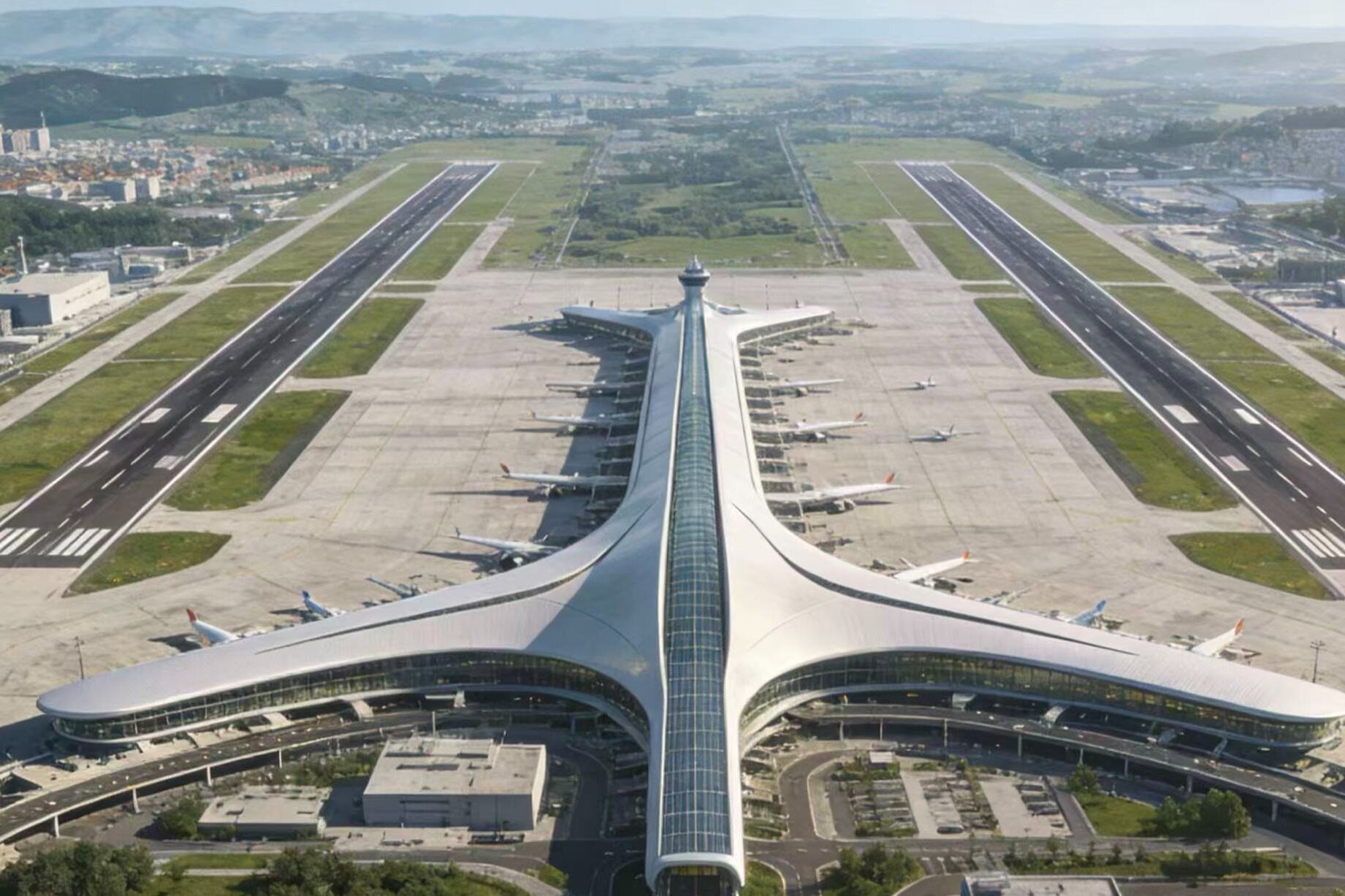
On the wasteland 40 kilometers southeast of Addis Ababa, Ethiopia, the sound of shovel breaking through the sky - Ethiopian Airlines officially laid the foundation for Bishovtu International Airport (BIA). This project, engraved with the mark of "China Africa cooperation", has broken the African infrastructure record with a total investment of 12.5 billion US dollars, and carries the mission of reshaping the global aviation pattern: after its full completion in 2030, it will become the first super airport in Africa to enter the "top global hub" with a peak passenger throughput of 110 million years, enabling Ethiopia to leap from the "roof of East Africa" to the "air crossroads" connecting the three continents of Asia, Africa, and Europe.
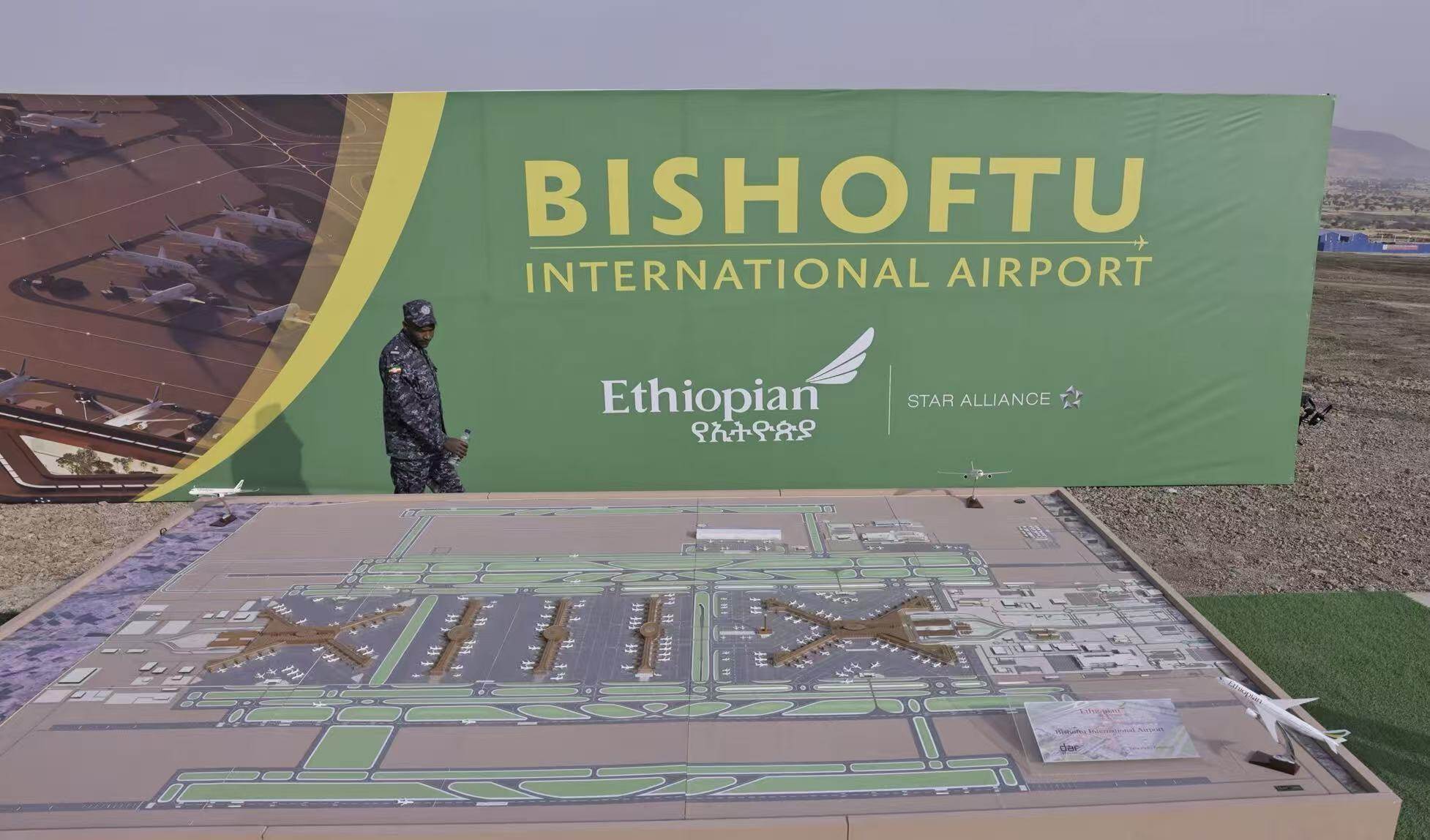

This cross-border infrastructure legend is a vivid example of China Africa cooperation moving from "aid construction" to "joint construction". As the core construction force of the project, the "China Construction Team" composed of China Communications Construction, China Road and Bridge Corporation, and Beijing Urban Construction, has joined hands with Ethiopian Airlines, a leader in the aviation industry in the Middle East and Africa, and collaborated deeply with international teams such as Zaha Hadid Architects and DAR to perfectly integrate China's infrastructure technology, Ethiopia's geographical endowment, and the world's top design concepts. From a blueprint to starting construction on a barren land, this cross hemisphere collaboration not only creates a new landmark for Africa, but also sets a benchmark for China Africa production capacity cooperation, technology sharing, and win-win development.
The bidirectional journey between African souls and global standards
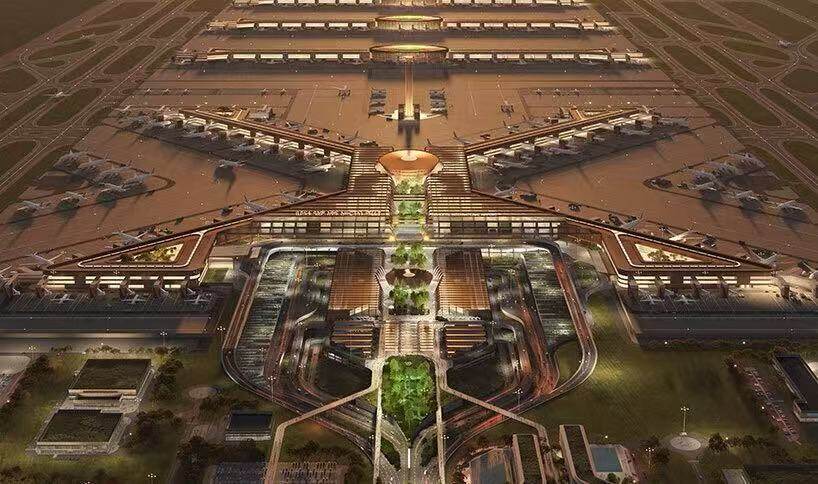
The design of Bischovtu International Airport was destined to become a "benchmark for Africa" from its inception. The designers of Zaha Hadid Architects delved deep into the hinterland of Ethiopia, transforming the ravine texture of the East African Rift Valley and the winding curves of the Blue Nile into architectural language - a continuous linear geometric structure outlining the smooth outline of the terminal building, with a central spine style corridor running through the entire area, allowing 80% of transit passengers to achieve "no detours" connection, with the shortest transit time compressed to 45 minutes, and efficiency approaching that of top global hubs.

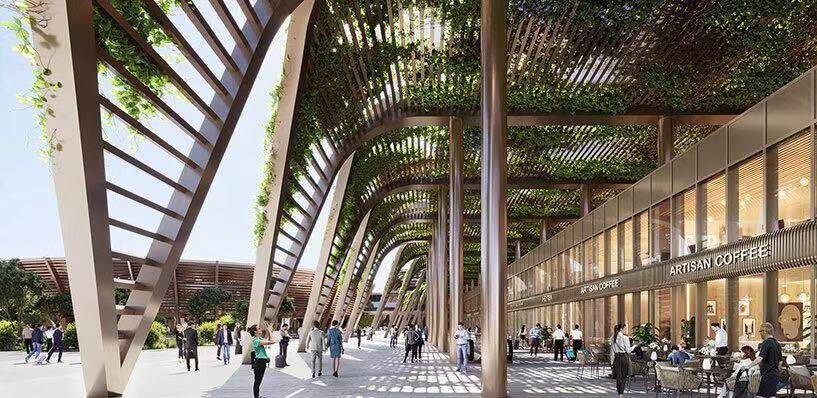
In terms of cultural expression, the airport incorporates the unique charm of Africa into every detail: the terminal building walls are made of Ethiopian sandstone and terracotta, with a color tone that gradually changes from the golden brown of the grassland to the reddish brown of the highlands, as if bringing the texture of East African land into the interior; The public art installations in the waiting area are inspired by the tribal totems of the Omo River Valley, while the dining area gathers specialty foods such as North African Tajipot and East African English Gila, allowing passengers to touch the pulse of African culture during transit. The breakthrough in technology is more in line with global standards: compared to the existing Bole Airport, BIA has lowered its altitude by 400 meters and three ultra long runways have completely broken the capacity limitations of high-altitude airports, allowing for the takeoff and landing of super large aircraft such as A380, clearing key obstacles for Ethiopian Airlines to open up intercontinental direct flights.


An airport activates Africa's' development engine '
The value of Bischovtu International Airport goes far beyond its title of "Africa's largest" - it is the core pivot for Ethiopia to build the "logistics heart of Africa" and a model for China Africa cooperation to leverage regional development. According to the plan, the airport will establish a three-dimensional development pattern of "air rail intermodal transportation+airport economy": a high-speed intercity railway will connect the city center of Addis Ababa, Bole Airport and BIA, and a 30 minute commuting circle will deeply integrate the airport with the city; In the planning of the "Aviation City" adjacent to the airport, a mixed use commercial area, a high-end manufacturing industrial park, and an ecological residential area are expected to rise simultaneously, directly creating 80000 job opportunities and indirectly driving upstream and downstream industries such as tourism, logistics, and infrastructure to increase income by over 10 billion US dollars.
As a 'future hub', BIA's radiation power will penetrate the African continent: after the first phase is put into operation in 2030, the 60 million year passenger throughput will enable Ethiopian Airlines' route network to cover 150 cities worldwide, becoming the 'first gateway' connecting Europe and Asia in Africa; After fully expanding to 110 million passengers by 2050, it will form a tripartite alliance with Dubai and Istanbul airports, reconstructing the air logistics map of the three continents of Asia, Africa, and Europe. The CEO of Ethiopian Airlines stated that BIA is not only the core carrier of the airline's 2035 strategy, but also a "super interface" for Africa to participate in the global economic cycle, allowing agricultural and manufacturing products from East Africa to directly reach the global market through aviation hubs.


Smart Writing for Sustainable Development in Central Africa
Under the wave of "dual carbon", BIA aims to become the first LEED Gold certified airport in Africa, integrating the concept of green development throughout the construction process and becoming a benchmark for environmental technology cooperation between China and Africa. Relying on the climate advantage of the temperate plateau in Ethiopia, the terminal adopts a passive natural ventilation system and intelligent sunshade curtain wall, which can reduce air conditioning energy consumption by 40% in summer; The photovoltaic panels covering a total area of 200000 square meters on the roof can meet 30% of the airport's electricity demand annually; The rainwater recycling system and artificial wetlands form a closed loop, with an annual recycling and utilization of over 500000 tons of water resources, which not only solves the local water shortage problem, but also builds a micro ecosystem for the airport.
Chinese enterprises have played a key role in green construction: the modular construction technology brought by China Communications Construction has reduced on-site construction waste by 80%; The plateau ecological restoration technology developed by China Road and Bridge Corporation has increased the vegetation survival rate in the construction area to 95%; The low-carbon building materials application plan of Beijing Urban Construction has reduced the carbon emissions per unit area of the terminal by 25% compared to industry standards. These technologies not only ensure the sustainability of the project, but also cultivate a group of green infrastructure professionals for Africa through technology transfer and local training, realizing the vision of China Africa cooperation of "building one project, retaining one set of technology, and nurturing a group of talents".

The rise of Bischovtu International Airport from the wilderness of Addis Ababa to the air hub of Asia, Africa and Europe is a milestone in the transition of China Africa cooperation from "hardware connectivity" to "development symbiosis". Behind the $12.5 billion investment is the precise alignment between China's infrastructure strength and Africa's development needs; The throughput target of 110 million people carries the desire of the African continent to step onto the global stage. In 2030, when the first flight lands at this super airport that combines culture, efficiency, and green, it will not only be a new landmark in Africa, but also an eternal witness to the win-win cooperation between China and Africa, writing a new chapter in global South South cooperation.Editor/Bian Wenjun
Comment





 Praise
 Collect
 Comment

 Share
Share


Write something~