 Search


- Chinese enterprises shift from strategic partners to open bidding, presenting both opportunities and challenges

On the desert edge of the Saudi capital Riyadh, a long planned steel artery is reaching a critical turning point. The Saudi Arabian Continental Bridge project, which was proposed in 2004 and has undergone multiple delays and route optimizations, has finally taken a substantive step. Saudi Railways Corporation SAR has recently officially launched the bidding for the design and construction of the Riyadh section, with the bidding deadline set for March 29th.
The investment for this section is about 7 billion US dollars, and the double track railway with a total length of about 35 kilometers will run through the north and south of the capital, becoming a "golden link" connecting the Red Sea ports with the eastern coastal economic belt. For Chinese companies that have been deeply involved in the preliminary work, this is not only a competition of technical strength, but also a test of role transformation from "strategic partners" to "bidding participants".
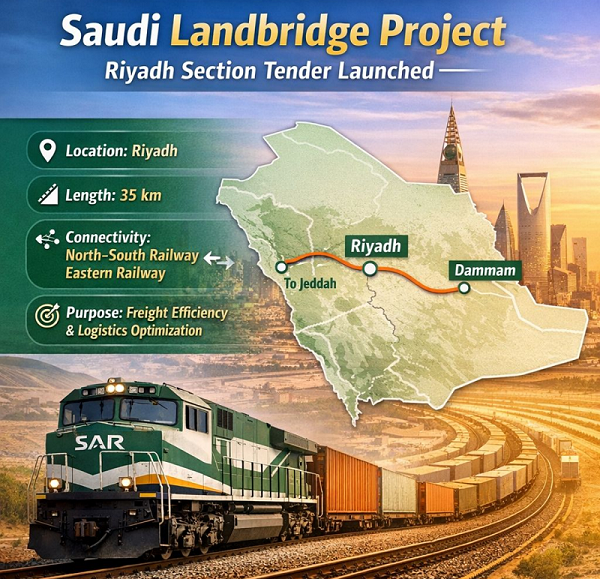
Billion dollar investment reshapes Saudi Arabia's transportation map
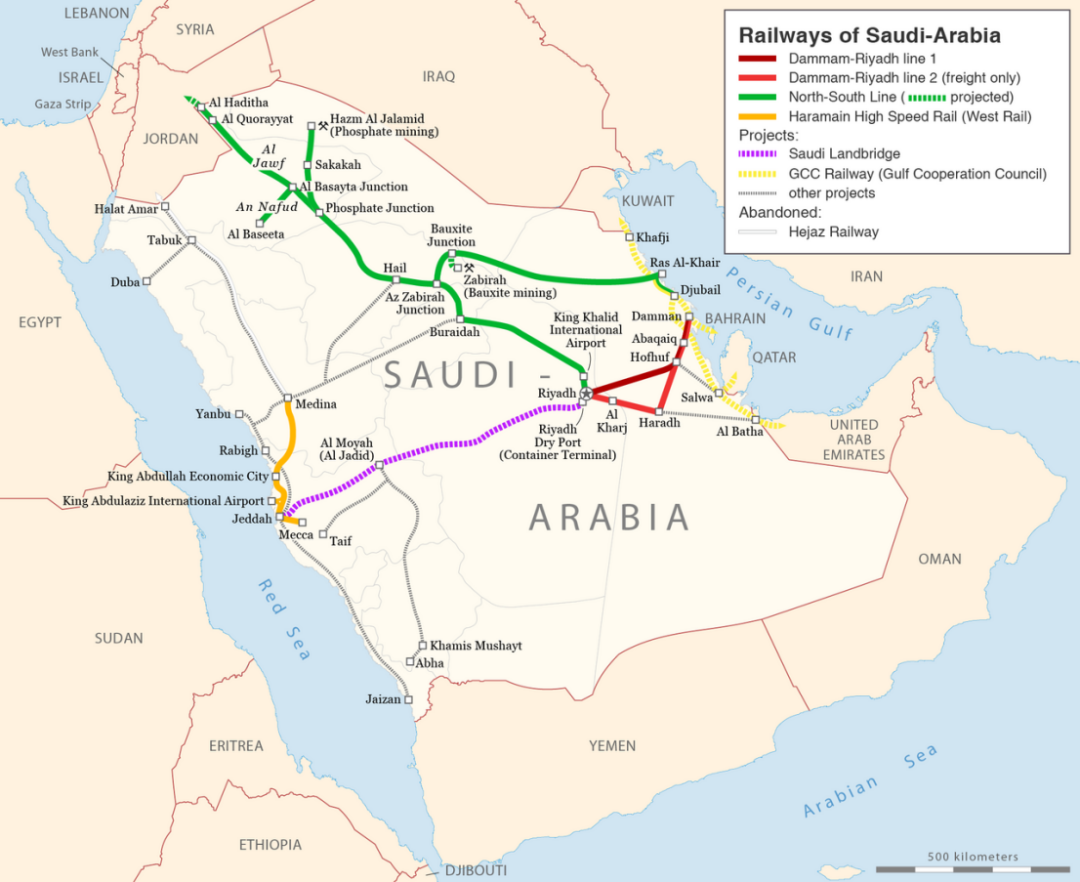
The Saudi Continental Bridge project is regarded as the core project of Saudi Arabia's "Vision 2030" transportation strategy, with a total planned mileage of over 1500 kilometers and a total investment of approximately 26.6 billion US dollars. The project focuses on building a 900 kilometer new railway from Riyadh to Jeddah, with Riyadh as the national railway hub, and seamlessly connecting with the Red Sea King Abdullah Port.
In addition to the construction of new lines, the project also includes the upgrading of existing lines from Riyadh to Dammam, the construction of capital bypass lines and port connection lines, with the goal of covering a comprehensive railway network of major economic zones and port nodes across the country. In recent years, SAR has summarized its previous experience and clearly adopted a phased construction and public-private partnership model to solve historical problems such as land acquisition coordination and complex financing.
The 35 kilometer double track project covers all elements
The Riyadh connection line for this bidding adopts an integrated design and construction model, covering track engineering, elevated bridges and roadbed structures, pipeline relocation, communication signal systems, and electromechanical supporting facilities. The project requires bidders to have full chain implementation capabilities, with a particular emphasis on compliant response to localization ratios.
It is worth noting that Saudi Arabia is in communication with Chinese companies interested in using the PPP model to participate in development. This means that despite entering the public bidding stage, Chinese enterprises still have the opportunity to take the initiative through innovative investment and financing methods.
Chinese enterprises deeply participate in the competition on the same stage
In the previous round of project promotion, Chinese civil engineering and other Chinese funded enterprises participated as core members of the consortium in route scheme research, engineering technology demonstration, and investment and financing model discussions, positioning themselves close to the core construction party. However, due to the inability to reach consensus on key terms such as localization ratio, the cooperation ultimately remained in the negotiation stage. Keywords: International News Network, Infrastructure Engineering, Railway
After entering a new stage, Chinese enterprises need to compete with international contractors on the same stage through open bidding. Facing strong competitors such as Japan and Europe, can Chinese enterprises win by leveraging their existing project experience and technological cost advantages in Saudi Arabia and become the focus of the industry.Editor/Yang Meiling
Comment






 Praise
 Collect
 Comment

 Share
Share


Write something~