 Search


- Accurately completing load testing, meeting bridge strength and stiffness standards, providing assurance for safe traffic opening
- The dynamic and static load tests have been successfully completed, and the main structure meets the standards, laying a solid foundation for the full line connection of the project

The morning sun shines over the Lanxin Railway, and on the construction site of the G30 Lianhuo Expressway Hatu 9 section, the staff hold their breath and wait for an important moment - the official completion of the dynamic and static load tests of the No.1 Bridge.
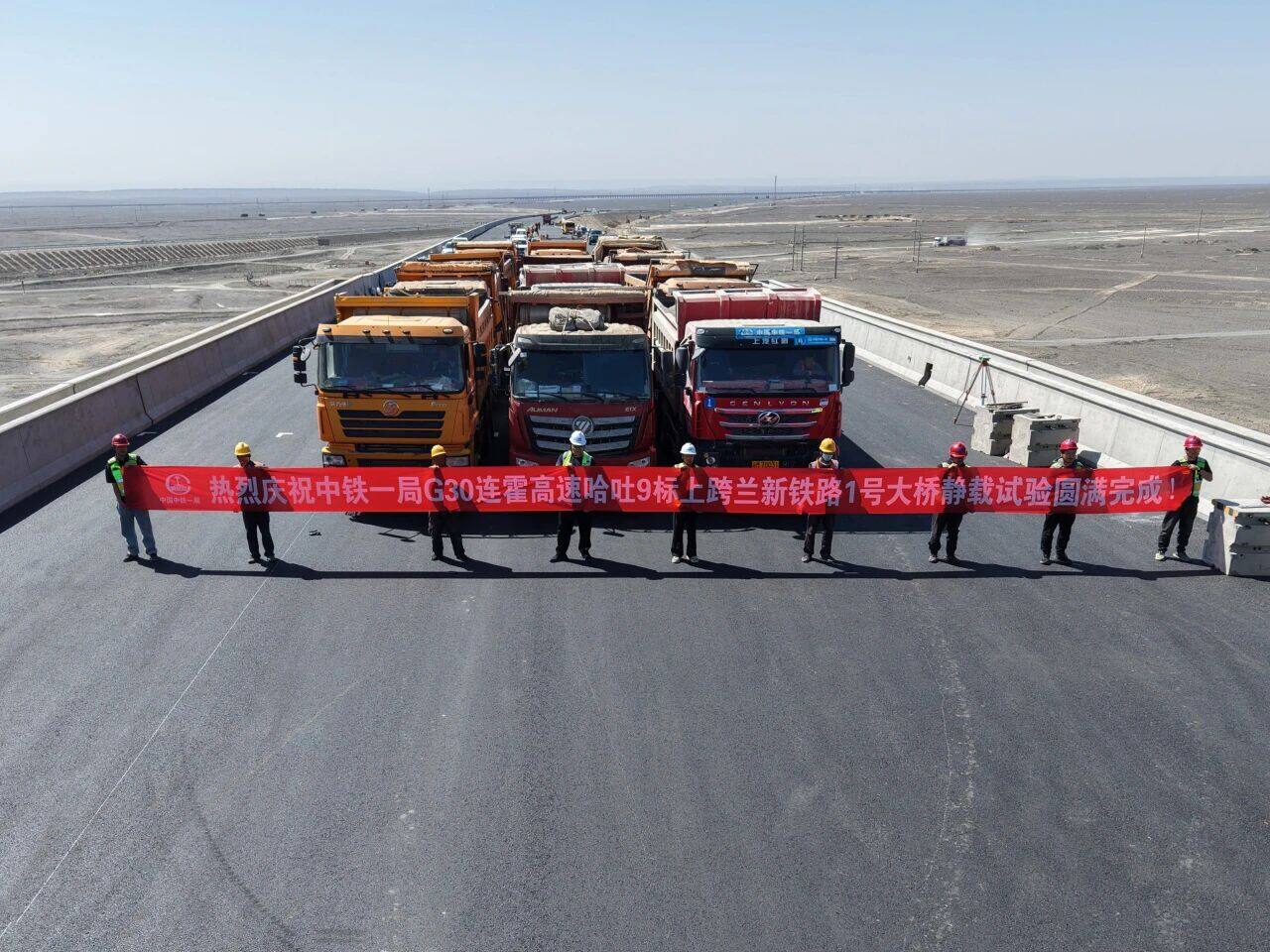
On April 10, 2026, the dynamic and static load tests of the G30 Lianhuo Expressway Hatu 9 section crossing the Lanxin Railway No.1 Bridge were successfully completed. All test data met the design and specification standards, indicating that the strength, stiffness, and bearing capacity of the main structure of the bridge have met the requirements for opening to traffic, laying a solid foundation for the subsequent construction of the entire line.
Overcoming multiple difficulties in construction
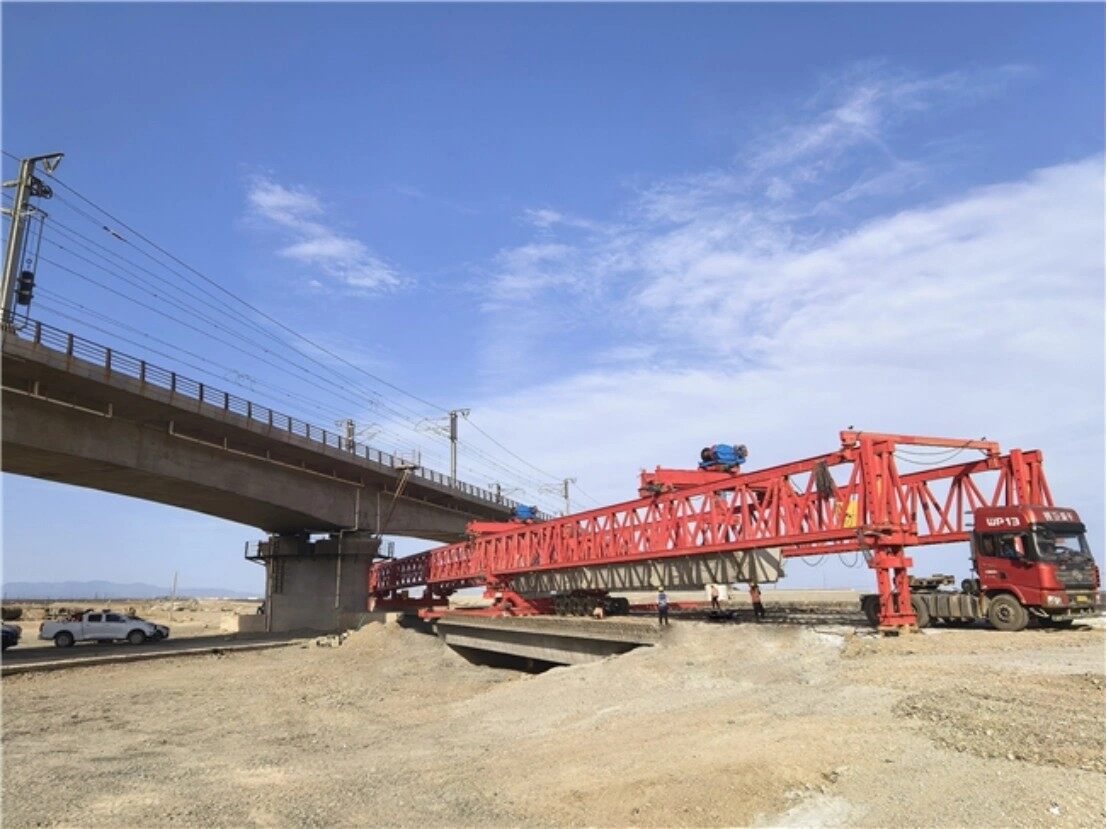
As a key node in the renovation and expansion project of the Hami to Tuyugou section of the G30 Lianhuo Expressway, the bridge is constructed using the rotation method. The T-shaped continuous beam works in parallel with the Lanxin Railway, first completing the pouring of two spans of 65 meter T-shaped rigid frame continuous beams, and then completing the 20000 ton continuous beam rotation during the "skylight period" of railway operation. During the construction period, the team successfully overcame many challenges such as tight skylight operations, high difficulty in rotating large tonnage vehicles, and strict safety control of adjacent existing lines.
Test to establish a strong safety line
This dynamic and static load test is the core detection link before the bridge is opened to traffic. By testing the performance of the bridge under static and dynamic loads, its bearing capacity is accurately evaluated, and safety hazards are promptly identified to ensure safe opening to traffic. Keywords: G30 Lianhuo Expressway, dynamic and static load test, Lanxin Railway
The experiment adopts a graded loading mode, where heavy-duty vehicles are precisely parked in key positions on the bridge deck that are sensitive to stress and prone to deformation, and the loading, holding, and unloading processes are completed in sequence. The total weight of 12 heavy-duty test vehicles reaches 480 tons. During loading, relevant principles are strictly followed, and high-precision equipment is used to collect real-time data, monitor the stress state, and conduct analysis; In the dynamic load test, heavy-duty vehicles pass through the bridge deck at different speeds and speeds, capturing the bridge vibration and response in real time, evaluating its dynamic characteristics, seismic resistance, and durability, and verifying whether it meets safety and durability requirements.Editor/Gong Ziwei
Comment





 Praise
 Collect
 Comment

 Share
Share


Write something~