 Search


- This railway is designed for a passenger speed of 160 kilometers per hour and a freight speed of 120 kilometers per hour

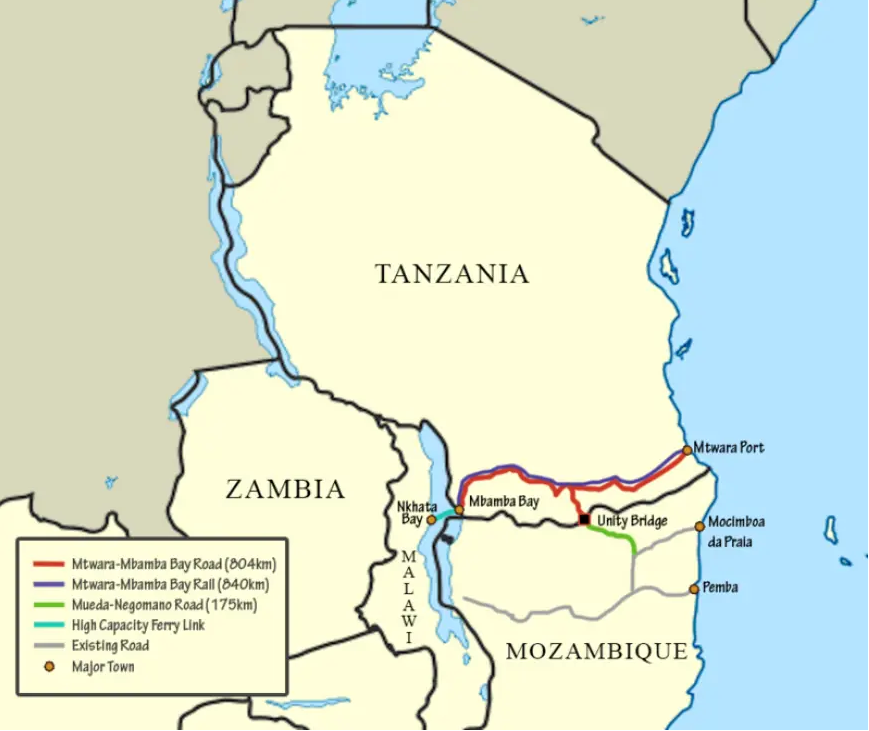
The Tanzanian government recently announced that the feasibility study and preliminary design of the Mtwara to Mbamba Bay Standard Gauge Railway (SGR) project have been completed. This 1000 kilometer railway will connect the mineral rich southern corridor and become a key link in promoting regional integration in East Africa. At the same time, the project has been officially included in the East African Railway Master Plan of the East African Community, marking an important step for Tanzania in building a modern transportation network.
Thousands of kilometers of railway leverage regional economy
The Mtwara Mbamba Bay Standard Gauge Railway project spans the southern region of Tanzania, starting from Mtwara Port on the Indian Ocean coast in the east and ending at Mbamba Bay on Lake Nyasa in the west, with a total length of approximately 1000 kilometers. It is also planned to construct branch lines to Liganga and Mtchuzuma. This railway is designed to have a passenger speed of 160 kilometers per hour and a freight speed of 120 kilometers per hour. In the future, it will be extended to multiple inland countries such as Mozambique and Malawi, becoming an important logistics channel in East Africa.

The Deputy Minister of Transport of Tanzania emphasized in a recent public statement that the railway project is of great significance in promoting economic and regional integration. He pointed out that there are abundant mineral resources along the southern corridor, and the completion of the railway will greatly reduce logistics costs and activate regional trade potential. In addition, the railway section from Dar es Salaam to Mtwara, which connects two major ports, has been included in the East African Community Railway Plan, further highlighting the strategic value of the project.
The government is seeking a public-private partnership model
Despite the promising prospects of the project, the huge funding requirement has become a real challenge facing the Tanzanian government. It is reported that the railway is expected to cost about 5.6 billion US dollars, and due to the large scale of funds involved, it has not yet been included in the list of projects directly funded by the government for construction. The Deputy Minister of Transport of Tanzania stated that the government is actively studying the feasibility of introducing the public-private partnership (PPP) model and encouraging private investors and financial institutions to collaborate with the government in development.
As early as 2023, Tanzania revealed that countries such as the United Kingdom, South Africa, the United States, Canada, and China had expressed investment intentions for the project. Now, with the completion of feasibility studies and preliminary designs, the project financing process is expected to accelerate. The Tanzanian government has stated that it will advance major infrastructure projects such as national standard gauge railways in a phased manner, and prioritize conducting updated feasibility studies for the Southern Corridor project to attract more potential investors.
Accelerated formation of standard gauge railway network
The Mtwara Mbamba Bay railway project is an important component of Tanzania's standard gauge railway network. In recent years, Tanzania has vigorously promoted the construction of standard gauge railways, aiming to gradually replace old meter gauge railways and improve national transportation efficiency. The advancement of this project will not only improve the transportation conditions in southern Tanzania, but also provide a more efficient and reliable sea route for the East African region.
Analysts believe that with the gradual implementation of the East African Community Railway Plan, Tanzania is expected to become a transportation hub in the East African region. The linkage between Mtwara Port and Dar es Salaam Port will further enhance Tanzania's position in Indian Ocean shipping. In the future, this railway may become an important corridor connecting East Africa and Southern Africa, injecting new vitality into regional economic development.Editor/Yang Meiling
Comment




 Praise
 Collect
 Comment

 Share
Share


Write something~