 Search


- The world's largest electrochemical cycle rocket engine (10-ton class), "Blazing Flame 2", has successfully completed all tests.
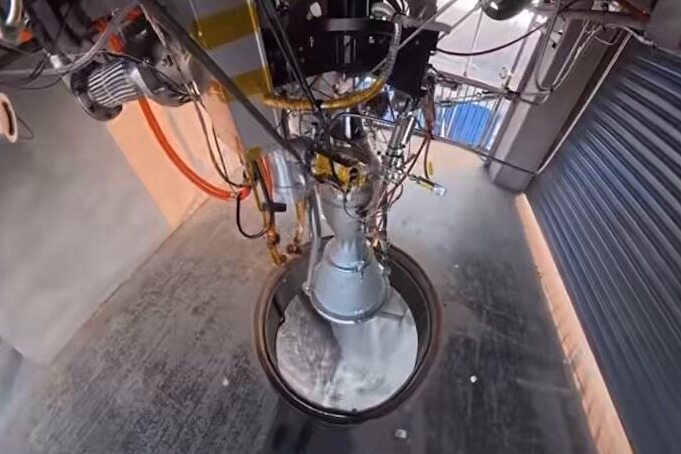
Developed by the Chinese commercial aerospace company Spark Space, this engine's successful test, announced in early March 2026, validated the feasibility of using electric pump fuel cycle technology in domestically produced engines and confirmed the correctness of its system design.
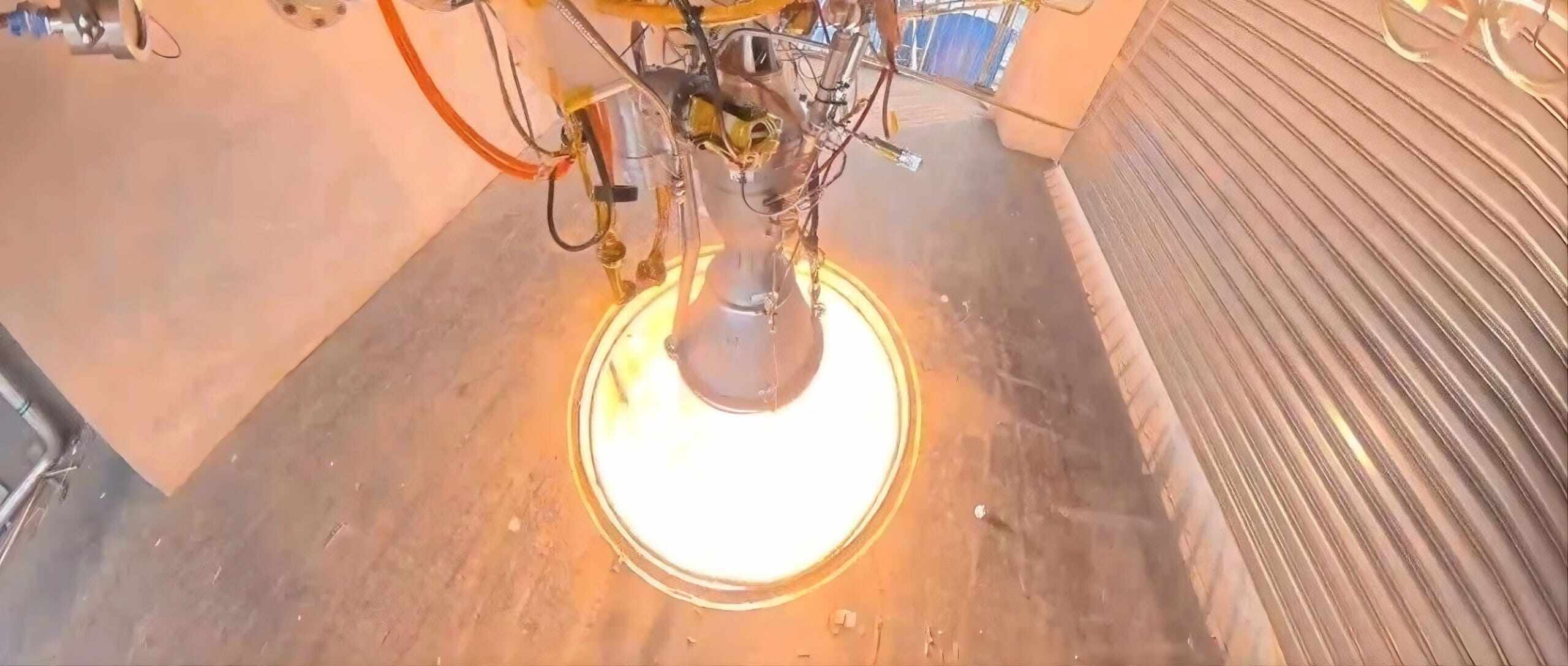
This achievement is particularly noteworthy globally. Currently, the only company using a similar technological approach is Rocket Lab, whose small "Electron" rocket uses the Rutherford engine with a vacuum thrust of 25.8 kN. In comparison, the "Blaze 2" engine achieves a vacuum thrust of 111 kN, exceeding 10 tons, setting a new world record for thrust in an electric pump fuel cycle engine.
This engine uses a high-power electric pump to drive propellant supply, instead of a traditional gas turbine. This innovative design significantly improves reliability by eliminating components that cause 50% to 70% of failures in conventional engines and reducing the number of valves and pipes by 70% and 80%, respectively. Furthermore, its lightweight design (with over 80% of components manufactured using 3D printing technology) achieves a 40% weight reduction, simplifies assembly, and paves the way for large-scale industrial production.

The "Lieyan-2" engine is the core propulsion system of Xinghuo Aerospace's "Evolution-1" rocket. "Evolution-1" will be the world's largest electric pump-fed rocket currently under development. The rocket is 27.5 meters tall, has a liftoff thrust of 90 tons, a low Earth orbit (LEO) payload capacity of 1.5 tons, and is scheduled for its maiden flight in 2027.Editor/Cao Tianyi
Comment


 Praise
 Collect
 Comment

 Share
Share


Write something~