 Search


- A 810 kilometer steel silver line connecting Uganda's hydroelectric rich mines with Tanzania's industrial center is about to be built
- This power highway spanning the Great Rift Valley in East Africa will solve the urgent need for power interconnection between the two countries
Under the tropical grasslands of the Great Rift Valley in East Africa, an invisible energy artery is accelerating - as early as February 2026, the Uganda Tanzania ± 400kV DC transmission project officially launched bidding. This 810 kilometer long power highway carries a huge financing of 650 million US dollars, carrying Tanzania and even the entire East African Community's decades long ambition of the Power Silk Road: connecting Egypt to the north and South Africa to the south, turning abundant hydropower resources into real tolls.
When the dust finally settles on the World Bank's soft loans, this game of energy sovereignty and regional hegemony has officially entered the countdown to construction.
A jigsaw puzzle worth 650 million US dollars
For a long time, the development of electricity in East Africa has faced an awkward paradox: Uganda has surplus hydropower resources but cannot use them up, while Tanzania and neighboring countries have a large industrial gap but lack electricity. There is only a thin border wall in between, but due to the lack of cross-border transmission lines, electricity cannot be interconnected.
Now, this total investment of up to 650 million US dollars has finally found a buyer, but it is not a simple business, but a complex multilateral financial relay:
Core funder: The World Bank provided the largest soft loan, with $250 million for the Uganda segment and $194 million for the Tanzania segment. The cost of this money is strict compliance review, which requires the use of international competitive bidding.
Asia Europe camp: The Japan International Cooperation Agency contributed $90 million, the French Development Agency contributed $82 million, and the European Union also contributed $35 million.
Timepoint: According to reliable sources, the World Bank is expected to officially approve this loan by the end of March 2026, which means that the engineering team can enter the field as early as the middle of this year.
It is worth noting the additional terms behind the financing. As one of the loan conditions, the Uganda section is mandated to have a local labor participation rate of 30%. This is not only to alleviate local employment pressure, but also a mandatory assessment of inclusive growth by the World Bank - money can be borrowed, but local people must share the cake.
Tanzania's Toll Ambition
If you only look at the Uganda Tanzania section, you may think that this is just a hand in hand between two neighboring countries. But if you open up the map of East Africa, you will find that this is actually a crucial move in a big game.
Tanzania's strategic intention is very clear: to become an East African power hub and collect grid fees.
The current plan is to center around Tanzania, connect Kenya and Ethiopia through existing lines to the north, and ultimately extend to Egypt; To the south, a new line will be built to connect Zambia and Zimbabwe, ultimately connecting to the South African power grid.
North Corridor: The Uganda and Tanzania sections of this tender are the core of the North Corridor. Once built, Uganda's cheap hydropower will continue to flow into Tanzania, and then be transported to power hungry Kenya and Rwanda.
South Corridor: Tanzania has previously connected with Zambia through the route from Mtwara to Dar es Salaam.
For the government of Tanzanian President Samia Suluhu Hassan, this is not only infrastructure construction, but also electricity banking business. By controlling cross-border transmission channels, Tanzania can charge high electricity grid fees to neighboring countries, which will become an important source of revenue for the country's finances and break away from dependence on Western aid.
810 kilometer challenge crossing grassland and policy jungle
Despite the availability of funds, the challenge of completing the 810 kilometer dual circuit transmission line within the 2026-2029 timeframe remains enormous.
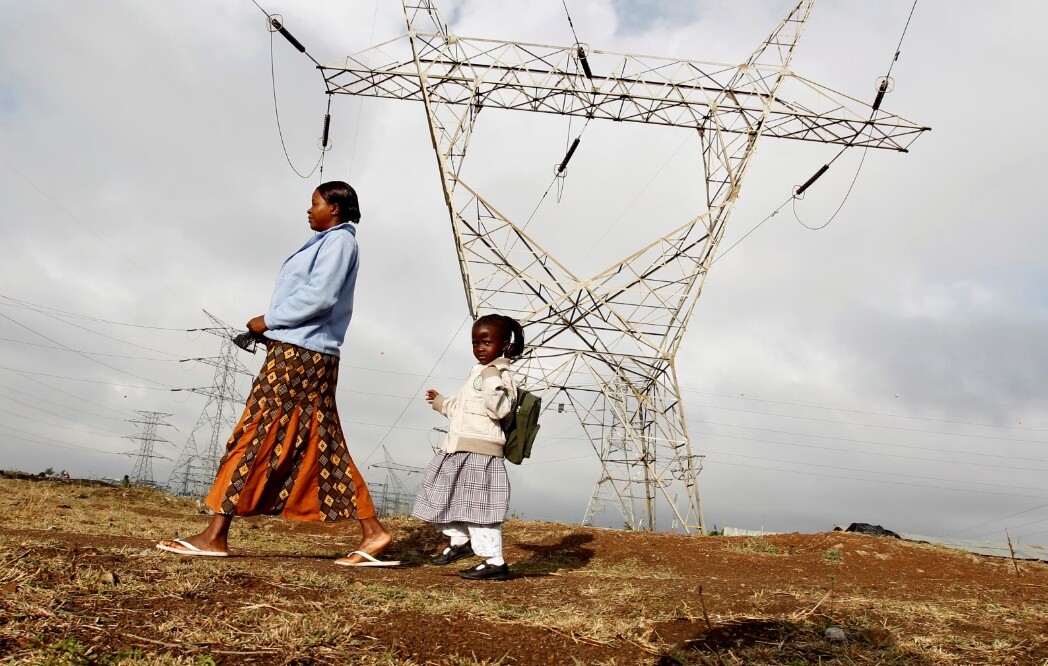
The first challenge is the physical environment. The route starts from Wobulenzi in Uganda, passes through dense agricultural areas around Lake Victoria, then reaches the border town of Mutukula, and finally arrives at Shinyanga in Tanzania. The terrain here is complex, involving a large amount of land acquisition and crossing of wildlife reserves, and the supervision of environmental organizations will be extremely strict.
Next is the adjustment of technical standards. Uganda is managed by UETCL, while Tanzania is managed by TANESCO. Although both countries belong to the East African Community, there are still soft barriers in power grid dispatching, billing systems, and technical standards. At the pre bid conference held in Kampala on February 5, 2026, World Bank experts specifically emphasized the unification of procurement regulations to prevent the two countries from blowing their own horn at the implementation level.
The deepest driving force comes from the African Continental Free Trade Zone. With the advancement of the African Free Trade Zone, industrial manufacturing has begun to cluster in East Africa. Without a stable cross-border power grid, there can be no large-scale factories. This $650 million is actually a ticket bought for the industrialization of East Africa in the next decade. Keywords: electricity, East Africa, Tanzania
When bulldozers enter the grasslands of East Africa in the second half of 2026, they will not only dig cable trenches, but also the foundation of the East African federal dream. Whether Tanzania's dream of toll fees can be realized depends on whether this silver line can light the bulbs of South Africa and Egypt as scheduled before 2030.Editor/Cheng Liting
Comment

 Praise
 Collect
 Comment

 Share
Share


Write something~