 Search


- Sener received the design contract and initiated the segmented implementation of the logo
Driven by the grand vision of Saudi Arabia's 2030 vision, the country is accelerating its strategic layout for national infrastructure construction, with the construction of a land bridge railway project aimed at connecting the Red Sea and the Arabian Gulf being particularly noteworthy.
As a key link connecting the three continents of Asia, Europe, and Africa, this project not only carries Saudi Arabia's ambition to build a global logistics hub, but also has become a focus of competition among international engineering consulting and construction giants due to its investment scale of up to $26.6 billion and a total length of 1500 kilometers.
Recently, with Spanish engineering consulting giant Sener successfully winning the project design contract, this long dormant super project has once again entered the public eye, marking a new stage of phased promotion and rolling development of the project after undergoing implementation mode adjustments.
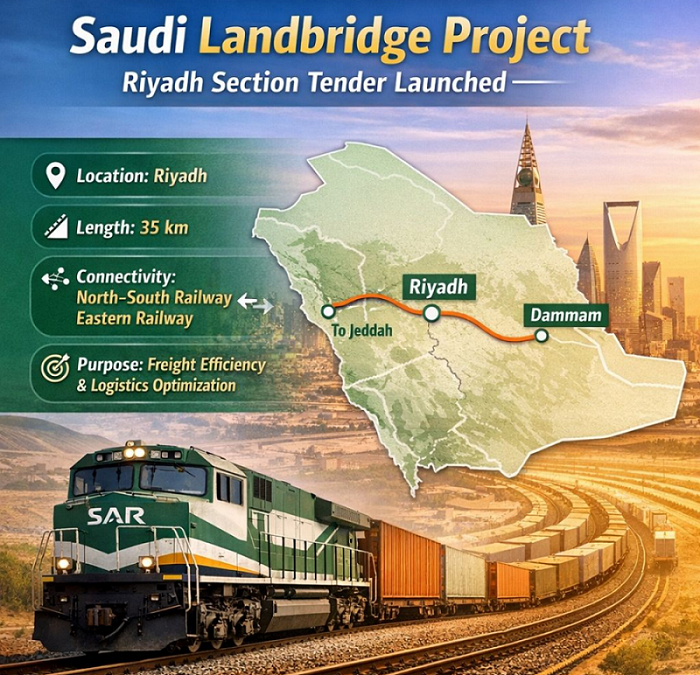
Spanish engineering consulting firm Sener has been awarded the design contract for the Saudi Continental Bridge project. This project is promoted by Saudi Railways SAR, and the route spans the Red Sea and the Arabian Gulf. It is an important component of Saudi Arabia's construction of a national level comprehensive logistics channel.
With the implementation mode shifting from overall PPP to phased promotion, the project is accelerating the pace of bidding and construction, and is expected to be completed and put into operation in stages before 2034. This design contract originated from the public bidding launched last year, and a new round of design work will be carried out on the basis of existing achievements. Italferr in Italy completed the preliminary and detailed design of the project from 2013 to 2017.
The updated design scope includes route scheme optimization, system integration, and construction section division to support the implementation of subsequent multi section design and construction contracts. The Saudi Continental Bridge project is one of the core infrastructure projects of Saudi Arabia's 2030 vision, aiming to build Saudi Arabia into a global logistics hub connecting Asia, Europe, and Africa, while driving employment and foreign investment along the route. We have gradually shifted from overall planning in the early stage to segmented implementation and rolling bidding. The management service contract was first awarded to the Hill International Italy Sener Spain consortium in 2023.
At present, the owner is advancing the bidding for the design and construction of the 35 kilometer Riyadh connecting line. China Civil Engineering has been deeply involved in the early stages of project route scheme research, engineering technology demonstration, and investment and financing model exploration, with a positioning closer to the core construction party and strategic partners at that time. However, due to multiple factors such as changes in project pace, adjustments in implementation mode, and localization requirements, the relevant cooperation was not ultimately transformed into actual contracts.
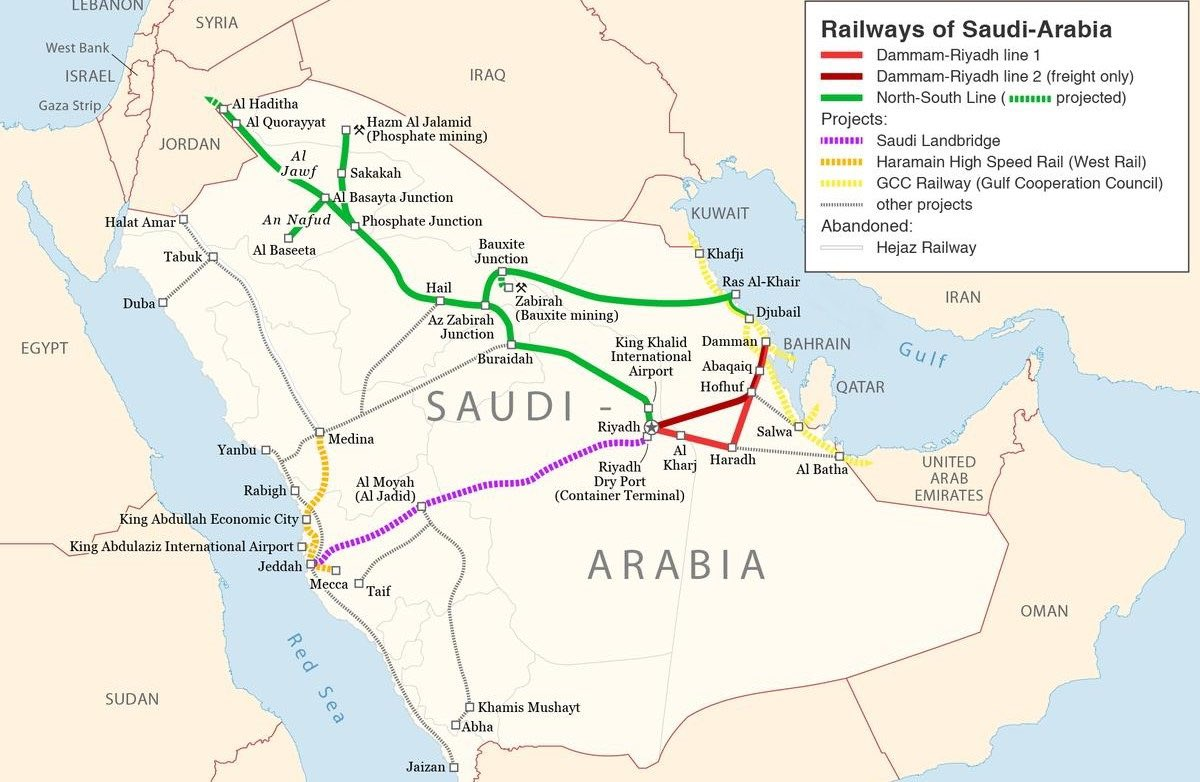
After entering the current stage, Chinese enterprises must compete with international contractors through open bidding in order to obtain implementation qualifications. With the railway construction experience accumulated in the Middle East and along the the Belt and Road, there is still a place for Chinese enterprises in the competition of subsequent sections. The Saudi Continental Bridge connects the Red Sea and the eastern coastal areas, with a core section of a newly built 900 kilometer line connecting Riyadh and Jeddah.
In addition to the construction of new lines, the project also includes the upgrading of existing lines from Riyadh to Dammam, the construction of a capital bypass line, and the construction of a port connection line. After completion, goods no longer need to detour through the Arabian Peninsula sea route and can be directly transported by land between the three continents of Asia, Europe, and Africa. The total mileage exceeds 1500 kilometers, with a planned investment of approximately 26.6 billion US dollars. The maximum speed of passenger trains is 250 kilometers per hour, and the maximum speed of freight trains is 160 kilometers per hour. The signal system adopts the European ETCS L2 train control standard. Keywords: Middle East news, transportation
The Saudi Continental Bridge project is not only a steel artery crossing the desert, but also a touchstone for Saudi Arabia's diversified economic transformation. With the addition of international consulting forces such as Sener and the launch of the Riyadh liaison line bidding, the project is gradually transitioning from a planning drawing to a construction drawing.Editor/Cheng Liting
Comment






 Praise
 Collect
 Comment

 Share
Share


Write something~