 Search


- The key section of the Beijing Hong Kong passage is sprinting, with an investment of 52.1 billion yuan on the horizon
At a critical juncture in the construction of China's eight vertical and eight horizontal high-speed railway network, the important gaps in the Beijing Hong Kong corridor are being rapidly filled. On April 13, 2026, the construction drawing review bidding plan for the Fuyang to Huanggang section (Hubei section) of the new Beijing Hong Kong high-speed railway was officially released, marking the last kilometer of preliminary approval for this steel artery spanning the provinces of Henan, Hubei, and Anhui, and only one step away from substantive construction bidding.
As a key project approved by the National Development and Reform Commission by the end of 2025, the pace of promoting the Fuhuang high-speed railway has significantly accelerated. It not only provides hard core infrastructure support for the rise of the central region, but also sends a strong signal to the market to accelerate investment in high-speed railway construction.
From paper blueprint to construction bidding countdown
With the bidding for the construction drawing review of the Hubei section being put on the internet, the preliminary work of the project has been fully completed. This bidding covers the FHHBTS section, with an estimated contract price of 13.66 million yuan. The scope of review includes on-site verification, design principles, and change documents throughout the entire process.
It is worth noting that the Anhui section has initiated similar bidding on March 16th, and this dual stage parallel approval rhythm shows the urgent demand of the owner for the full line to start construction within the year. Once the construction drawings are approved, they will immediately trigger the bidding for construction supervision and general contracting, paving the way for substantive construction before the end of the year.
Geological and spatial game under the high bridge tunnel ratio
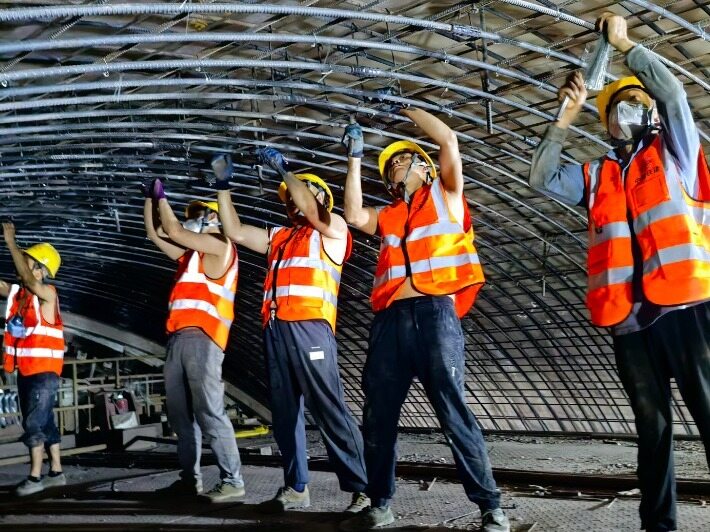
As a mountainous high-speed railway with a bridge to tunnel ratio of 76.6%, the engineering difficulty of the Fuhuang high-speed railway cannot be underestimated. In the 318.1 kilometer long main line, there are as many as 100 bridges and 14 tunnels, which require crossing the complex geological structure of the Dabie Mountains. The Hubei section of the main line is 131.6 kilometers long. Although the bridge tunnel ratio has slightly decreased to 66.39%, 60 bridges and 7 tunnels still need to be constructed.
Among the 9 stations along the entire line, 6 are newly built, including key nodes such as Hong'an, Machengxi, and Wuhan Xinzhou. This high-density station layout aims to maximize coverage of the revolutionary old areas in the Dabie Mountains, while balancing the economic benefits of the railway and the social poverty alleviation effect.
Approval of final acceleration for long-distance running
Looking back at the promotion process of the Fuhuang high-speed railway, its preliminary work took nearly six years, which can be regarded as a microcosm of the rigor of China's high-speed railway approval. From the launch of survey and design by China Railway Group in September 2020, to the completion of pre feasibility study in 2021, and then to intensive pre feasibility study review, feasibility study review, and approval by the National Development and Reform Commission in the second half of 2025, the project will significantly accelerate after obtaining the "production permit" at the end of December 2025. With a total investment of 52.12 billion yuan (including 23.96 billion yuan in the Hubei section), it has become one of the most eye-catching infrastructure investments in Central China this year. Keywords: infrastructure, railway transportation
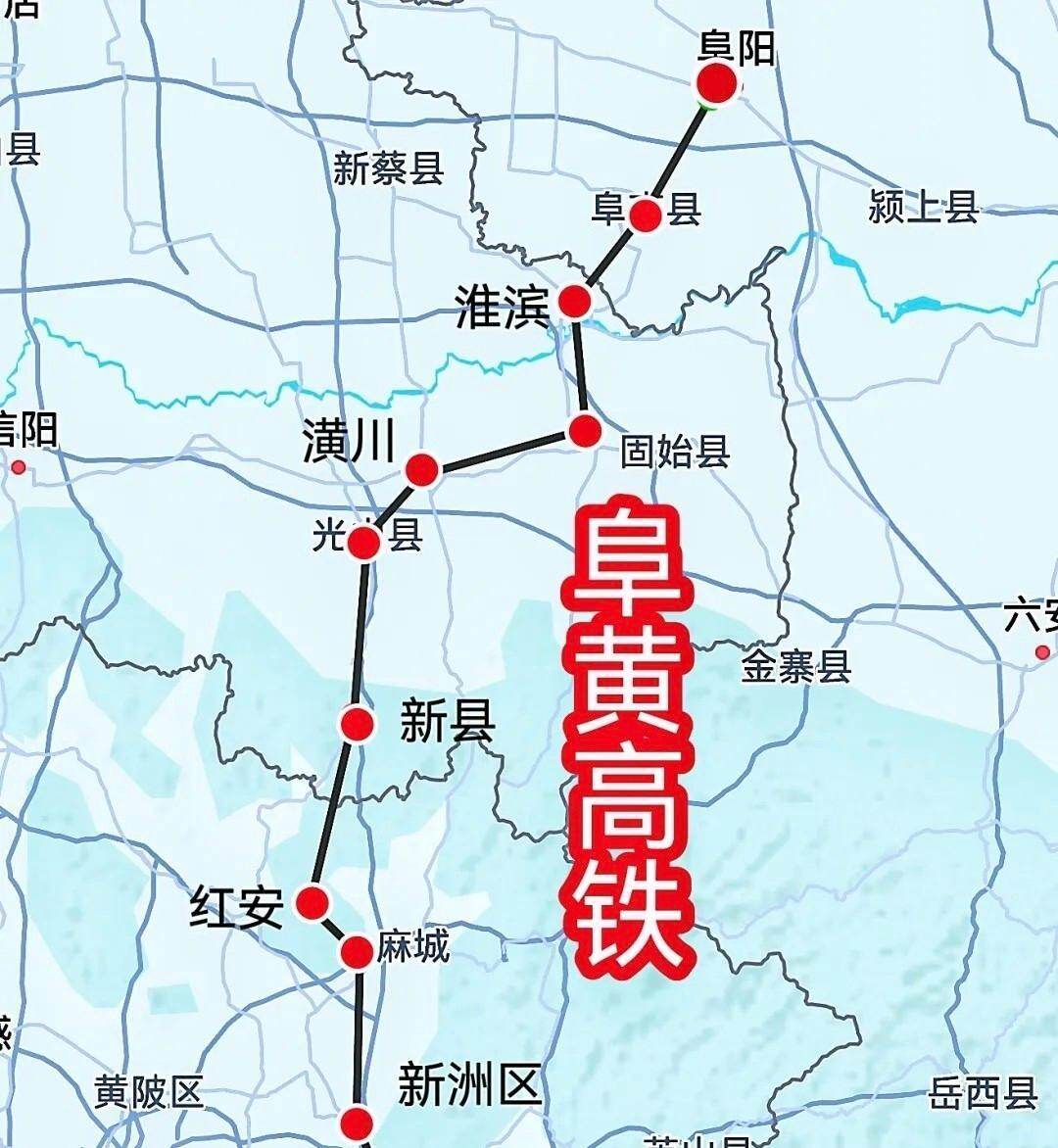
The landing of the Fuhuang high-speed railway not only means that the Beijing Hong Kong corridor will be fully connected, but also will reconstruct the spatial and temporal pattern of the Dabie Mountains region. At that time, the railway travel time from Wuhan to Beijing will be further compressed, and southeastern Henan and northeastern Hubei will be included in Wuhan's "1-hour commuting circle". With the support of national dual construction funds, this golden corridor connecting the Yangtze River Delta and the Central Plains urban agglomeration is expected to become the core engine driving the intersection of the Yangtze River Economic Belt and the Central China Rise strategy.Editor/Cheng Liting
Comment

 Praise
 Collect
 Comment

 Share
Share


Write something~