 Search


- This 134 kilometer Grand Canal will fill the last gap of the Western Land Sea New Channel
On May 8, 2026, the Youth Hub of Pinglu Canal completed water diversion, and the seal inspection of the ship lock was launched. The final sprint before navigation officially began. This 134.2 kilometer long canal is the first Grand Canal in New China that connects the Yangtze River and the sea. It will be fully navigable in September 2026. Its significance goes far beyond just a waterway - it is the backbone project of the Western Land Sea New Corridor, filling the last shortcoming of the railway public water intermodal transportation. The Western Land Sea New Corridor has been in operation since 2017, with trains increasing from 3382 TEUs in the first year to over 5 million TEUs in total, a 420.5 fold increase in 9 years, reaching 127 countries and 584 ports worldwide. But no matter how strong the railway and highway are, the cost advantage of water transportation has never been released. There is always the last threshold between the Xijiang Golden Waterway and the Beibu Gulf Port. The Pinglu Canal is here to demolish the threshold.
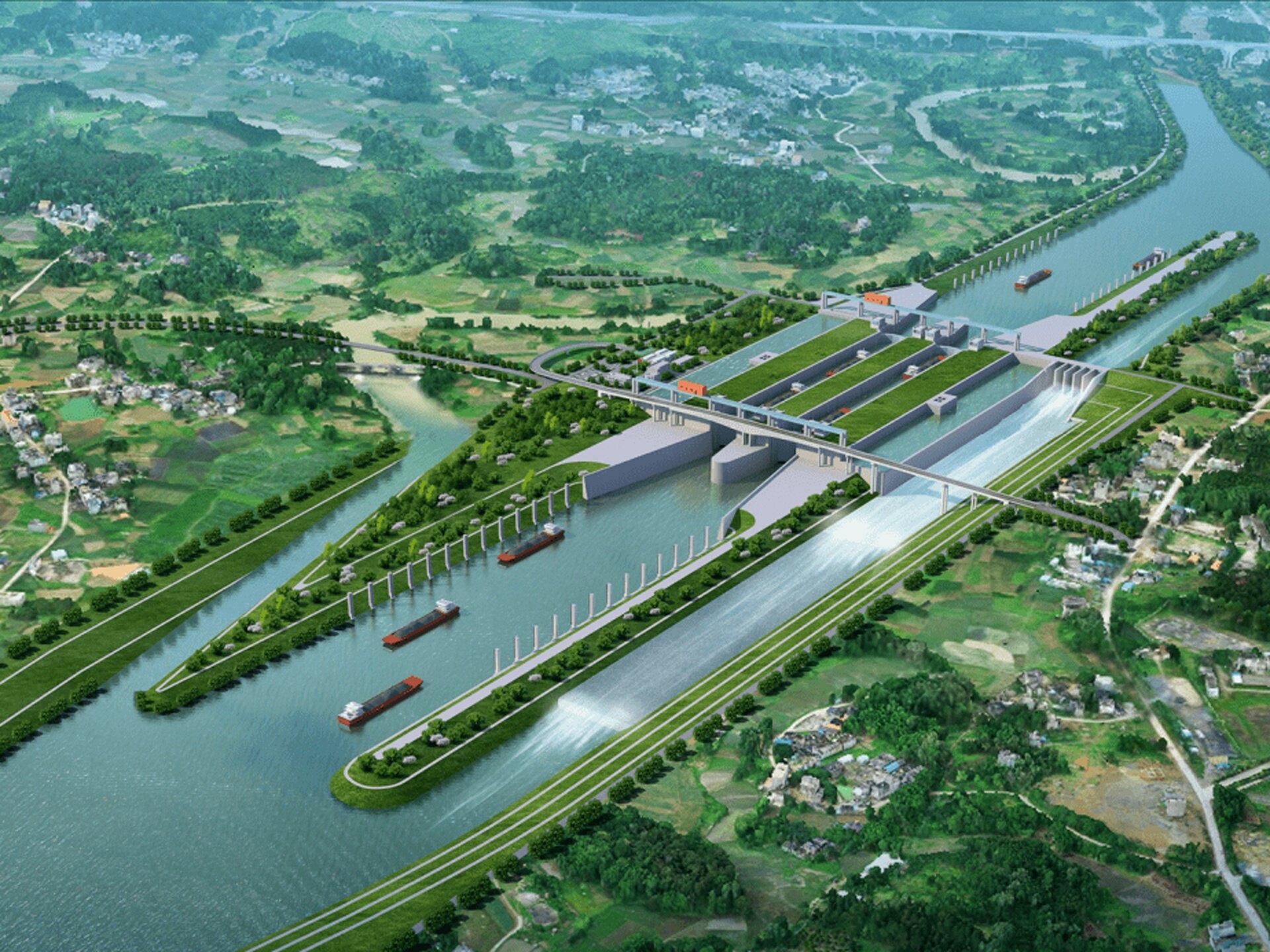
A canal saves more than just the voyage
After the navigation of the canal, the inland rivers in Guangxi are directly connected to the Beibu Gulf, without the need to detour around Guangzhou to go out to sea. The sea voyage has been shortened by more than 560 kilometers, and the annual transportation cost has exceeded 5.2 billion yuan. 5000 ton ships can reach Qinzhou Port directly from Nanning, and minerals, grains and chemicals in the western hinterland do not need to bypass the the Pearl River. Costs have decreased, time has been saved, and the competitiveness of western enterprises has directly risen to a higher level. This is not icing on the cake, it is a timely help - logistics costs in the western region have long been 20% to 30% higher than those along the coast, and this canal is meant to smooth out the price difference.
Thoroughly rewriting the channel pattern
There are currently three main channels for the Western Land Sea New Corridor: Chongqing goes out to sea via Guiyang and Nanning, Chongqing goes out to sea via Huaihua and Liuzhou, and Chengdu goes out to sea via Luzhou and Baise. After the opening of the Pinglu Canal, the three railway channels will seamlessly connect with inland waterway transportation, truly forming a dual wheel drive system of railway sea intermodal transportation and river sea intermodal transportation. By 2025, the freight volume of the canal has exceeded 100 million tons, and it is expected to add more than 30 million tons of water volume after the canal is opened. More importantly, it is connected to the Silk Road Economic Belt to the north, the 21st Century Maritime Silk Road to the south, and the Yangtze River Economic Belt, which is equivalent to opening up a strategic artery that runs north-south and connects land and sea in the hinterland of western China.
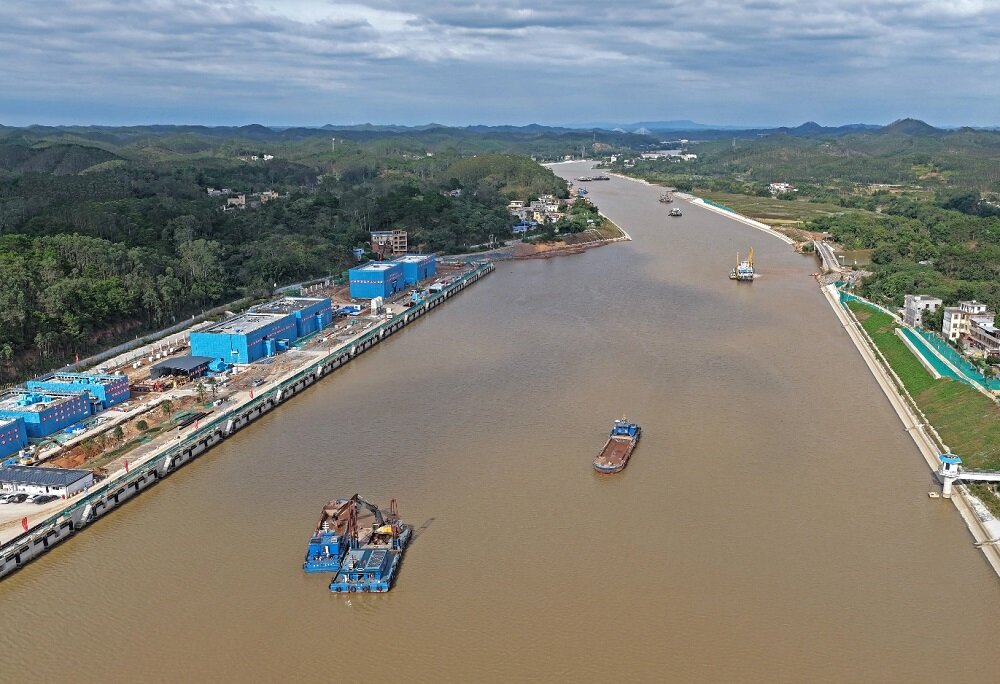
A new pivot for China ASEAN economic and trade relations
The value of the Pinglu Canal ultimately lies on a larger chessboard. ASEAN has been China's largest trading partner for five consecutive years, with bilateral trade exceeding 6.5 trillion yuan in 2024. Beibu Gulf Port is the closest seaport to ASEAN. After the canal is opened, goods from the southwest and northwest can be transported directly to Southeast Asia through river sea intermodal transportation, increasing logistics efficiency by more than 40%. This canal is a deep-water area for the Western Development and a hard support for the China ASEAN Free Trade Area 3.0 version.Editor/Cheng Liting
Comment



 Praise
 Collect
 Comment

 Share
Share


Write something~