 Search


- China's aviation hub continues to upgrade, empowering high-quality economic development
- Improve the aviation network, enhance the hub level, and inject lasting momentum into the construction of the aerial Silk Road

The 2026 government work report clearly proposed that we should jointly build the the Belt and Road with high quality, strengthen the strategic docking with the co building country, and solidly promote hard, soft and heart connectivity. Under this policy guidance, the aerial Silk Road composed of a network of air routes is accelerating its formation.
According to CAAC data, in the summer and autumn of 2026, the number of flights of Chinese airlines accounted for 74.7% of the regular routes between China and the countries jointly building the the Belt and Road, with a year-on-year growth of 31.4%, becoming the growth highlight of the international aviation market. The report on the construction and development of the Air Silk Road, released in August 2025, also indicates that China has initially built air corridors covering the six major economic corridors. All this clearly shows that under the guidance of the the Belt and Road Initiative, China's hub airports are upgrading from a traditional transportation node to a key strategic fulcrum to drive inland opening, industrial upgrading and regional coordination, and become an important force to serve the overall situation of the country's opening up and help high-quality regional economic development.

Inland leaps to the forefront of opening up
Airports are key hubs connecting inland provinces to the world, while air routes are an important support for enhancing regional openness. In the past, the remote geographical location put inland provinces in China at a disadvantage in foreign trade, and inconvenient transportation became a bottleneck restricting regional development. However, with the continuous progress of the the Belt and Road Initiative and the construction of the Air Silk Road, under the dual impetus of policy guidance and market demand, the inland airports are like anchor points, closely connecting the hinterland cities with the global market, making the once inland hinterland a frontier gateway for opening up to the outside world.
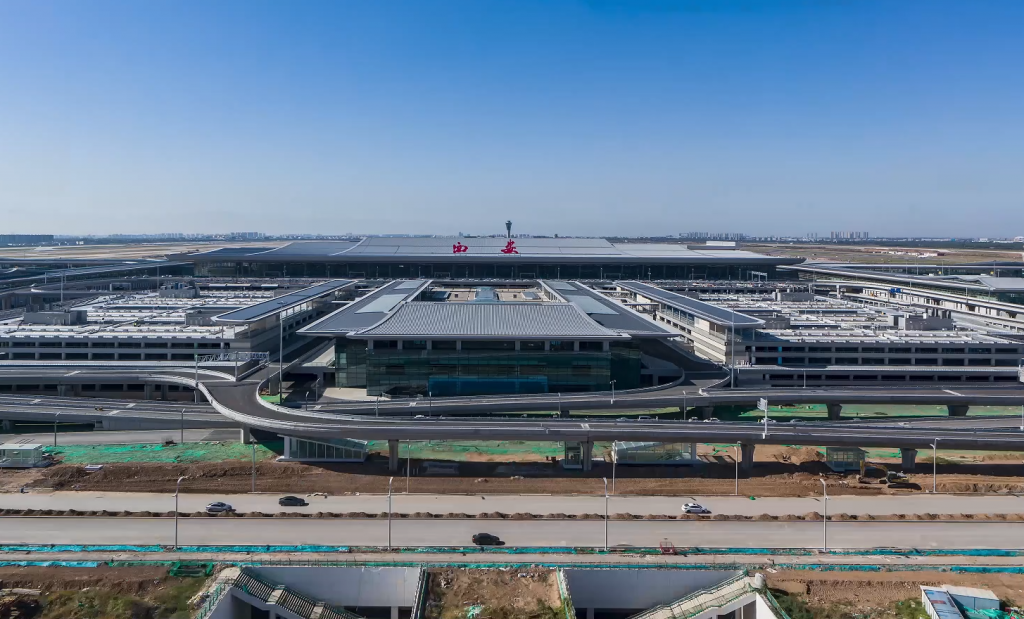
As the starting point of the ancient Silk Road, Xi'an has continuously built an aviation network that runs smoothly from east to west and from north to south, breaking the limitations of geographical location on open development. Looking back 10 years ago, in 2016, although Xi'an Xianyang International Airport was already a regional core hub, its passenger throughput was only about 30 million people, and international routes were mainly concentrated in Japan, South Korea, and Southeast Asia, with almost no direct flights to Central Asia, West Asia, and Central and Eastern Europe. Now, with the opening of Terminal 5, the airport's annual support capacity has increased to 83 million passengers, and passenger throughput has achieved a leapfrog growth. As of May 2026, Xi'an has been connected to eight cities in five Central Asian countries. Since April, the passenger volume on routes from Xi'an to Tashkent, Dushanbe, and other destinations has significantly increased, demonstrating its hub value. Xi'an Airport has identified its position as the main channel for opening up to the west, with differentiated advantages in terms of coverage of Central Asian air routes and flight density. It is transforming from a transportation node to an economic power source, driving the development of local industries such as exhibitions and tourism, and transforming traffic dividends into industrial dividends. At the same time, airports in Urumqi, Shanxi, Ningxia and other places have also increased the number of westbound flights, creating a blue sky gateway open to the west.
Adding new vitality to the aviation economy
The expansion of the Air Silk Road not only brings passenger flow, but also activates the potential of air cargo transportation, providing favorable conditions for the development of the aviation industry cluster. As an important starting point of the Maritime Silk Road, Guangzhou Baiyun International Airport, relying on the advantage of connecting nearly 70 national destinations along the the Belt and Road, has driven the cross-border e-commerce, bonded logistics and other industries to gather in the airport area. Around it, Asia's leading cross-border e-commerce distribution center has been built, attracting the entry of SHEIN, Temu and other leading platforms. The airport has also upgraded from a single transportation node to an engine for urban global resource allocation, while providing support for the Guangdong Hong Kong Macao Greater Bay Area to connect with global resources.
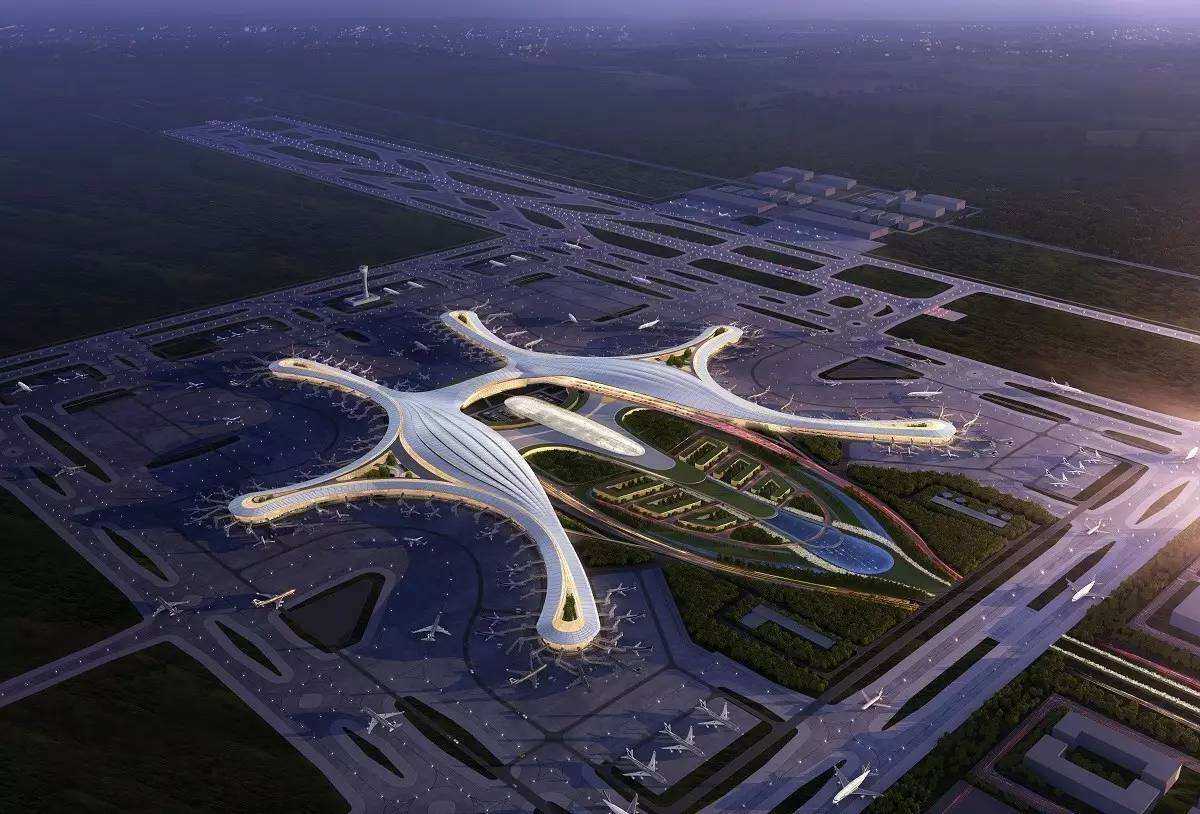
In addition to Guangzhou, hub airports in Chengdu and Shanghai are also accelerating their transformation. With the advantage of dual airport synergy, Chengdu has encrypted its routes to Central Asia and Southeast Asia. Airbus' full lifecycle service center has achieved fully quantified operation, and the first airport type comprehensive bonded zone has been officially closed and put into operation, focusing on characteristic industries such as cross-border e-commerce. Shanghai Pudong International Airport relies on its advantage of connecting destinations in Central Asia, Europe, and other regions to serve the local hard technology industry. Its comprehensive bonded zone has the country's first fully intelligent semiconductor global distribution center, which ensures efficient turnover of high-end components in the global supply chain by improving cold chain logistics facilities and intelligent cargo station management. These changes signify that hub airports have been upgraded from geographical centers to value centers, becoming an industrial driving force for regional economic development.
The hub energy level continues to improve
The expansion of the airline network and the upgrading of hub functions have put forward higher requirements for the operational support, service efficiency, and safety resilience of airports. China's hub airports are building a solid foundation for air travel through hardware upgrades, process optimization, intelligent empowerment, and multimodal transportation collaboration. As an air gateway open to the north, Harbin Taiping International Airport has built a Northeast Asia route network covering the Russian Far East, Japan, South Korea, and Southeast Asia, with the highest number of routes to the Russian Far East in the country, forming a fan-shaped radiation pattern. Faced with challenges such as extreme cold and frequent snowfall in winter, Harbin Airport has ensured the stable and smooth operation of the northbound open passage through the five early mechanisms of early warning, early consultation, early decision-making, early disposal, and early notification, as well as measures such as the intelligent snow and ice removal system and the four party joint office. In recent years, the national core hub airports have upgraded their international services in response to the cross-border needs of the the Belt and Road. Zhengzhou Airport has launched a district port direct loading mode, significantly improving logistics efficiency; Kunming Airport implements 24-hour direct transit without border inspection, becoming an efficient transit gateway for ASEAN; Xiamen and Qingdao airports have launched measures such as multilingual services and visa free transit to enhance passengers' travel experience. The two major airports of Beijing Capital and Daxing continue to strengthen their hub functions, launching electronic boarding pass clearance, multilingual inquiry and other services, covering major cities in Europe, Africa and other regions with high frequency, supporting domestic and international dual circulation. Key words: the Belt and Road, aviation hub, the Silk Road in the air
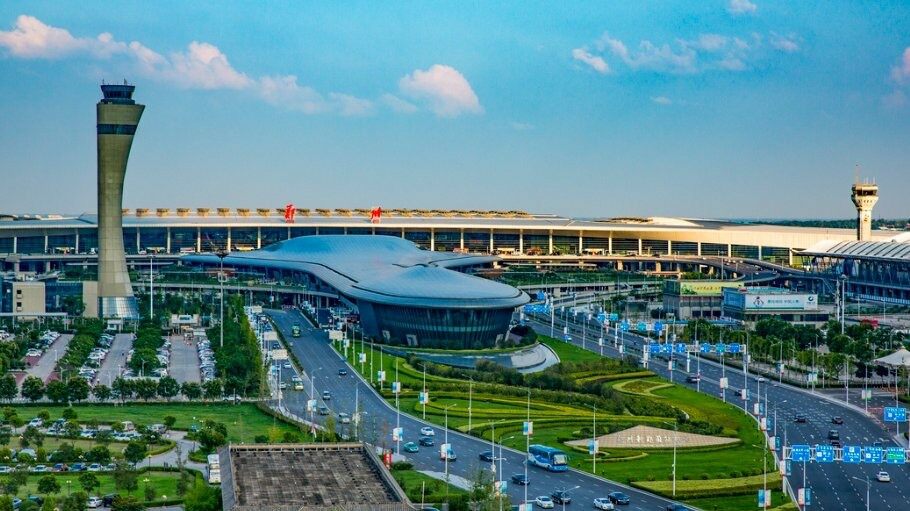
The aerial Silk Road spans mountains and seas, and aviation hubs connect the world. In the process of high-quality joint construction of the the Belt and Road, China's aviation hub, taking the route network as the thread, industrial development as the basis, and operational resilience as the guarantee, continues to expand the opening of air routes to the outside world, activate the momentum of regional development, inject strong power into promoting the quality and efficiency of the air Silk Road, serving the overall situation of the country's opening up, and enabling high-quality economic development, and steadily move towards a further future.Editor/Gong Ziwei
Comment





 Praise
 Collect
 Comment

 Share
Share


Write something~