 Search


- China's surge in component imports drives energy structure transformation
- The coordinated development of photovoltaic energy storage is accelerating, and the Philippines has become the most dynamic energy investment hotspot in Southeast Asia
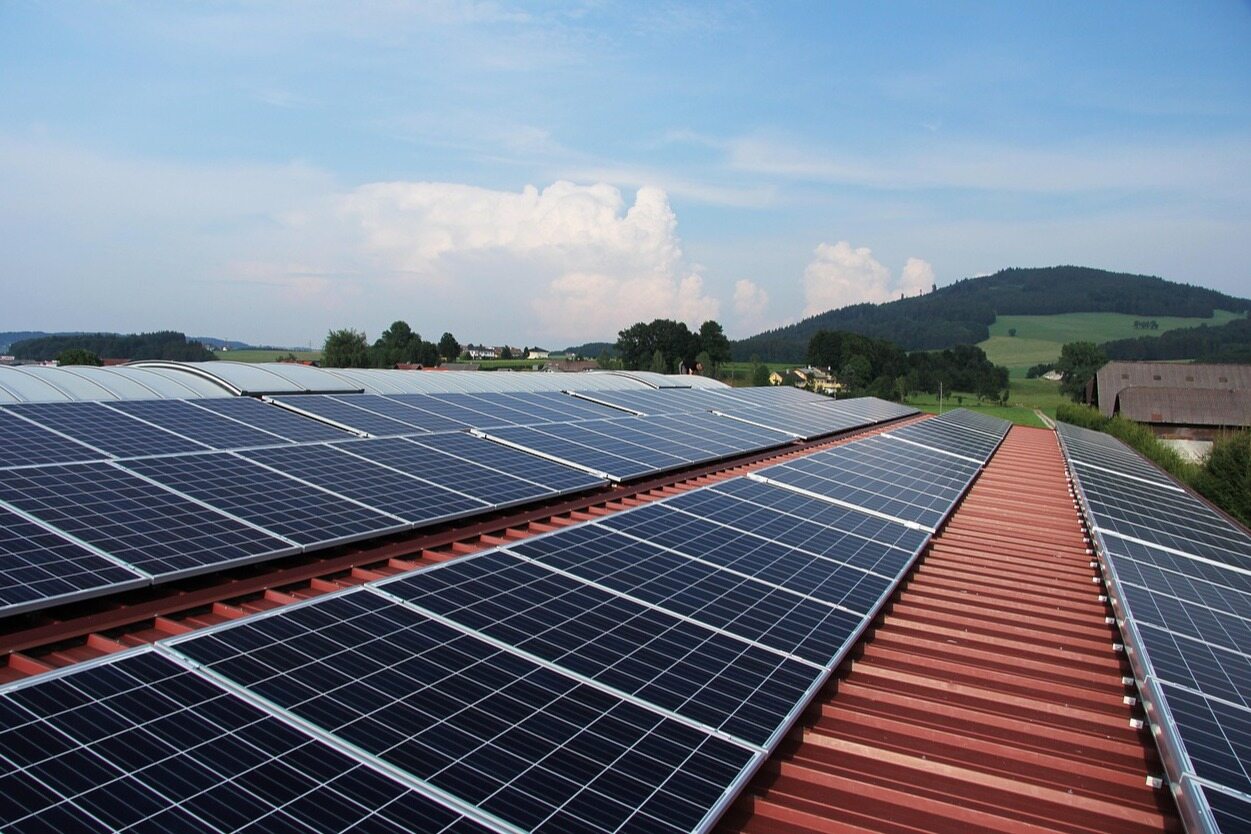
As the pace of energy transformation in Southeast Asia continues to accelerate, the demand for electricity from private and corporate sectors in the Philippines continues to rise. Distributed photovoltaics have quietly entered thousands of households and industrial parks, ushering in a new development trend in the local new energy market.
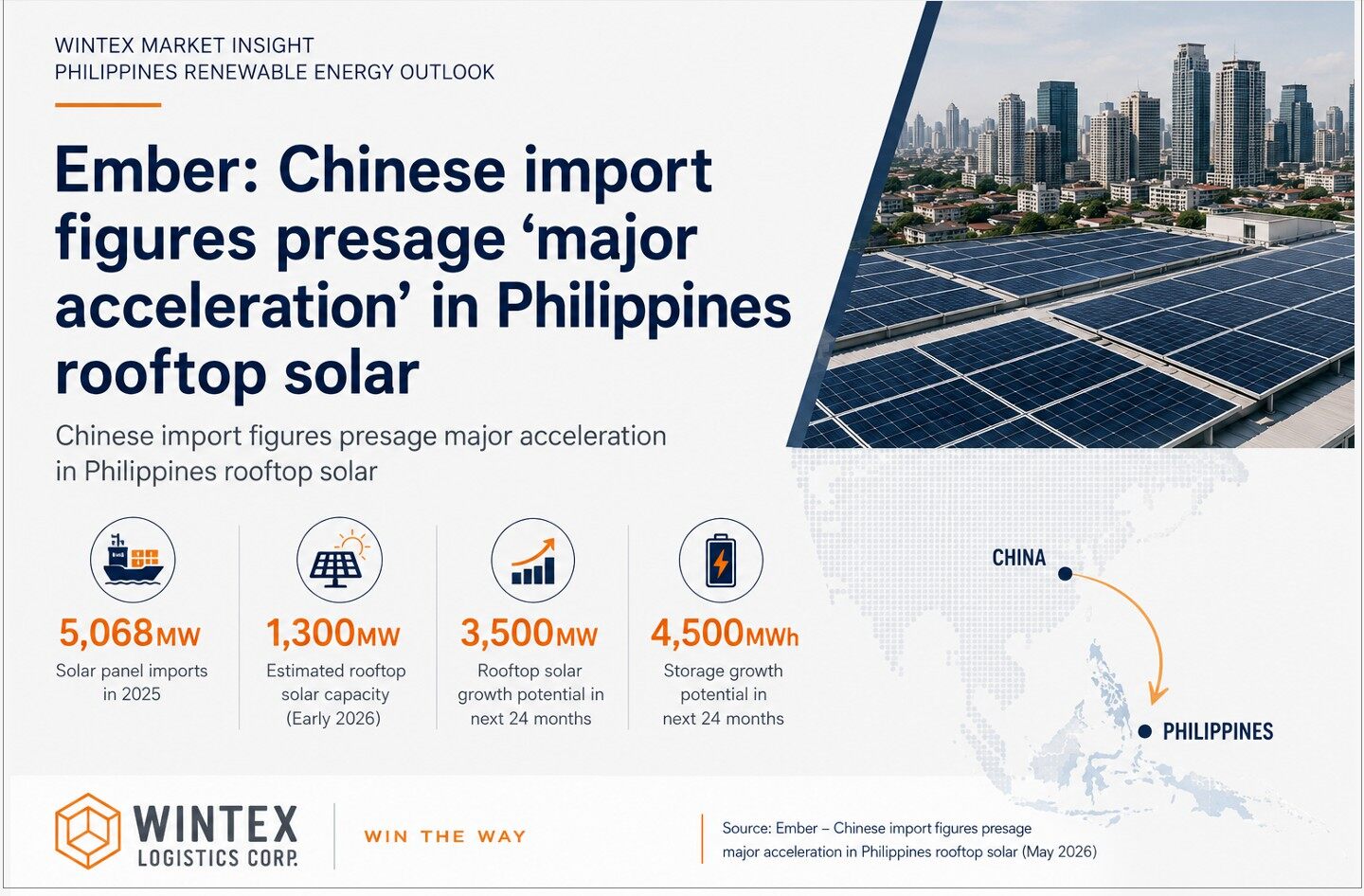
Ember, an international energy think tank, recently released a special research report predicting that the Philippine rooftop photovoltaic market is about to enter a period of rapid development. The increasing import volume of photovoltaic modules in China, the continuous rise in local electricity prices, and the increasing demand for national energy security have jointly driven the Philippines' new energy industry into a high-speed growth cycle. This market dividend covers new energy developers, equipment manufacturing enterprises, investment institutions, and logistics service providers, which not only drives the expansion of the rooftop photovoltaic track, but also promotes the acceleration and upgrading of the entire local new energy industry chain.
The import of photovoltaics has significantly increased
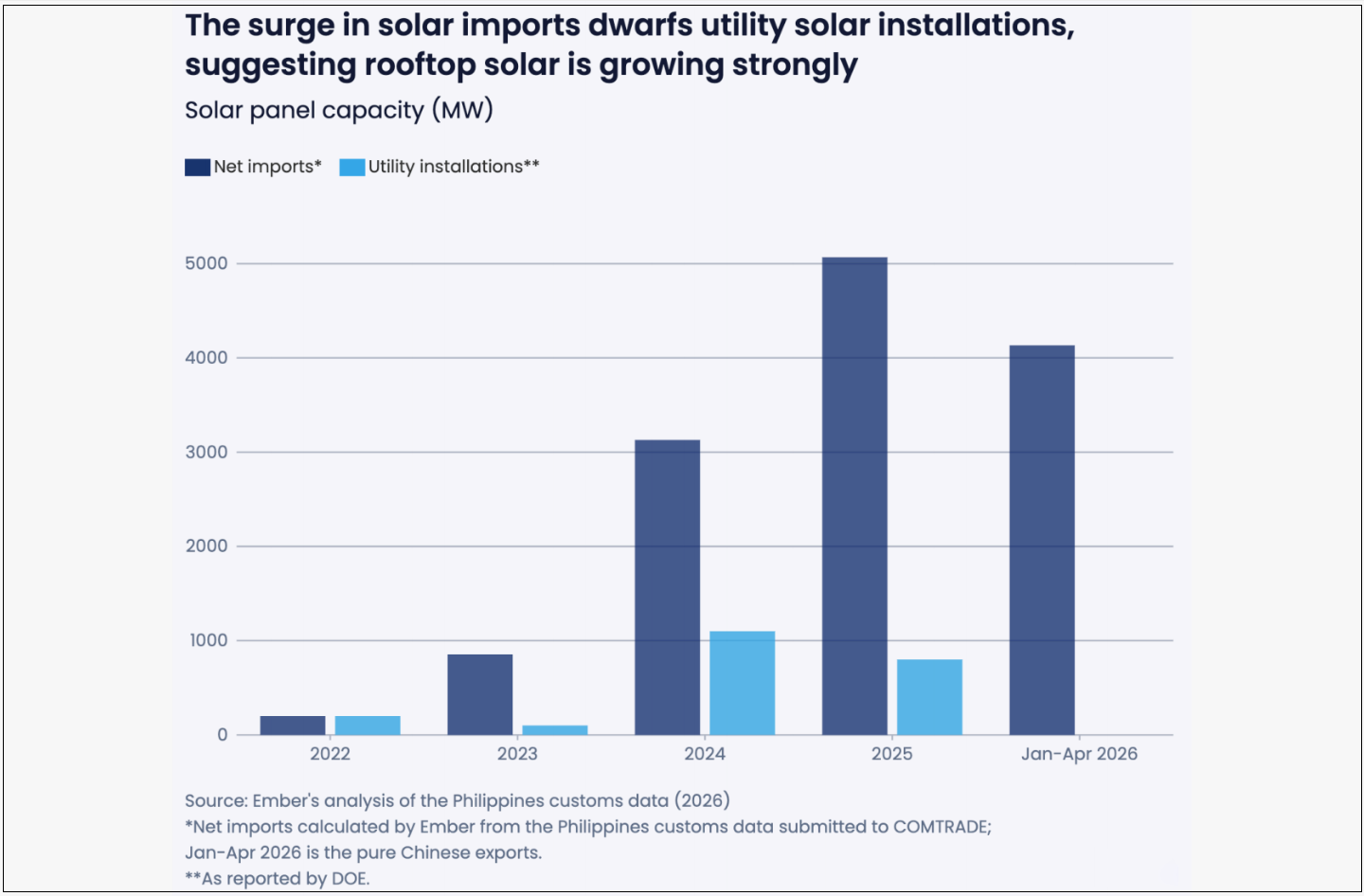
According to think tank data, the net import volume of photovoltaic modules in the Philippines will reach 5068 megawatts by 2025, while the installed capacity of newly built large-scale centralized photovoltaic power plants in China that year was only 800 megawatts, and the scale of imported modules exceeded that of ground-based photovoltaic projects by more than six times. A large number of imported photovoltaic modules have not been invested in the construction of large-scale power stations, but have flowed towards residential rooftop photovoltaics, industrial and commercial distributed photovoltaics, energy storage supporting projects, and ongoing photovoltaic projects that have not yet been connected to the grid.
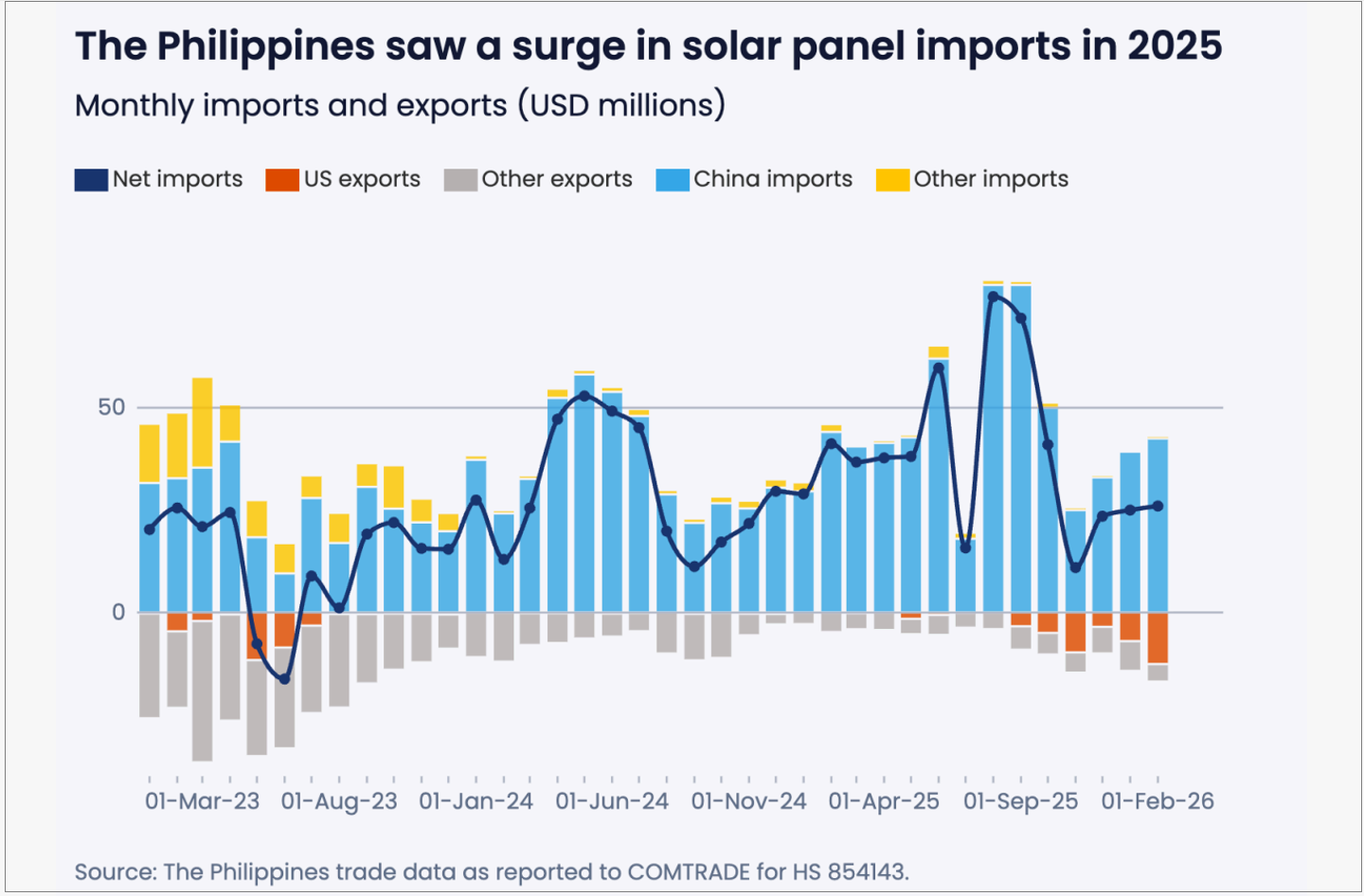
In 2026, this upward trend will further intensify, with the total amount of photovoltaic modules exported from China to the Philippines exceeding 3000 megawatts in the first four months. At present, the Philippines firmly occupies the core export market for Chinese photovoltaic modules overseas, ranking second only to the Netherlands, and its demand scale exceeds that of several traditional photovoltaic import countries. The think tank pointed out that the continuous surge in imports of photovoltaic modules from China is a core forward-looking signal that the Philippine rooftop photovoltaic market is about to explode.
The installation scale is growing rapidly
Think tanks and professional organizations jointly retrieved satellite monitoring data to comprehensively understand the real development trend of rooftop photovoltaics in the Philippines. As of early 2025, the cumulative installed capacity of local rooftop photovoltaics is 721 megawatts, including 371 megawatts for residential photovoltaics, 214 megawatts for small and medium-sized commercial photovoltaics, and 136 megawatts for large commercial rooftop photovoltaics.
According to the calculation of power generation data from local power operation platforms, from April 2025 to April 2026, the Philippines will add 600 megawatts of rooftop photovoltaic installed capacity, with a total installed capacity approaching 1300 megawatts, a year-on-year increase of nearly 80%. For the Philippines, which has long relied on traditional fossil fuels, the growth rate is significant, and the local energy structure is steadily shifting from centralized power supply to distributed clean energy supply.
Multiple favorable factors empower the industry
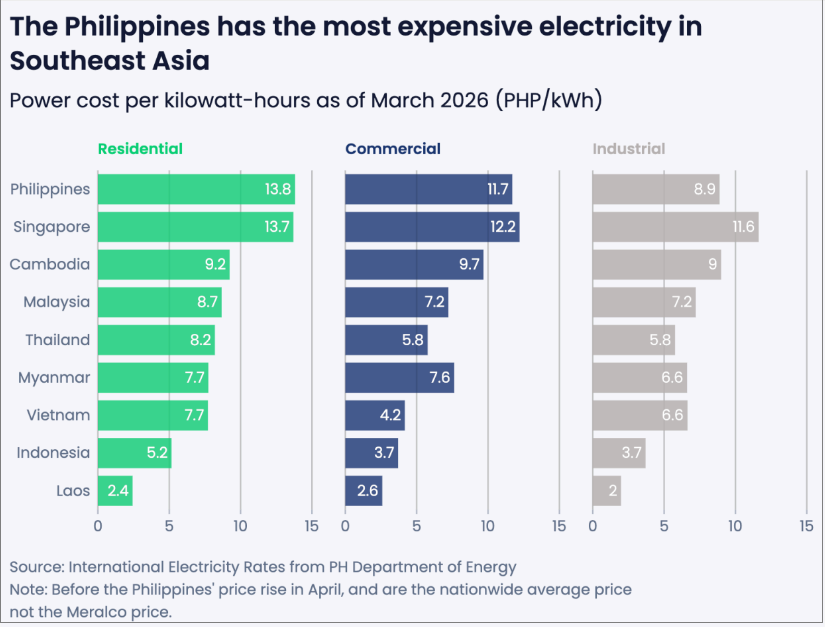
The high electricity prices are the core reason that drives the popularization of new energy in the local area. In March 2026, the average electricity price for Philippine residents was at a high level in Southeast Asia. In the past year, mainstream power supply companies in the area have raised their electricity prices comprehensively, with residential, commercial, and industrial electricity prices increasing by 17%, 18%, and 14% respectively. The high cost of electricity has increased the burden on various business entities. At the same time, the payback period of photovoltaic projects continues to shorten, and the investment return period of residential, commercial, and industrial photovoltaic projects has been compressed to around 3 years. Industry rules indicate that after the payback period falls into the 2-3 year range, the photovoltaic market will experience large-scale expansion, and the Philippines' rooftop photovoltaics have mature market development conditions.
The local new energy production capacity has also achieved a breakthrough from zero to one. Chinese enterprises have built a gigawatt level photovoltaic module factory in the Philippines, and are planning to expand production capacity of the same scale. Many places have also successively landed photovoltaic manufacturing investment projects. The continuous increase in the import value of photovoltaic cells marks the Philippines' gradual transformation from a single new energy consumer country to an integrated new energy production and sales country. The improvement of local supply chains will also further reduce project construction costs.
The warming of the photovoltaic industry will also drive the synchronous development of the energy storage industry. Industry insiders predict that in the next two years, the Philippines will increase the scale of rooftop photovoltaic installations and supporting energy storage installations, becoming the most active new energy investment hotspot in Southeast Asia. The coordinated development of photovoltaics, wind power, and energy storage will become the mainstream direction of local energy transformation. Keywords:Foreign construction news network,Southeast Asia engineering information network,Overseas engineering construction,Foreign engineering construction news
Currently, the wind power, photovoltaic, and energy storage industries in the Philippines are working together to accelerate the entire new energy industry chain. WINTEX has a deep layout of logistics services for local new energy projects, undertaking logistics and transportation services for multiple local wind power projects. With the continuous increase in the import volume of new energy equipment, the value of professional engineering logistics is becoming increasingly prominent. The Philippines' new energy track presents significant opportunities and is currently a core market with great investment and cooperation value in Southeast Asia.Editor/Gong Ziwei
Comment


 Praise
 Collect
 Comment

 Share
Share


Write something~