 Search


- This marks that the policy dividend has entered the stage of actual implementation
In the early morning of Mombasa Port, the sound of sirens shattered the tranquility of the Indian Ocean coast. A freight train loaded with containers slowly entered the port area, carrying fresh avocados, coffee beans, and tea from inland Kenya. These goods, which used to require a long journey to reach the port, are now accelerating towards China through steel tracks. This is not just an ordinary transportation, but also a microcosm of the new changes in China Africa trade.
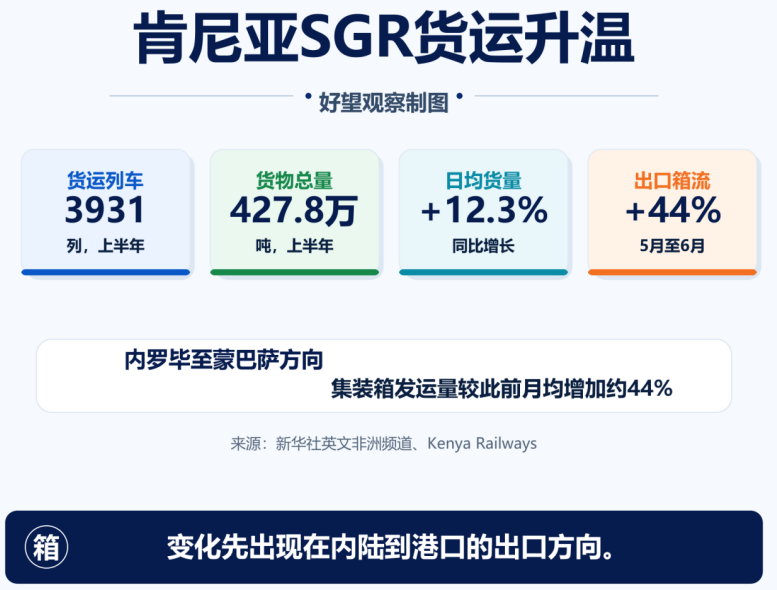
The latest statistics from Kenya Railways reveal this change: in the first half of 2026, a total of 3931 standard gauge railway freight trains, known as Madaraka Express, were operated, transporting 4.278 million tons of goods, with a year-on-year increase of 12.3% in daily freight volume. Converted, on average, each train carries about 1088 tons of goods, with a daily average transportation volume of 23600 tons. This set of numbers means that the railway trunk line connecting Mombasa Port with Nairobi and even Naivasha has become the absolute mainstay of logistics in the hinterland of East Africa. In May and June, a more significant change quietly occurred: after China announced zero tariff on Kenya, container shipping volume from Nairobi to Mombasa surged by 44% compared to the previous monthly average level.
Box flow confirms the effectiveness of policies
This 44% increase is highly directional. The Nairobi Mombasa route is the main channel for inland cargo to gather at ports in Kenya, and the increase in container volume directly reflects the strengthening of export momentum. Although not all of these containers were sent to China, the changes in their flow clearly indicate that the market has begun to respond to the zero tariff policy.
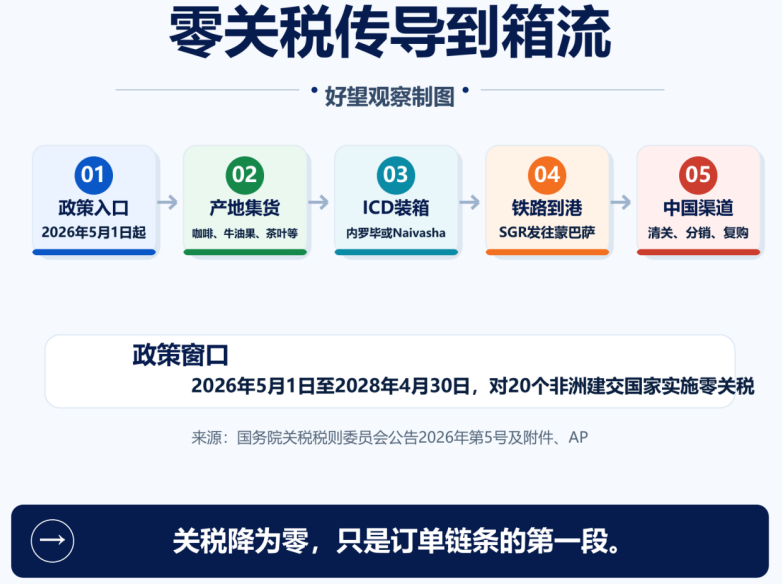
According to the announcement of the Tariff Commission of the State Council of China, from May 1, 2026 to April 30, 2028, China will implement zero tariff treatment for 20 African countries including Kenya. This measure covered economies that had not been treated as least developed countries before, making almost all African countries except Eswatini enter the era of zero tariff on their exports to China.
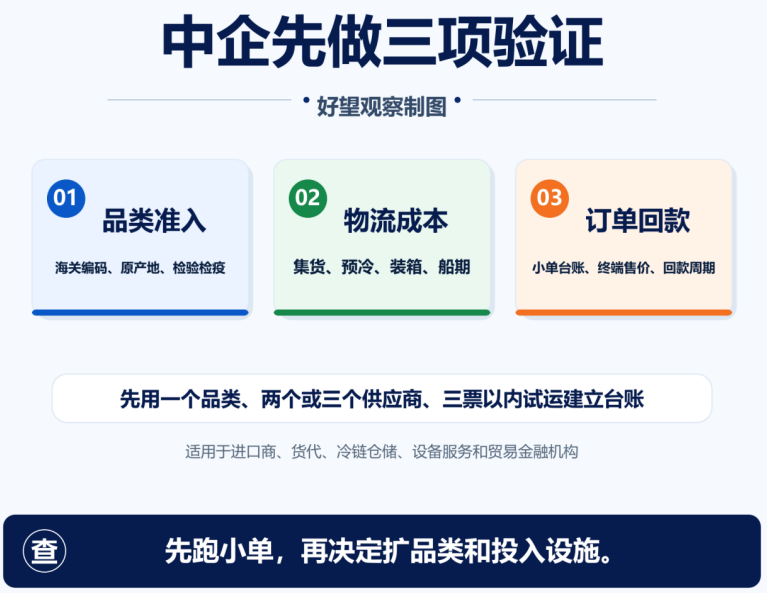
However, zero tariffs only open the entrance to the market, the real test lies in whether the access chain is smooth. For Kenyan agricultural and food products, customs code classification, origin rule certification, strict inspection and quarantine standards, pesticide residue testing, and cold chain transportation requirements are all practical barriers that stand in front of orders. The train running on SGR is verifying the feasibility of the entire chain from origin cargo collection, graded pre cooling, container railway transportation to port booking.
Railway competes for port share
For Kenya Railways, this wave of export growth is not just business, but also a strategic opportunity. According to the plan of Kenya Railways, the share of railway transportation in the throughput of Mombasa Port has risen from 4% in 2017 to 26% in 2022, and is planned to reach 42% by 2027.
This means that SGR's future focus will shift from passenger transportation to freight transportation, especially in order to grab more goods from traditional road transportation. As the largest maritime gateway in East Africa, Mombasa Port has an annual cargo throughput of 45.45 million tons and a container handling capacity of 2.1 million TEUs, connecting over 40 shipping companies and more than 80 ports worldwide. The stable growth of export container volume will help improve the situation of railways relying too much on imported goods in the past, making inland cargo collection, yard management, and railway scheduling more predictable.
At the same time, Kenya is also advancing the extension of the railway line from Naivasha to Kisumu and Malaba. Once connected with the Uganda section, the hinterland of Mombasa Port will further extend into the interior of East Africa, bringing more sources of mineral and processed products, while also increasing demand for warehousing, cold chain, and cross-border settlement services.
Chinese enterprises test the waters with small orders first
Faced with this seemingly hot market trend, Chinese enterprises need to remain calm and pragmatic. The World Bank reminds in the latest Kenya country update that fiscal consolidation and debt pressure remain macro constraints on the country's development, and the progress of infrastructure construction ultimately depends on the budget and financing situation.
Therefore, zero tariffs do not equal an automatically growing pool of orders. For companies intending to layout, the top priority is to validate their business logic with small batch orders. It is recommended to select a specific category, lock in two or three stable suppliers, and through trial runs of no more than three tickets, record in detail the entire process data from purchase price, grading loss, packing rate, inland transportation, railway costs, port demurrage, sea freight, customs clearance costs to terminal selling price.
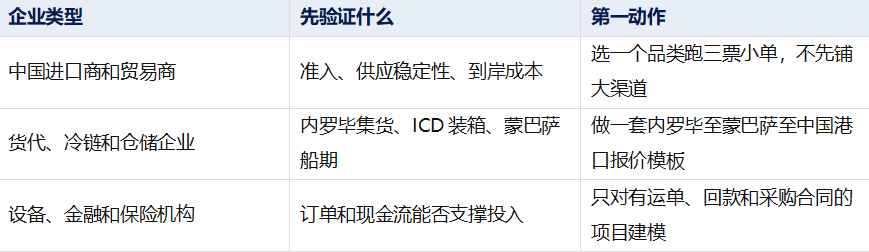
Whether it is importers, logistics companies, or equipment service providers, they should prioritize filling the gaps: importers need to deeply cultivate product access and Chinese sales channels; Logistics companies need to strengthen the linkage between inland cargo collection, pre cooling facilities, and railway booking; Equipment manufacturers should pay attention to small cold storage facilities, packaging equipment, and trade finance support.
Only by clarifying every cost and responsibility from Kenyan fields to Chinese shelves, can the policy dividend of zero tariffs truly be transformed into a profit growth point for enterprises.Editor/Yang Meiling
Comment


 Praise
 Collect
 Comment

 Share
Share


Write something~