 Search


- The Mukaab will create immersive future cities to enhance Saudi Arabia's global influence
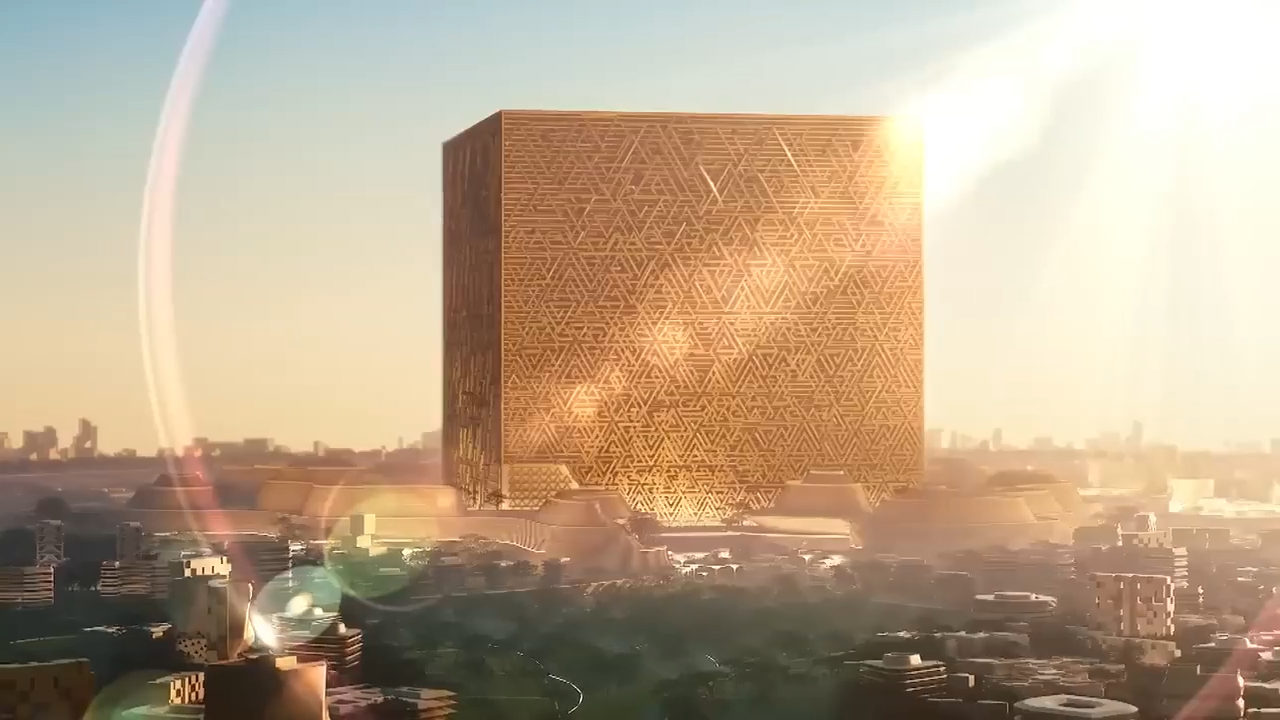
In the northwest of Riyadh, the capital of Saudi Arabia, an astonishingly large cube shaped building is quietly changing the contours of this desert land. This used to be an open area waiting to be developed, but now it has become a future urban testing ground that attracts global attention due to the emergence of The Mukaab, the most core landmark in the New Murabba master plan. This giant building with a total construction area of over 2.6 million square meters is not only the new skyline peak of Riyadh, but also carries Saudi Arabia's national ambition to transform from an oil economy to knowledge innovation. Entering the interior concept of this building, you will find that it is far more than just a building - it is a micro city that integrates reality and the digital world, an ambitious work that compresses commerce, culture, housing, and technology into a cube.

Inheriting the Naxidi style technology landmark
The design language of The Mukaab is rooted in the Najdi architectural tradition of Saudi Arabia, with exterior lines and textures paying tribute to history, but what truly brings it to life is the digital nervous system that envelops it. The project plans to deploy holographic imaging system and immersive display technology, combined with intelligent adaptive lighting and high-quality acoustic design, to enable real-time switching of light, shadow, and sound inside the building according to the scene. Public spaces are no longer just corridors and lobbies, but mobile digital art galleries where the boundaries between reality and virtuality are intentionally blurred. This design concept is not simply about showing off skills, but an attempt to answer a question: when the building itself becomes a platform, how many lifestyles can it provide containers for?
The future urban area of the 15 minute living circle
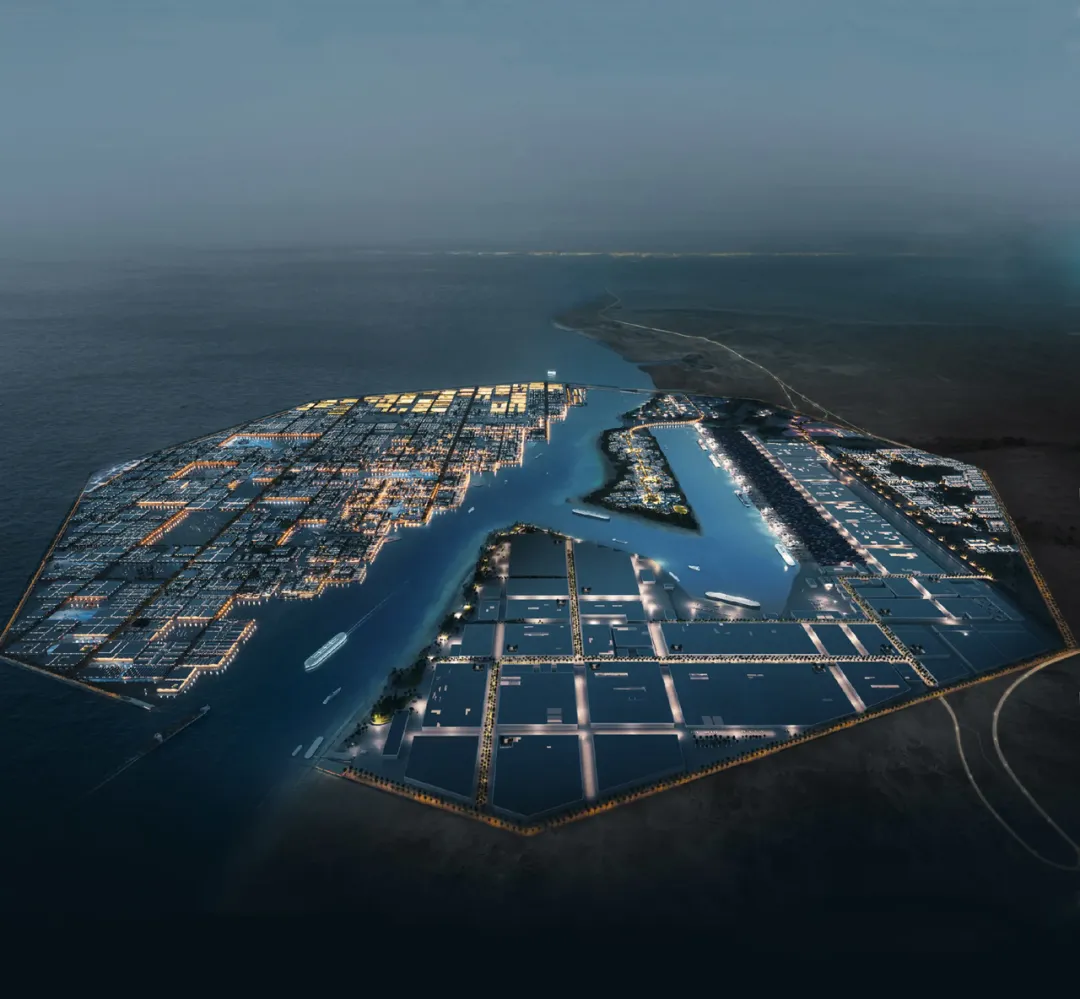
The Mukaab is not an isolated landmark, it is embedded in a future urban area planned with the concept of a 15 minute walking circle. Residents can reach their workplaces, shopping centers, cultural venues, and green parks within a fifteen minute walk from their doorstep. Large areas of green open spaces are interspersed between building clusters, with smart transportation systems and AI city management platforms responsible for scheduling pedestrian flow, energy consumption, and security, while sustainable infrastructure reduces carbon emissions from the ground up. This compact and self-sufficient urban model is challenging the old paradigm of functional zoning in traditional urban planning and providing a reference sample for urban development in hot and arid regions around the world. Keywords: Middle East News Network, Infrastructure, Urban Infrastructure
From real estate development to sovereign innovation platform
Saudi Arabia's positioning of The Mukaab has long surpassed that of a single building or a group of commercial complexes. Under Saudi Arabia's 2030 Vision framework, every newly completed mega project is tasked with promoting economic diversification. The Mukaab is clearly seen as a platform for transforming real estate into knowledge production, technological innovation, and sovereign capabilities - every square meter of built-up space is accelerating the growth of Saudi Arabia's non oil industry. In the future, this cube will become a new urban gateway that connects reality and digital experiences, further enhancing Saudi Arabia's international discourse power in global urban construction, cultural tourism, and future lifestyles. It is not just building a building, but laying the foundation for an unnamed way of life.Editor/Gao Xue
Comment

 Praise
 Collect
 Comment

 Share
Share


Write something~