 Search


- The compliance threshold for multilateral projects is high, and complete materials are a prerequisite for going global

The hot winds of the Sahara swept over the conference tables in Abuja, and a blue fiber optic network covering the whole country was slowly spreading from the blueprint to the red soil. When digital islands are about to be connected by optical cables, the communication backbone of this continent is waiting for new builders to take action.

On August 4, 2026, the Nigerian Minister of Communications reported on the progress of national level fiber optic projects in Abuja. The Nepalese side has completed the preliminary preparations for the 90000 kilometer fiber optic project and is expected to commence laying within a few weeks. The project covers all state and local governments across the country, with a total planned backbone network mileage of 120000 to 125000 kilometers. The World Bank project has come into effect, the advisory team is in place, and private investors have entered the selection stage. The first batch of bidding sections and suppliers have not yet been announced to the public, and business opportunities will be released in stages.
The project takes effect and is awaiting substantial commencement
The World Bank has confirmed that the project will take effect on April 27th, with all executing agencies and various consultants in place, and the registration of the project company is nearing completion. The $500 million financing has not been withdrawn yet, and the loan needs to meet multiple prerequisites such as company establishment, contract procurement, environmental and social security. Currently, only preliminary preparations have been completed, and the physical installation is still awaiting the official release of the contract.
Multi fund government enterprise joint venture
The comprehensive financing of the project is about 2 billion US dollars, jointly funded by the World Bank, the African Development Bank, the European Bank for Reconstruction and Development, and private capital, with supporting technical assistance grants from the European Union. The government holds a 25% -49% stake in the project company, while private capital accounts for 51% -75%, responsible for network construction and wholesale bandwidth; The operator is responsible for terminal access. Chinese enterprises can participate through four paths: equity, engineering, equipment supply, and operation and maintenance.
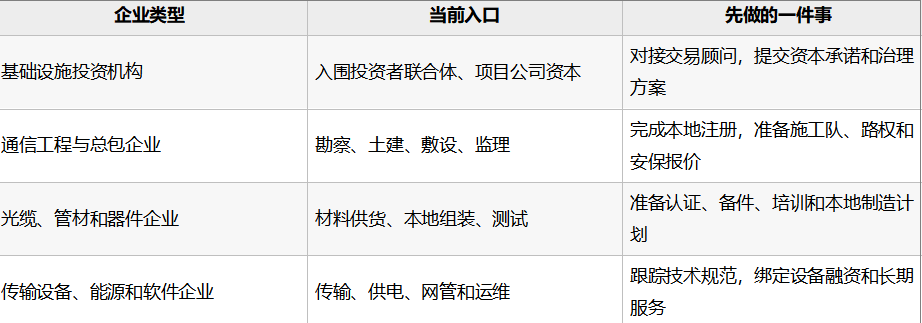
Batch bidding compliance entry into the bureau
The project will release multiple types of contracts, including survey, civil engineering, optical cable equipment, and operation and maintenance, in batches according to the process. Partial line designs have undergone pre qualification review, while large-scale procurement packages have not yet been made public. Investors who have not been selected for the first round can jointly participate in the consortium. The project requires the implementation of local manufacturing and personnel training, and the engineering quotation needs to include costs such as road rights and security. The project adopts an open access mode, with the backbone network constructed by the project company and the last kilometer invested by the operator. After completion, the broadband coverage rate will increase from 8.4% to 50%, with nearly 59100 public facilities connected to the internet. Equipment vendors can expand their value-added services such as operation and maintenance. Keywords: Nigeria fiber optic, digital infrastructure, multilateral financing
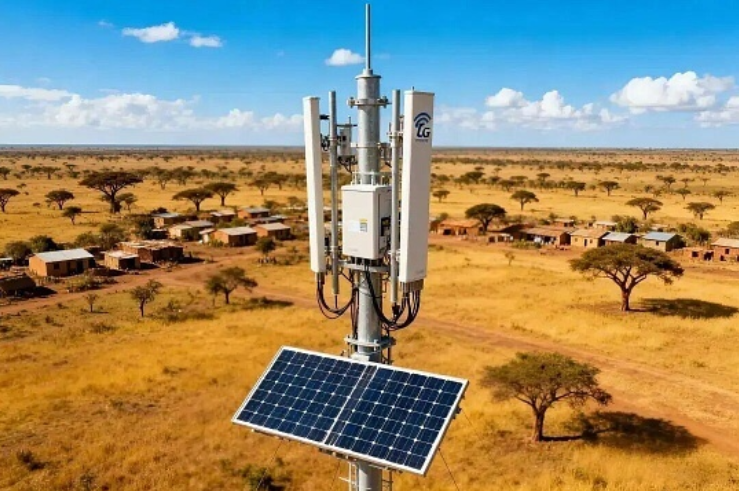
The pace of the project can be determined by the list of project companies, the first batch of routes, the award of the contract, and the first withdrawal from the World Bank. The risk level of this project is relatively high, and the enterprise needs to prepare compliance documents such as bank procurement, anti-corruption, environmental and social management. Chinese enterprises need to make three preparations: find the right business docking port; Output financing construction operation and maintenance integrated solution; Complete relevant materials such as local registration, due diligence, spare parts security, exchange rate, etc. The progress of the first batch of procurement packages will determine the construction pace. Enterprises should complete the joint venture and localization preparations in advance to strive for the first batch of orders.Editor/Gong Ziwei
Comment






 Praise
 Collect
 Comment

 Share
Share


Write something~