 Search


- The world's first three in one heavy ion research device has been put into use, and China has solved world-class technical problems
Recently, there has been significant good news from the top of the mountains in Huizhou. The process acceptance of the high current heavy ion accelerator device has been completed, marking the world's first advanced heavy ion research device consisting of a superconducting linear accelerator, a synchrotron, and a storage ring, which has been fully operational and put into scientific research. This national treasure, buried 13 meters deep in the mountain and stretching for 1.6 kilometers, was fully installed in just 8 months from construction to operation. It is another hardcore answer sheet handed over by Chinese scientists and builders to the world.
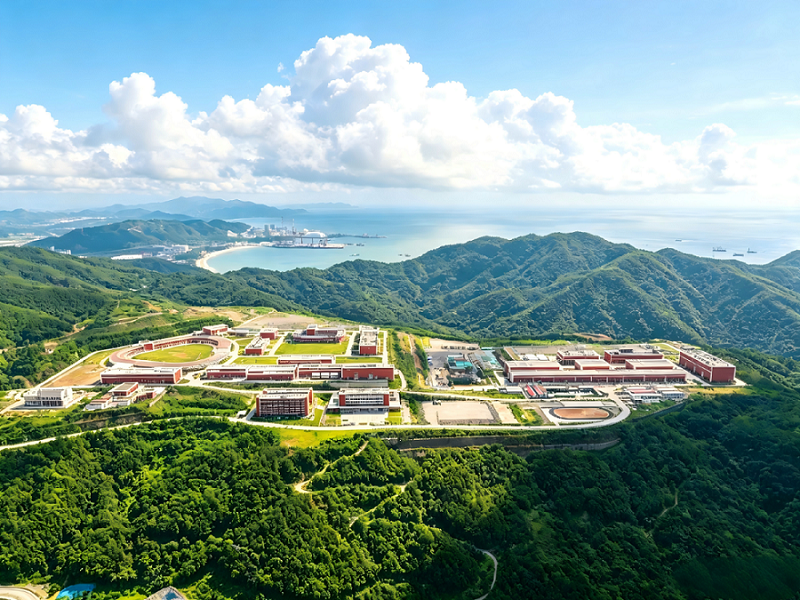
Super microscope peeks into the microscopic world
The high current heavy ion accelerator device can emit the strongest international pulsed heavy ion beam, and study the microstructure of particle fragments generated by bombardment, making it a super microscope for exploring the microscopic world. The total construction area of the project is about 112800 square meters, including 29 individual buildings such as underground tunnels and factories. It mainly constructs two scientific devices: a high current heavy ion accelerator and an accelerator driven transmutation research device. It is known as a national treasure. This trial operation marks China's breakthrough in world-class dynamic problems and technological challenges, and the acquisition of a new independent and controllable, world-class heavy ion research platform, which will help promote the interdisciplinary application of nuclear energy development in aerospace, medical, agriculture, and other fields.
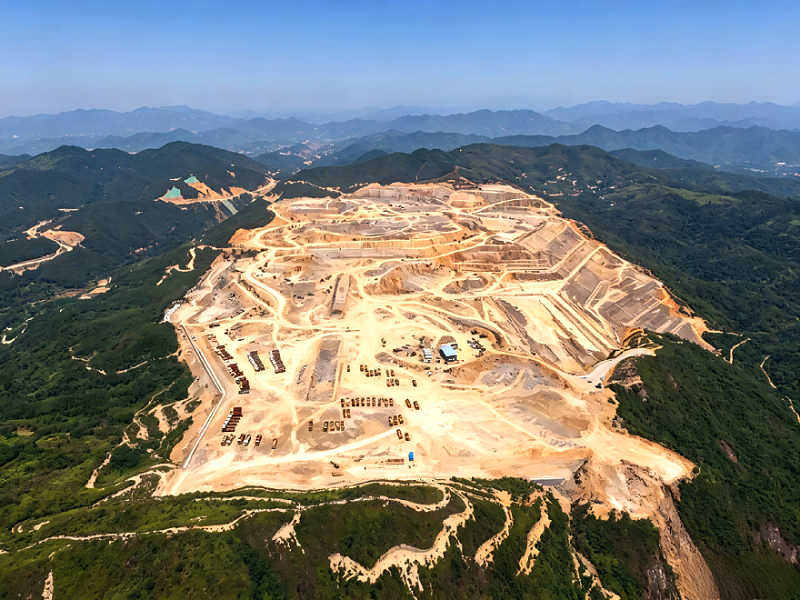
Solving the problem of construction in coastal deep mountains
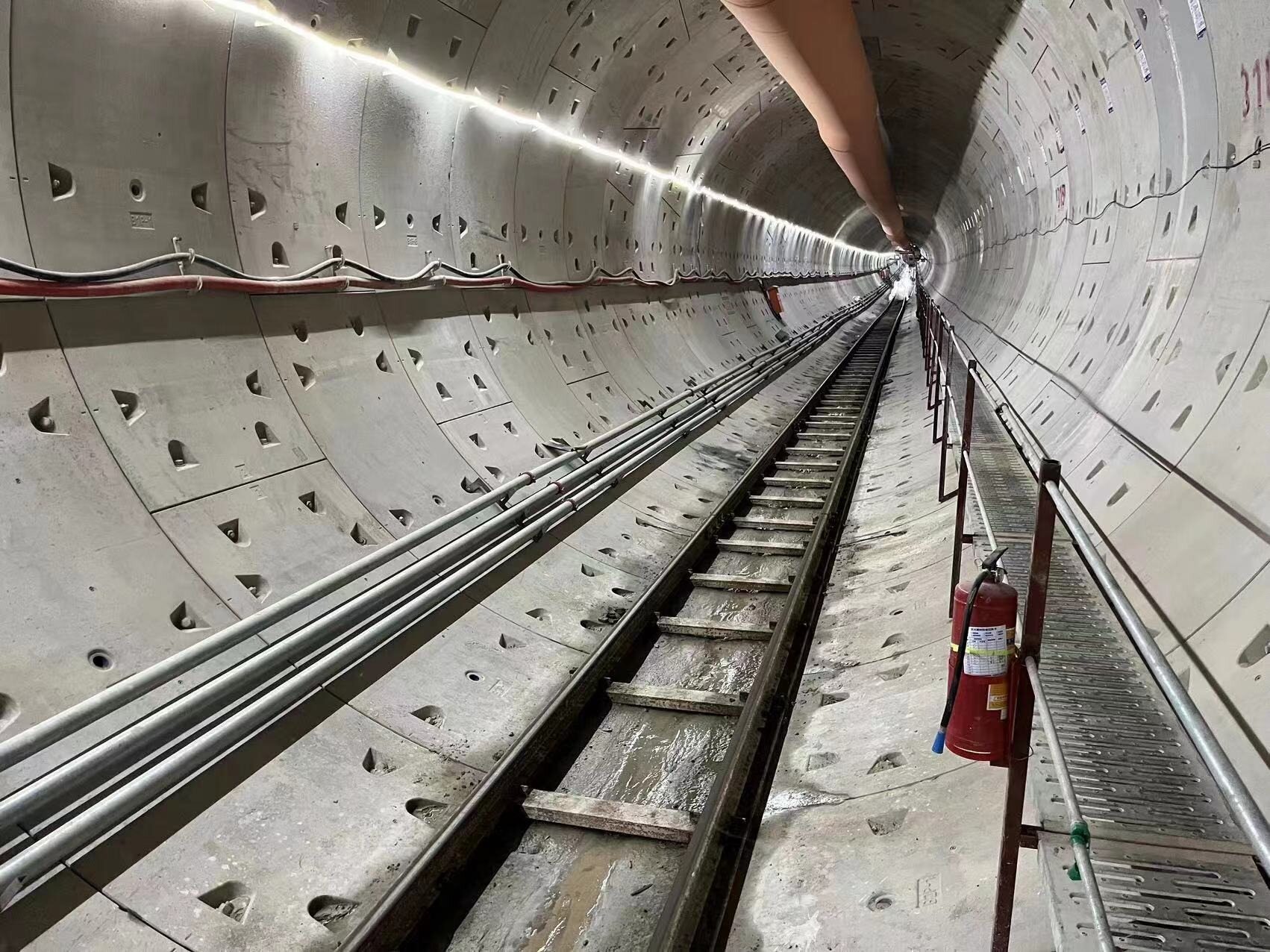
The project is located at the top of the mountains in Huizhou, on the banks of Shuangyue Bay, with abundant groundwater and strong salt spray corrosion. A large number of precision electromagnetic and vacuum equipment are deployed in a tunnel 13 meters deep and 1.6 kilometers long, and any small cracks or water seepage will damage the core device. The project team has established an expert team to carry out scientific research and development, and built a comprehensive anti-seepage system for interception, prevention, and drainage pipes to effectively intercept and discharge rock fissure water and precipitation. The innovative use of fluidized solidified soil construction technology on the side walls has improved the waterproof effect of the tunnel, providing a stable and reliable operating environment for 6000 sets of large equipment and 5 million components. Through finite element analysis software simulation calculation, customized steel reinforcement layout schemes are developed for different cracking risks in different regions, breaking through core challenges such as pouring large concrete with a thickness of 4.5 meters and controlling the stability of ultra long tunnels. Keywords: mechanical equipment news and information, infrastructure construction
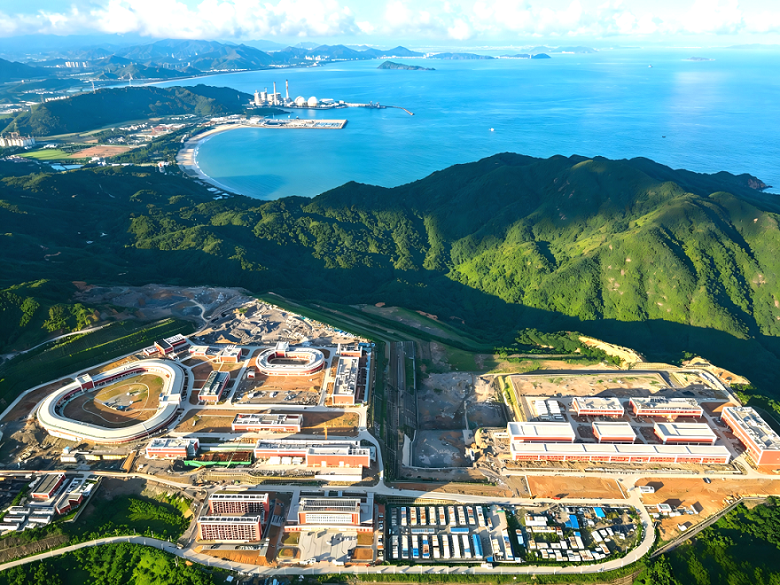
Domestic installation creates a new paradigm
The key equipment and installation processes of large-scale scientific facilities have long been monopolized by foreign countries. The project team closely cooperates with the Chinese Academy of Sciences, abandoning the traditional construction plan of blindly copying overseas and applying a new construction model driven by big science engineering digital twins. Components such as mechanical and electrical pipelines and intelligent equipment are first installed on the computer and then assembled on site, shortening the international average installation cycle of 2 to 3 years to 8 months. The project establishes a three-level measured control network and real-time monitoring system, dynamically collects settlement monitoring data throughout the entire process, strengthens the process control and positioning accuracy of more than 8000 embedded parts, uses three-dimensional laser scanning for deviation chromatography analysis, and solves the problem of large-scale component installation through digital means. The project has created a new paradigm for the construction of large-scale scientific engineering, helping China's heavy ion scientific research level reach a new level.Editor/Gao Xue
Comment


 Praise
 Collect
 Comment

 Share
Share


Write something~