 Search


- Injecting practical value into Silk Road education collaboration

The wind on the west coast of the Aral Sea blows through the refining tower in Atyrau, a major oil town in western Kazakhstan. Recently, a new lesson has been added to the classroom - reading professional terms for valves, well control, and reservoirs in Chinese. I am not interested in taking elective courses, but rather pursuing positions in the oil and gas industry.
Atyrau University of Petroleum and Natural Gas has just concluded an intensive round of Chinese talks in the past few days, signing two memorandums of cooperation at the table, and also laying out the prospects for cooperation with Huazhong University of Science and Technology. In the words of the international cooperation leader of the school, this is not a foreign affairs action of hanging a few more signs, but truly integrating Chinese language, Chinese vocational education standards, and joint scientific research into the flesh and blood of the oil and gas discipline.
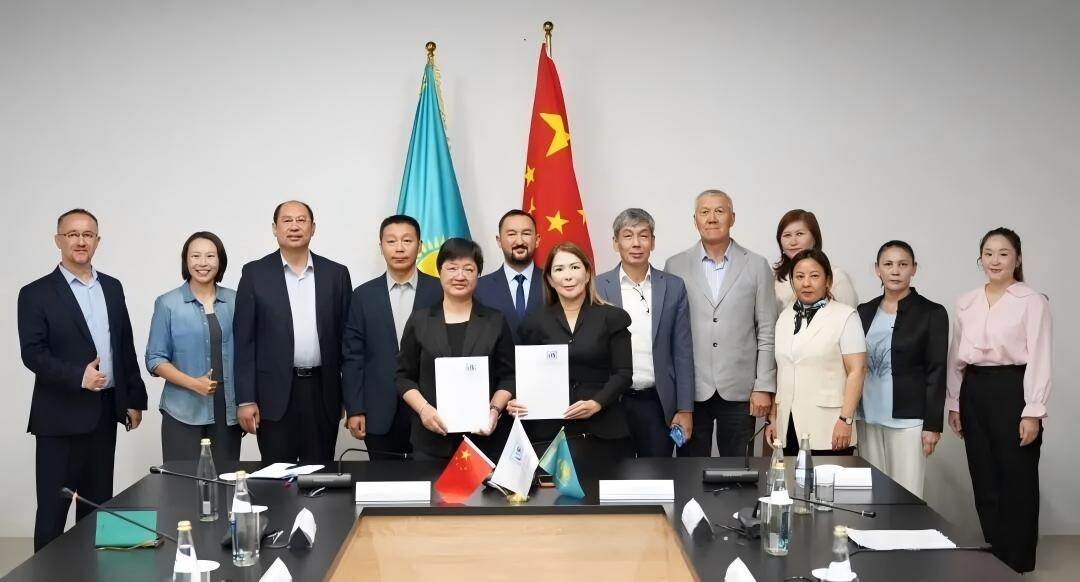
Three party joint construction industry Chinese course
The first memorandum is the most down-to-earth: Atyrau University of Petroleum and Natural Gas, Language and Culture Publishing House, along with Silk Road National Universities and Consulting Companies Association, working together to provide targeted Chinese training for oil and gas professionals. The course is called Oil&Gas Chinese, which does not teach daily greetings, but focuses on wellsite language, technical dictionaries, and industry terminology lists.
The supporting actions are very practical: introducing an artificial intelligence Chinese learning platform, allowing mining area engineers to brush words during shift breaks; Translate the Russian papers of the school teachers into Chinese and publish them in a Chinese publishing house. A technical dictionary, an AI platform, and a set of bilingual publications, when stacked together, are like building a bridge between the Caspian Oilfield and the Chinese technology community.
Inner Mongolia Vocational Education Integration Dual track Training
The second memorandum was written at Inner Mongolia Vocational College of Chemical Technology. Both sides will first open up the flow channels for students and teachers, and the joint education will directly apply the 2+2 and 3+1 models - the first two or three years will lay the foundation in Atyrau, and the later stage will be assigned to the China Chemical Industry Training Base, where internships, practices, and graduation projects will be packaged together.
For Atyrau students, this means they can touch Chinese standard chemical equipment before leaving the school gate; For Inner Mongolia Vocational College of Chemical Industry, Central Asian students and overseas internship bases are also tangible assets for vocational education to go global. Teacher visits and joint applications for research projects have also been included in the same cooperation list.
Huake Foresight lays the foundation for scientific research
The third corner of the conference table is reserved for Huazhong University of Science and Technology. This one was not signed, but we talked through it thoroughly: how to connect higher education and scientific cooperation? Joint laboratories, mutual visits of young scholars, and cross-border projects on energy materials and oil and gas equipment have all entered the pool of candidates. For Huake, the on-site data from the Caspian Basin and the Central Asian geopolitical samples are attractive for scientific research; For Atyrau, Huake's engineering discipline ranking and transformation ability are the springboard for the next step towards internationalization.
Looking at the three talks together, Atyrau University of Petroleum and Natural Gas has a clear plan: language courses solve communication barriers, Inner Mongolia Vocational College solves the problem of skilled talent output, and Huake solves the problem of upstream scientific research endorsement. The three-layer overlay corresponds precisely to its established strategy of promoting internationalization of education and expanding the international education environment.
For current students and young teachers, the changes will be more specific - there will be more exchange quotas, joint graduates will have Chinese mentors, and oilfield internships may be directly arranged to China Chemical Industry Park. Turning over the paper protocol, there will inevitably be an extra page of drilling terminology labeled with pinyin next to the Russian lecture notes in class.Editor/Yang Meiling
Comment

 Praise
 Collect
 Comment

 Share
Share


Write something~