 Search


- China Africa trade volume hits new high, zero tariffs and AI digital trade become new growth engines
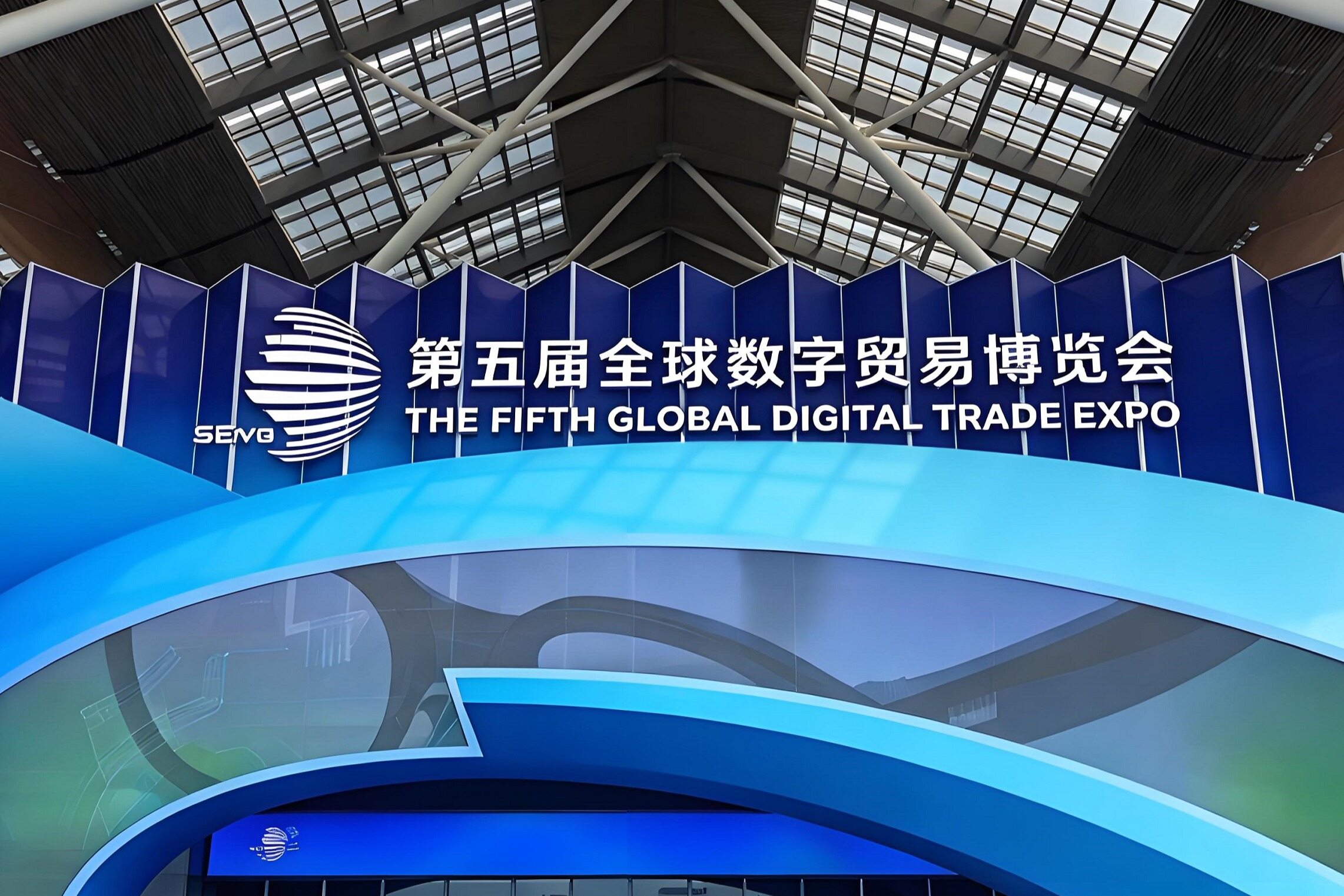
On September 25, 2026, the report "China Africa Economic and Trade Cooperation: Progress and Prospects 2026" prepared by the research group of the State Research Think Tank was officially released on the scene of the Fifth Global Digital Trade Expo in Hangzhou. The numbers popping up on the big screen are eye-catching: by 2025, the trade volume between China and Africa will reach 348 billion US dollars, a year-on-year increase of 17.7%, setting a new historical high. China has maintained its position as Africa's largest trading partner for 17 consecutive years. The report also reveals a deeper change: China Africa economic and trade cooperation is shifting from buying resources and selling products to integrating production and supply chains, jointly building capabilities, and empowering digitalization.

Trade scale reaches a new high again
The $348 billion in 2025 is a milestone, and growth has not stopped. From the perspective of trade structure, China's exports to Africa will reach 22.531 billion US dollars in 2025, a year-on-year increase of 25.8%; Non imported goods amounted to 123.021 billion US dollars, a year-on-year increase of 5.4%. The export growth rate is much higher than the import rate, reflecting the strong demand for Chinese industrial and capital goods in the African market. Entering 2026, the growth rate will further accelerate. According to statistics from the General Administration of Customs, in the first quarter of 2026, the bilateral trade volume between China and 53 African countries with diplomatic relations reached 92.16 billion US dollars, a year-on-year increase of 26.8%, nearly 9 percentage points higher than the overall growth rate of China's foreign trade during the same period. The export structure of Africa to China is also changing, with specialty agricultural products such as Ethiopian coffee, Beninese pineapple, Rwandan dried chili, and Madagascar lamb entering the Chinese market at an accelerated pace.
Zero tariff coverage in 53 countries
The core institutional support for the growth of China Africa trade comes from the comprehensive implementation of zero tariff policies. Starting from May 1, 2026, China will fully implement zero tariffs on 53 African countries with diplomatic relations, becoming the world's first major economy to implement full coverage of zero tariffs on all African countries with diplomatic relations. Zero tariffs will be implemented in the form of preferential tax rates for 20 African countries that have established diplomatic relations with China and are not classified as least developed countries, valid until April 30, 2028; Combined with preferential measures already implemented by 33 African least developed countries, achieving full coverage in 53 countries. The effect has already been demonstrated. Kenya's fresh avocados were previously subject to a 7% export tariff rate to China, and with the implementation of zero tariffs, product costs have significantly decreased. The General Administration of Customs has simultaneously optimized the quarantine access procedures, formulated the origin management measures, and implemented the registration management regulations for overseas food production enterprises from June 1, 2026. Wang Xuekun, President of the Institute of International Trade and Economic Cooperation of the Ministry of Commerce, stated that zero tariffs, with reducing trade costs as the fulcrum, will help Africa overcome its long-term dependence on raw material exports and substantially accelerate its industrial transformation. Keywords: the Belt and Road News Network AI、 Digital trade

AI and digital trade landing
The most noteworthy judgment in the report is that AI applications are shifting from future options to a realistic agenda for China Africa cooperation. China Africa AI cooperation has expanded to four major fields: disaster prevention and control, healthcare, smart agriculture, and urban governance. The Chinese meteorological intelligent warning system Mazu has been deployed in Ethiopia and Djibouti. Alhaji Saljo Bach, the Permanent Representative of the African Union to China, proposed five key cooperation directions: trade facilitation and cross-border e-commerce, interoperable payment systems, trustworthy data governance and network security, digital intelligence and industrial park value-added, cultural exchanges and digital talent cultivation. He emphasized that Africa's goal is to shift from exporting raw materials to producing processed products, and from generating raw data to intelligent production and processing. Alibaba International has developed an AI intelligent agent platform to assist African merchants in completing the entire process of website construction, product selection, marketing, and customer service operations. A fully functional website can be built in as little as 30 minutes. During the event, the service action of Chinese enterprises going to Africa was officially launched. The China International Investment Cooperation Center in Kenya settled in the China Africa Cooperation Industrial Park along the the Belt and Road, and issued the Hangzhou initiative of Chinese and African private enterprises, calling for seizing the development opportunities of digital trade.Editor/Gao Xue
Comment





 Praise
 Collect
 Comment

 Share
Share


Write something~