 Search



- Nebula Constellation Plan Released, China's Space Cloud Enters Industrialization
- Unified scheduling and on-demand access to the computing power of heaven and earth
- Provide global intelligent services for natural resources, disaster prevention and emergency response, and low altitude economy
Sudden flash floods have caused communication interruption in remote mountainous areas. In the past, remote sensing satellites flew over disaster areas to capture images, and could only gradually transmit massive amounts of data back to the ground. After the computer room completed the calculations, the results were sent back to the rescue team. The data was on the way, and time was also on the way. Nowadays, this process is being rewritten: satellites can recognize and judge in orbit, and only send the conclusions back to the ground. At the 2026 Space Cloud Industry Ecology Conference held in Hefei on November 9, 2026, the achievements of China's space cloud industrialization, such as the Nebula Constellation Plan, were released, marking a crucial step in the construction of the space cloud ecology from technical verification to industrial layout.
Satellites no longer only transmit data
Space cloud refers to a collaborative space-based cloud service system in orbit, which changes the traditional mode of single satellite observation and data transmission to the ground for processing, allowing space-based resources to be called upon as needed and used immediately. By transferring computing power to satellites, massive amounts of data do not need to be fully transmitted. After processing in orbit, only the results are transmitted back, resulting in a significant reduction in bandwidth usage and a noticeable improvement in response speed. When ground data centers encounter power shortages, tight heat dissipation, and scarce land, the continuous supply of solar energy from space provides a new solution; High power supply, efficient heat dissipation, and radiation resistance reliability still need to be overcome, but space computing power has become a new direction for global computing power competition. The technological level and number of high-resolution remote sensing satellites in orbit in China have reached the international leading level, and the construction of high-throughput communication satellites has entered a period of rapid development, with a solid foundation. In May 2026, the Aerospace Information Innovation Research Institute, in collaboration with over a hundred units, launched an initiative to jointly build a space cloud ecosystem, with the goal of reaching a thousand star scale.
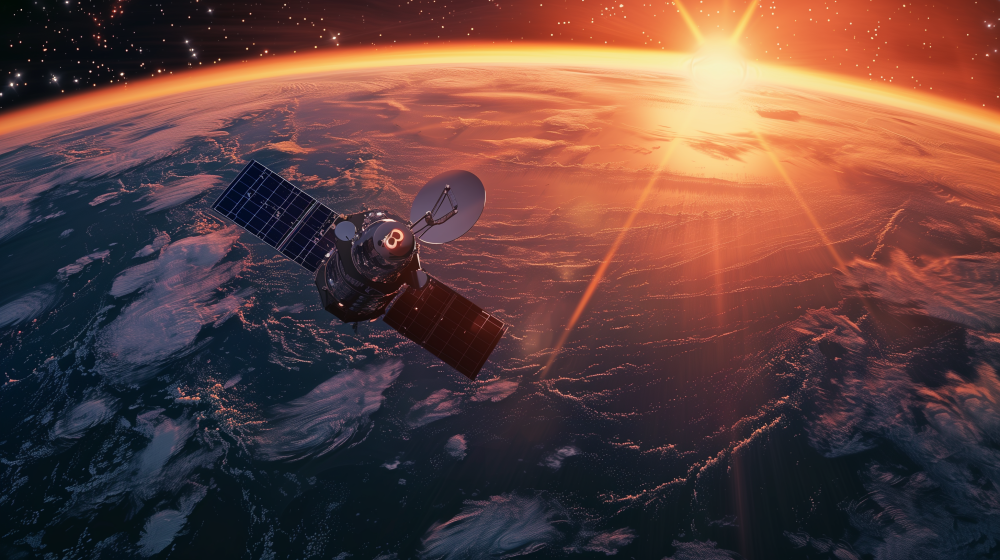
Fully autonomous from chip to application
The Xingyun Constellation Plan, jointly developed by the Aerospace Information Innovation Research Institute of the Chinese Academy of Sciences and domestic scientific and technological innovation enterprises, is a home-made space computing network for the whole stack, and also a key project for the ecological industrialization of space clouds, covering the entire industrial chain from domestic computing chips to satellite applications. The project will rely on domestic research and development units such as computing chips, server machines, satellite manufacturing, and satellite applications to build a full stack domestic independent technology system from core component development to constellation networking and application. Synchronous landing of industrialization carrier: Zhongke Xingyun Space Intelligent Technology was established and operated in Hefei with a registered capital of 1.5 billion yuan, jointly initiated by 16 industrial entities and state-owned platforms; The construction of the Nebula Research Platform has been launched, and the authorization of special intellectual property rights has been completed, which has opened up a channel for the transformation from technology research and development to engineering construction and industrial application. The technological path consists of three steps: sensing and computing fusion, general computing fusion, and supercomputing collaboration: first, allowing satellites to collect and calculate data simultaneously, and then using high-speed interconnection between satellites to support the collaborative operation of giant remote sensing constellations, ultimately gathering in orbit computing power to form a unified computing power network that is equivalent to that of heaven and earth.
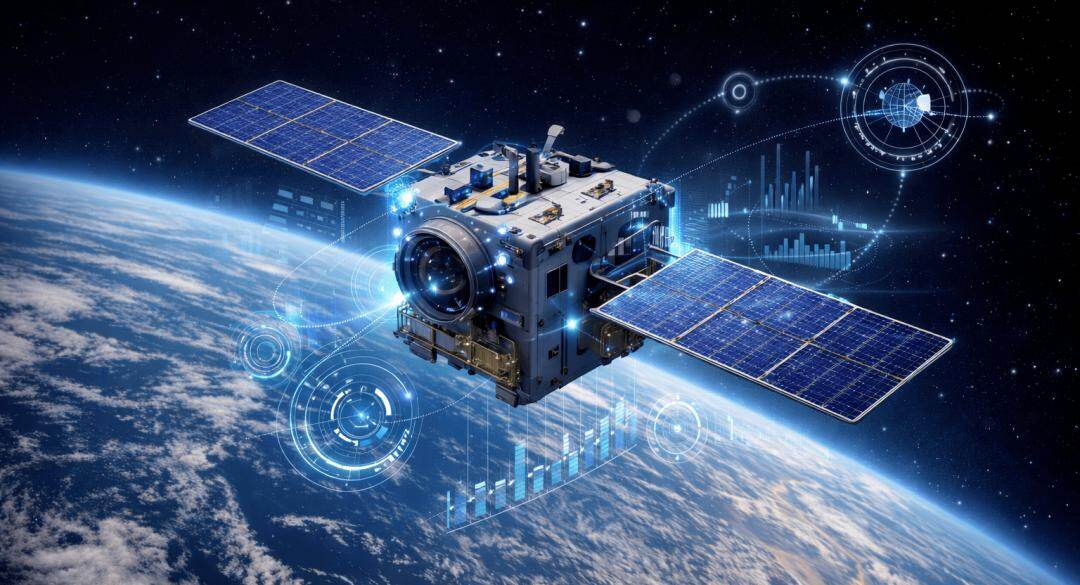
The computing power of heaven and earth is equally useful
According to experts, in the future, space and ground computing power will seamlessly integrate and be coordinated. Space is no longer just a data transfer station, but a first level computing power node with equal status and complementary capabilities to the ground. Users can access space computing power services anytime, anywhere, and on demand, just like using ground-based cloud computing, without having to ask which satellite the data comes from. Through natural resources, disaster prevention and emergency response, low altitude economy and other scenarios, high-precision perception and low latency in orbit computing capabilities covering the world can be obtained. This is not a one-man show either. Beijing, Shanghai and other places have successively laid out integrated computing power platforms and constellations, with chips, inter satellite links, and on-board operating systems synchronously mature. The industry sees it as a complement to ground computing power rather than a replacement, with the core being to exchange computing for bandwidth. With the integration of various satellites such as remote sensing, communication, and computing power into intelligent space-based information service systems, functional single satellites will transcend into intelligent nebulae. The accelerated construction of a thousand star scale space cloud ecosystem will significantly enhance the comprehensive application efficiency of China's space-based resources and provide strong support for the high-quality development of the national economy. Returning to the flash flood at the beginning, what the rescue team was waiting for was no longer a stack of unprocessed images, but a directly usable answer.Editor/Yang Meiling
Comment


 Praise
 Collect
 Comment

 Share


Write something~