 Search


- After the completion of the entire China Thailand railway, the China Laos Thailand railway network will be connected into a single line
- Accelerate the flow of goods, tourists, and industrial factors, paving a stable channel for regional prosperity
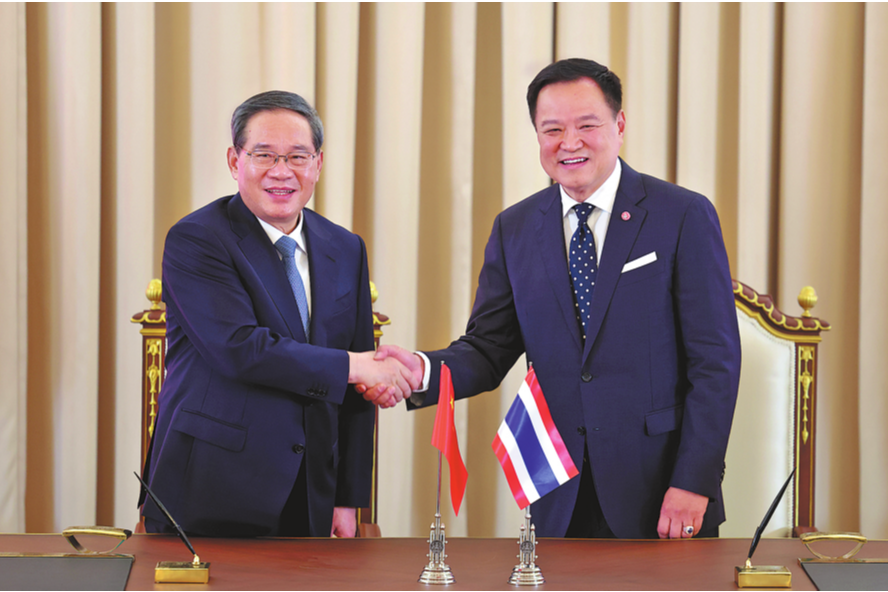
To the north of Bangkok, elevated piers extend northeastward along rice paddies; A few hundred kilometers away, Langkai faces Wanxiang across the river, and the meter gauge train is still slowly stopping. This 610 kilometer long steel rail is becoming a reality. On November 13-14, 2026, Li Qiang visited Thailand and it was repeatedly mentioned within two days.
Two days, three trips to the railway
On November 13th, Li Qiang met with Thai Prime Minister Anutin. China proposes to strengthen the docking of development strategies, promote high-quality joint construction of the the Belt and Road, implement major projects such as the China Thailand Railway, negotiate a new five-year plan for economic and trade cooperation, and expand cooperation in finance, new energy, semiconductor, artificial intelligence, etc; After the meeting, both parties signed multiple cooperation documents in areas such as automobiles, vocational education, agriculture, customs, and safety.
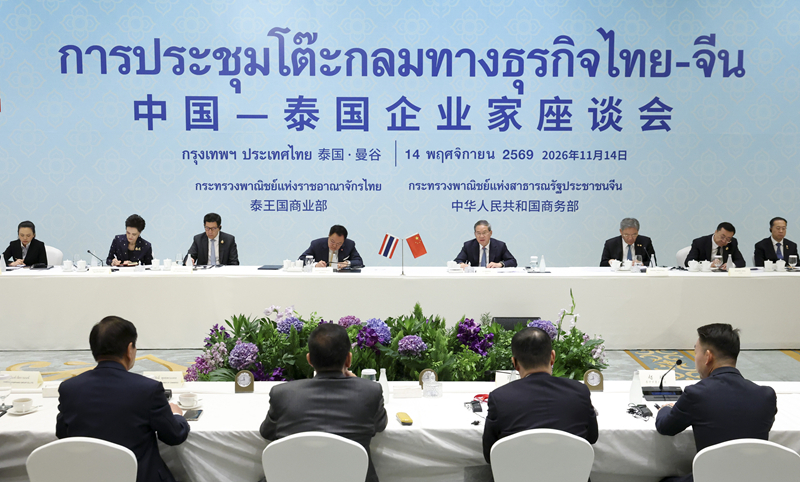
On November 14th, Li Qiang met with the Speaker of the Thai National Assembly and the Speaker of the House of Commons, Sopong, and reiterated the need to accelerate the construction of the China Thailand railway, encouraging cooperation between enterprises from the two countries in areas such as new energy and electronic information; Subsequently, together with Anutin, they attended the China Thailand Entrepreneurs Symposium and identified the aggregation effect of interconnectivity as an important opportunity: the steady progress of the China Thailand railway, the official opening of the Pinglu Canal, the continuous strengthening of soft connectivity in economic and trade rules, standards, finance, and other areas, smoother market integration, and greater economic benefits between the two sides.
Half of the first phase, follow up with the second phase
Anutin responded decisively: Thailand will continue to promote the China Thailand railway, strive to complete and open the first phase by 2030, and prepare for the second phase to connect Laos and China, in order to enhance its position as a transportation and logistics hub in Southeast Asia, drive trade, investment, and cross-border transportation.
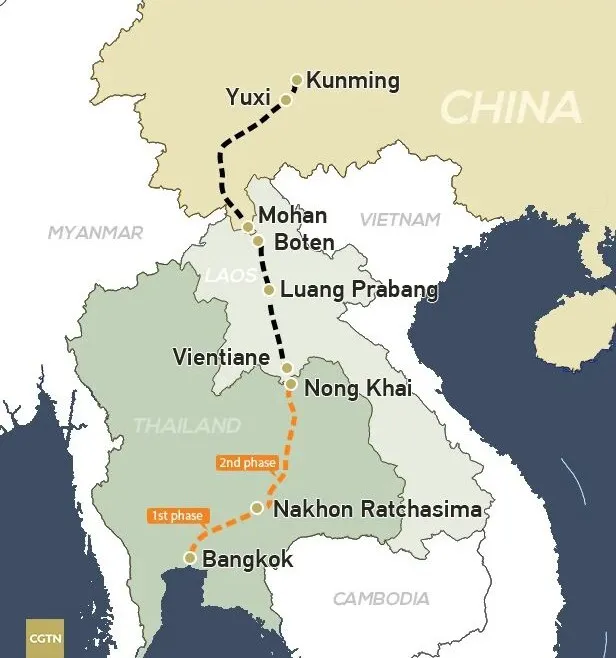
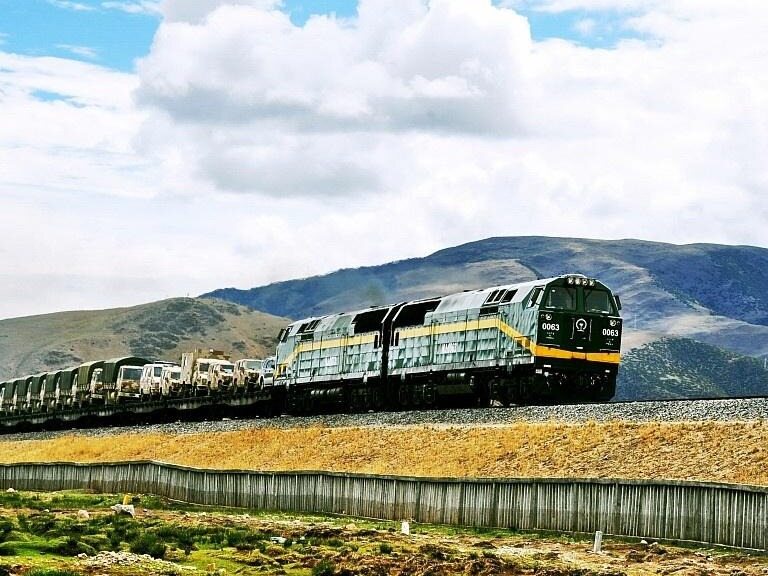
The China Thailand Railway is a high-speed railway jointly built by the two countries and an important part of the Central Line of the Pan Asian Railway. The entire line is planned to connect Bangkok with the Thai Laotian border city of Langkai, with a total length of about 610 kilometers and will be constructed in two phases, with a designed maximum speed of 250 kilometers per hour. The first phase of the Bangkok to Nakhon Ratchasima section is approximately 252.3 kilometers long, with 6 stations. Construction began in 2017, and the progress is now halfway through, with the goal of opening to traffic by 2030; The total length of the second phase from Nakhon Ratchasima to Langkai is about 357.12 kilometers, and it is expected to start bidding for the project in 2027, with the goal of opening in 2033.
The second phase is connected to a network: the China Laos Railway opened in December 2021 has connected Kunming and Vientiane, and Langkai is only separated by a river. After completion, the China Laos Thailand Railway can be connected. In July of this year, the Sino Thai Joint Statement clearly stated that the first phase will be accelerated and the second phase will be launched as soon as possible. Thailand is working hard to resolve the remaining issues of the first phase and advance the preparations for the second phase.
One line brings life to one piece
For enterprises, this is not just a civil engineering project. Li Qiang mentioned that China and Thailand are working together to create a new golden 50 year relationship between the two countries. Stability itself is a scarce resource, and the aggregation effect of connectivity can upgrade cooperation from a bilateral basis to a radiating region; The implementation of the China ASEAN Free Trade Area 3.0 upgrade protocol and the growth of agricultural and food trade are all contributing to the accumulation of passenger and cargo flows on this line. Anutin hopes that both sides will grow from trading partners to long-term partners for common development, expanding cooperation in electric vehicles, agriculture, investment, and other areas.keywords:Engineering infrastructure
Once the first phase is opened in 2030 and the second phase follows suit in 2033, agricultural products, industrial parks, and tourist cities in northeastern Thailand will be linked into shorter channels; Prior to this, civil engineering, railway systems, vehicle procurement, and operation and maintenance will continue to release market demand. The steel rails move forward, laying the road and accounting for the future decades of the region.Editor/Yang Meiling
Comment


 Praise
 Collect
 Comment

 Share


Write something~