 Search


- With the strong return of China, this poses a threat to the recovery of Germany and Europe as a whole after the epidemic.
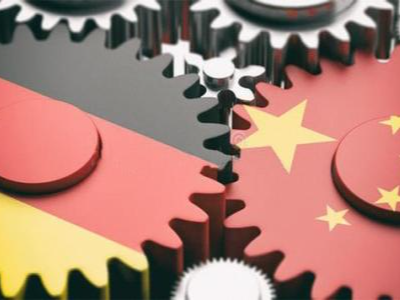
Germany provides China with the machinery and equipment needed for economic development. Such a bilateral relationship helped the German economy recover rapidly after the financial crisis. But German business leaders said that this model is no longer applicable as China changes from a partner to a competitor.
According to economists in the German public and private sectors, Germany’s gross domestic product (GDP) should shrink by 5.8% to 7.1% this year, which is better than most other Western economies, but faster than China’s expected growth rate of 2.5% Much worse.
Although German exporters are benefiting from the recovery in international trade, they are not getting the boost from China as they did 10 years ago. Germany’s exports increased month-on-month in July, but they were still down 11% year-on-year. And China's exports have exceeded the level of the same period last year for two consecutive months.
According to economists and German business leaders, the divergence of the economic situation between China and Germany is partly attributed to the Chinese government’s strategy to encourage domestic manufacturers to produce more sophisticated machinery and equipment. These machinery and equipment are comparable to the high-end German capital products that were once the world’s best Stronger competitiveness.
For many German exporters, this situation not only means that their sales in China have become more difficult, but also means that Chinese companies are increasingly becoming competitors in other areas. Herrenknecht AG is one company that feels this pressure.
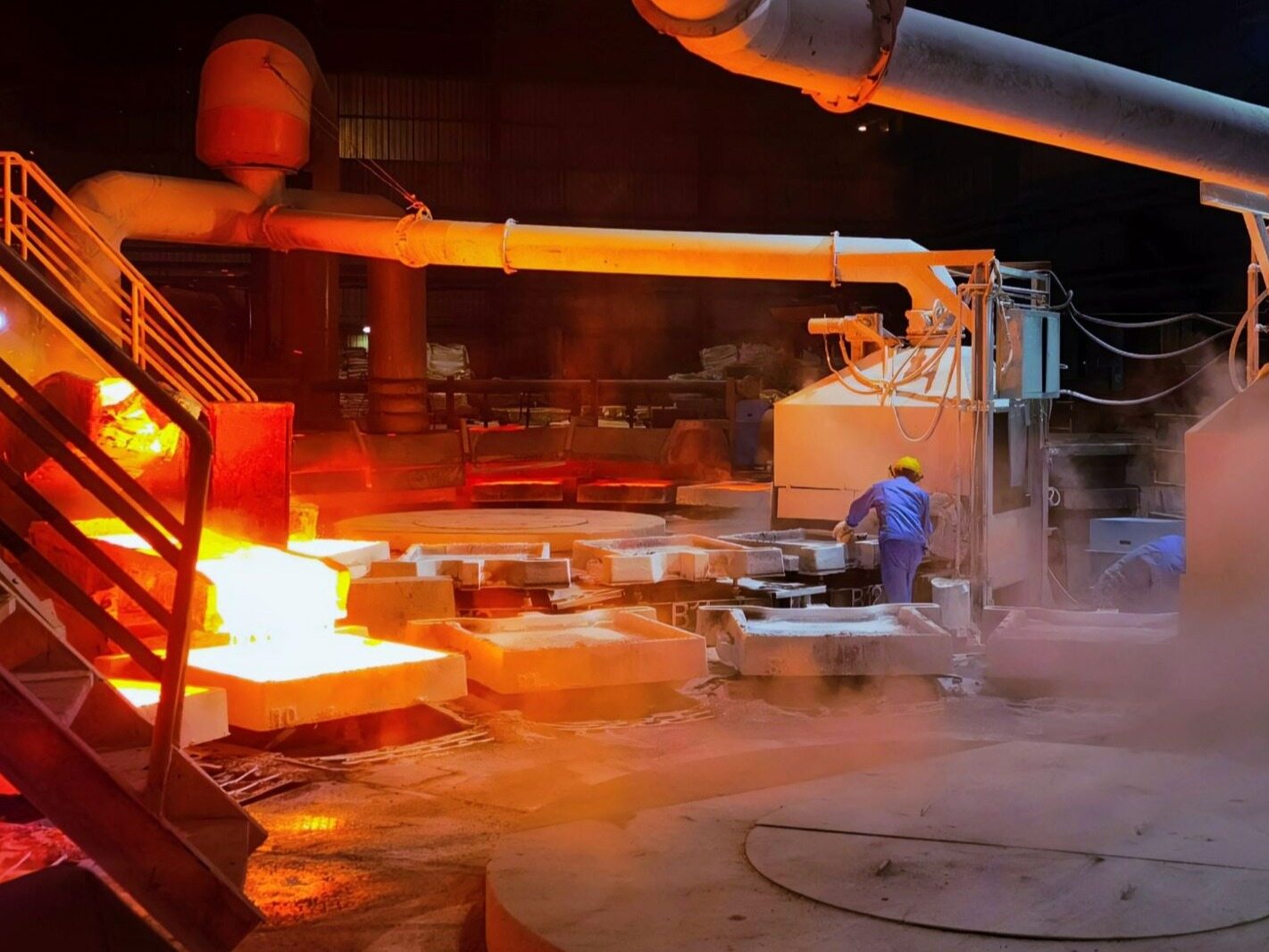
In the first 15 years of this century, this high-end tunnel boring machine manufacturer has played a pillar role in infrastructure projects across Asia, serving underground construction in metropolises such as Beijing and Shanghai. The high-end tunnel boring machine is a large-scale machine loaded with a multi-layer structure, which can lay pipelines and concrete while driving the tunnel.
Between 2000 and 2015, the family business’s revenue increased nearly six-fold, reaching approximately 1.3 billion euros, of which as much as one-fifth came from China. The company’s growth created data for its manufacturing plant in southwest Germany. Thousands of job opportunities.
However, in the past four years, Herrenknecht’s annual sales have fallen by approximately 5%. The company said that large Chinese construction companies have developed their own drilling machines and do not need to purchase Herrenknecht machines. As Herrenknecht’s main competitor in the large-scale machinery market, Robbins Co., headquartered in Ohio, recently merged with China Northern Heavy Industries Group Co., Ltd. (referred to as Northern Heavy Industries).
"Chinese companies are becoming more and more competitive in the international market, and the prices they offer are exceptionally low." Herrenknecht spokesman Qu En said. "The speed of their appearance has surprised Europe."
This year may be a turning point in the relations between Germany and China. China is not only Germany's largest trading partner, but also a long-term focus of Germany's global diplomacy.
In the past 20 years, China needs to import German industrial robots, factory equipment and vehicles to become the world's most important producer of consumer goods. German companies take the double-digit growth in sales to China as a matter of course. In the early years of this century, this not only helped Germany become the world’s largest exporter of goods, ahead of China and the United States, but it also enabled Germany to keep itself in the face of a large number of industrial transfers from the United States and other countries and regions to China. Manufacturing jobs.
Now, Chinese companies are supplying wind turbines in France, selling buses in Norway, building power grids in Poland, and selling advanced industrial machinery around the world. In the Swedish capital, a Chinese group recently won a contract to dig three subway tunnels for Stockholm.
Hawe Hydraulik SE Chairman Hoisgen said that in key areas of high-end manufacturing, including infrastructure equipment, China has narrowed the gap with German companies. HAWE Hydraulik said that the company has faced more competition from China in terms of hydraulic valves and pumps used in wind turbines and mechanical equipment.
Heusgen said: "China is not a developing country, it is not at all. China is a mature country with first-class manufacturing capabilities."
As the Chinese government has worked hard to control the spread of the domestic new crown epidemic, and China has introduced policies to support the economy, Chinese exporters are now seizing a larger share of the global export market, while at the same time, other countries are still suffering from the epidemic .
Ackerman, the managing director of the German Machinery and Equipment Manufacturing Federation in charge of foreign trade affairs, said: "It is only a matter of time before Chinese companies become the world's No.
According to data from the German Machinery and Equipment Manufacturing Federation, in the 10 years ending in 2018, Germany's share of global mechanical engineering product trade fell from 19.2% to 16.1%, while China's share rose from 8.5% to 13.5% . The mechanical engineering industry provides approximately 1.3 million jobs in Germany.
According to a study published by the law firm Baker McKenzie last month, China has since further expanded its share in the global market with the highest correlation with German engineering companies, such as infrastructure.
In December last year, the Chinese engineering company CRRC Tangshan Rolling Stock Co., Ltd. won a 50 million euro contract to build 18 subway trains for the Porto Metro, the light rail network of Portugal's second largest city. This is the first rail vehicle construction contract won by a Chinese company in the EU, beating German companies such as Siemens. According to a person familiar with the matter, officials believe these subway trains are sturdy and almost identical in design to Italy.
Porto Metro spokesperson Morgado said that the success of the Chinese bid was based on factors such as price, technical quality and design. It was 6.5 million euros lower than the initial estimate of the purchase price of subway trains by the Porto Metro.
Brandel, CEO of ebm-papst Group, said that he realized this three years ago and found that the quality of competitive products from China has improved. The ebm-papst Group produces electric motors and fans for automobiles and household appliances.
He said that China is still the company’s second largest market after Germany, but the company’s sales have stagnated for several months even before the outbreak of the new crown epidemic, and its sales in the Chinese market have often been before. Increase at a double-digit rate.
Reschner, the general manager of NGC Europe and a German, said that all parts of Germany have begun to reopen large-scale trade fairs. Not long ago, Chinese companies only set up old-fashioned small booths at such fairs. He also said that now "you can't see the difference between many Chinese and German manufacturers." NGC Europe is a subsidiary of China High Speed Transmission Equipment Group Co., Ltd. in Germany.
Organizers of the Hannover Messe stated that Chinese exhibitors accounted for nearly one-fifth of the total exhibitors last year, compared with 13.6% in 2015. Hannover Messe is one of the world's largest investment goods trade shows.
Government data show that the growth rate of German exports to China in 2019 hit the lowest level since 2015. Brandl, CEO of ebm-papst Group, said that even though the Chinese economy has now rebounded from the trough of the new crown epidemic, German companies have not benefited as much as they did after the 2008 financial crisis. He predicts that ebm-papst's sales in China will drop by 3% to 4% this year, and will return to the pre-crisis level next year.
Bauer, the managing director of German Bauer Machinery Equipment Co., Ltd., an industrial equipment manufacturer in Bavaria, said that German medium-sized engineering companies are often family-owned and rely on bank financing, and the Chinese corporate giants they face have government funds. It has huge economies of scale and everything is self-produced.
Bauer said: "Industrial machinery is not a luxury. Customers care about both quality and price."
Even the legendary German automobile industry is under siege. China Ningde Times New Energy Technology Co., Ltd. (Ningde Times) is currently the world's largest manufacturer of electric vehicle batteries. CATL is building a battery factory in Germany to supply European automakers. This factory is about three times the size of the Tesla super factory.
At the same time, Robert Bosch, the world's largest supplier of auto parts, said that although the company's internal combustion engine parts business is shrinking, it will not produce batteries for electric vehicles. Instead, the company said it is cooperating with CATL to produce batteries.
Analysts estimate that batteries account for about 40% of the cost of an electric car. The German government estimated in a report last year that as electric vehicles replace traditional cars, nearly half of the 870,000 auto industry jobs in Germany may be lost.
Last year, Bogestra AG, which operates in cities such as Bochum and Gelsenkirchen in the Ruhr Valley, Germany's old industrial area, became the first public transportation company to order electric buses from China. The 20 buses ordered from BYD will be used with older buses produced by Mercedes-Benz and Czech manufacturer Solaris Bus & Coach SA. A Bogestra spokesperson said that the company's decision to purchase BYD vehicles was based on the latter's selling price, vehicle operating costs and quality.
Many German executives still view China as their biggest market. However, they said privately that they are losing patience with bureaucratic obstacles, forced technology transfer, subsidies and various protectionist barriers, which have long been seen as the price of entering the Chinese market. Some people call on the German government to follow the example of US President Trump and adopt a tough strategy against China.
Zetelmeier, a former senior official of the German Ministry of Economic Affairs and current deputy director of the International Monetary Fund’s strategy department, said: “The U.S. hardline attitude is useful because it means that Germany can take what seemed aggressive two years ago, but now it looks Reasonable position."
German officials have recently signaled a tougher diplomatic stance against China. They said that due to disputes with China over a series of issues ranging from fair market access to human rights, Germany will shift its focus to Asian democracies including Japan and South Korea.
German Chancellor Angela Merkel’s political alliance and the chairman of the German Parliament’s Foreign Affairs Committee Rotgen said that only if Germany maintains its technological superiority will China need Germany.
He said: "What I am worried about is that this window is closing, China is constantly improving, and its technological leadership is increasing, and we are stagnating. Editor/Xu Shengpeng
Comment


 Praise
 Collect
 Comment

 Share
Share


Write something~