 Search


- The Belt and Road Initiative provides rare opportunities for Chinese companies to go global
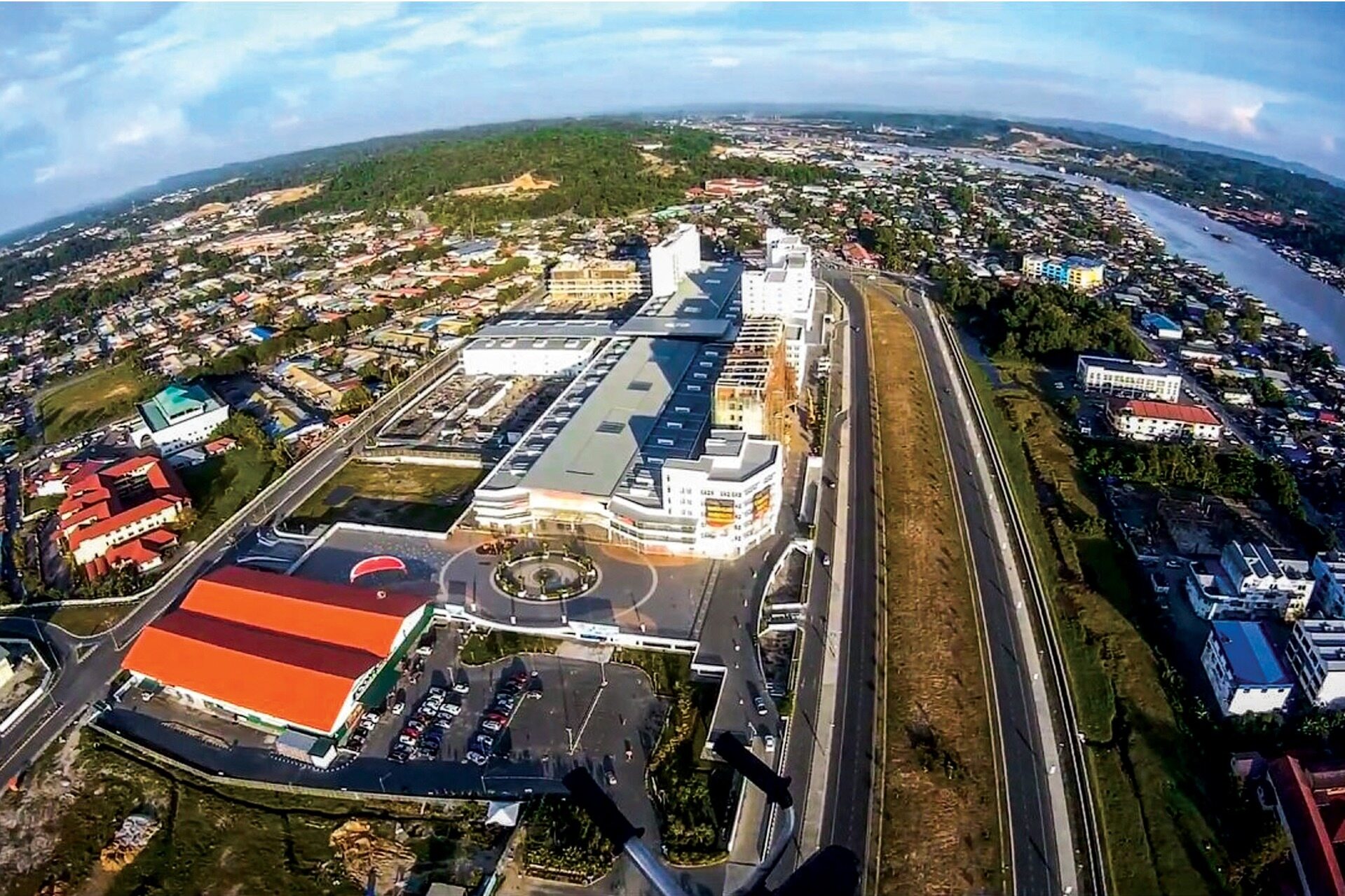
In recent years, the industrial park projects between China and the countries along the Belt and Road have become an important platform for undertaking cooperation between Chinese and foreign enterprises and promoting the employment of local residents.
China-Belarus Industrial Park is full of vitality
"I have witnessed the growth of the industrial park, and sometimes I still can't believe that all these changes are happening around us." Andrei Cherepanov, Chief Accountant of China Merchants China-Belarusian Trade and Logistics Co., Ltd. Say.
In 2015, the Sino-Belarusian Industrial Park located on the outskirts of Minsk, the capital of Belarus, entered the substantive development stage. At this time, Cherepanov, who had been working in state agencies for 8 years, made an important career choice. With his outstanding work ability and experience, Cherepanov was hired as the company's chief accountant and became the first white employee in the company's team.
"When I first came, the park was still a forest." Cherepanov said. In just a few years, customs warehouses, business centers, and exhibition centers have risen to form a large-scale business and logistics complex-Sino-Belarusian Business Logistics. The park appeared in the park. Today, the second phase of the construction of the park is about to start, digital development is beginning to accelerate, and the introduction of 5G and driverless transportation has made work more efficient. "We have built a'small city'-wide roads, beautiful green environment, modern buildings... Every Belarusian investor who visits the industrial park for the first time will be amazed."
Cherepanov said that a big idea for the establishment of the Sino-Belarusian Industrial Park is to learn from China's advanced park construction concepts, introduce Chinese experience, and drive the economic development of Belarus. To this end, Cherepanov was sent to China to learn about the establishment and operation of special zones and industrial parks. Nowadays, not only has the park developed well, the innovations in the park have also been gradually applied to other parts of Belarus, promoting the country's commercial development. Chinese companies in the park are also happy to share advanced technologies such as trolleybus supercapacitors, special constructions, and rescue equipment with Belarus. "The introduction of technology makes Belarusian products more competitive in the world market," Cherepanov said.
Belarus is known as the "crossroads" of the Eurasian transport corridor and is one of the first countries to support the joint construction of the Belt and Road Initiative. In Cherepanov's view, the joint construction of the Belt and Road has further stimulated the logistics potential of Belarus. The multimodal railway logistics station project that has been launched connects the railway, aviation, road and other types of transportation in China, Germany, Switzerland, Belarus and other countries, so that goods can be transported more quickly between Europe and China.
Cherepanov told me that there are Minsk Avenue and Beijing Avenue in the park, and there is a symbolic "Friendship Road" beside the two avenues. He believes that as a platform for win-win cooperation, the industrial park project is of great significance to the two countries in terms of economic, political, and cultural exchanges. Here, some people have found new friends, some have established cross-cultural families, and Cherepanov has also become friends with many Chinese colleagues. Regarding the future of the China-Belarusian Industrial Park, Cherepanov is full of hope: "The park will develop international manufacturing, international trade, business tourism and medical services, etc., and become a vibrant modern city."
Adama Industrial Park, Ethiopia
Gibrel is 35 years old this year. Before becoming an employee of Adama Industrial Park, he had been engaged in management work in three companies. In October 2016, Jibriel saw the recruitment notice issued by the Adama Industrial Park project undertaken by China Civil Engineering Group Co., Ltd. (China Civil Engineering Group), and delivered his resume as soon as possible. "This will be a place for me to display my talents", Jibriel still remembers the choice at that time.
"Many of our country’s booming industrial parks are built by Chinese companies, and the Adama Industrial Park is a model." Adama Industrial Park is located in Oromia State, Ethiopia, and is located on the Yaji Railway which was also built by the China Turkey Group. Along the line. This railway is the first transnational electrified railway in Africa, and one railway drives an economic belt. Since 2015, China Earth Group has successively constructed six industrial park projects along the Yaji Railway, including the Awasa Industrial Park, Adama Industrial Park, and Dre Dawa Industrial Park, all of which are currently in operation. The 19 modern workshops in the Adama Industrial Park have also been leased out. Chinese Antai Textile and other enterprises have successively settled in and put into production, creating more than 5,000 jobs for the local area.
“When the Yaji Railway was opened, we were very excited, but we don’t know how it can produce actual benefits and whether it can really change our lives.” Nowadays, many locals, like Jibril, have experienced the construction of railways and industrial parks. The "visible and tangible" changes brought about. "The folks have a stable job, learned skills, and increased income." Gibril said that more and more foreign investors are optimistic about the development of industrial parks, and the types of enterprises tend to be diversified. In the long run, they can help local Industrial transformation and upgrading. "The railway has brought opportunities, and the industrial parks along the route are creating prosperity."
Since joining Adama Industrial Park, Jibril has been responsible for the human resources management of the project. The construction of the industrial park requires the participation of a large number of local personnel, and it is not easy to coordinate the various personnel to complete the work on time and with quality and quantity. Speaking of his work, Gibrill said: “As a human resources manager, I need to make sure that everyone who enters the project has the relevant knowledge and skills, and participates in the project construction in an active state every day. When encountering difficulties At times, I will be duty-bound to solve them one by one."
During the prevention and control of the new crown pneumonia epidemic, Ethiopia and other African countries lacked professional medical personnel and materials, which put great pressure on epidemic prevention, and the construction of the Adama Industrial Park was also facing huge challenges. "Fortunately, Chinese companies have provided complete guarantees, timely distribution of anti-epidemic materials such as masks, hand sanitizers, and related training. I have seen on the news that China's epidemic prevention work has been successful, and I feel relieved to work here. "
In the past few years working in the industrial park, Jibril has not only greatly enhanced his work ability, but also gained friendship with Chinese colleagues, and he is full of confidence in the future. "Our country's infrastructure construction is still relatively weak, but I believe that under the framework of the joint construction of the'Belt and Road', the areas of cooperation between the two countries will become wider and wider, and Ethiopia's development will definitely get better and better."
Zhongtai Rayong Industrial Park
"If I hadn't come to work in the park, I could only make ends meet as a farmer in my hometown. It is even more extravagant to earn money to send my younger siblings to school." Seven years. When he first joined the company, Ai Gepu was just an ordinary worker, and now he has grown to be a department production supervisor. "Rayong Industrial Park and Zhongce Rubber have changed my life, and I feel very rewarding to work here."
The Thai-Chinese Rayong Industrial Park is more than 100 kilometers away from Bangkok, the capital of Thailand, and is located in the core area of Thailand's "Eastern Economic Corridor". It is one of China's first overseas economic and trade cooperation zones. As an important carrier of the Belt and Road capacity cooperation, Rayong Industrial Park has attracted more than 160 companies to settle in, driving Chinese companies to invest more than 4 billion U.S. dollars in Thailand, and the cumulative industrial value exceeds 16 billion U.S. dollars. Over the past decade or so since the park was established, more and more Chinese companies have invested in the park to set up factories, creating jobs for the local area, and at the same time bringing technologically advanced production lines. At present, there are more than 40,000 Thai employees working in the Rayong Industrial Park like Ai Gaipu, and it will reach 100,000 in the future.
When I first arrived at the company, the advanced production line was amazed by Ai Gepu, and this young man who had just graduated from a vocational and technical school felt a little bit helpless. "The company has strict rules and regulations, and the requirements for product quality are almost harsh." Ai Gap learns by doing, with photos and physical objects of parts marked in Chinese, Thai and English hanging on the wall of the workshop. If you encounter difficulties, you should ask the Chinese master for advice. , Can get patient guidance every time. After get off work, Ai Gepu also brought the operating instructions back to the dormitory to continue studying. After hard work, Ai Gap has mastered a variety of operating skills, such as process operation, use of tooling and equipment, production material configuration, and accessory management.
With the joint efforts of Chinese and Thai employees, Zhongce Rubber has established a complete factory operation model with standardized production, localized management, and systematization. The annual output is 13.31 million sets of various tires, and the products are sold to more than 80 in the United States, Brazil, etc. Countries and regions. The company attaches great importance to the career development of local employees. Among the current 4,300 employees, Thai employees account for 90%. "My Chinese colleagues and I cooperated very smoothly. They worked hard and treated Thai employees sincerely, and they became friends and partners." Ai Gaipu said that the company will organize celebration activities on important festivals such as the Chinese New Year and the Songkran Festival in Thailand. Improved mutual understanding and friendship between employees of the two countries.
Affected by the new crown pneumonia epidemic, industrial production in many countries has encountered a cold winter, and the enterprises in the Rayong Industrial Park are still working hard to maintain their operations. When the epidemic in Thailand was the most severe in March last year, Zhongce Rubber did not lay off a single employee, but increased revenue and cut expenditures to maintain low-cost operations. Since the third quarter of last year, the company has resumed full production. During the epidemic prevention and control period, Rayong Industrial Park boldly innovated in the application of digital technology and explored a new model of "cloud investment" and "cloud service". Investing enterprises cloud inspected and settled down. When investors were unable to come to Thailand, the park successfully attracted nearly 20 companies into the park, and more than 10 companies broke ground. Ai Gaipu expressed that he expects more Chinese companies to settle in Thailand and further enhance the level of local industry and economic development. "'Win-win cooperation' is not only a placard for the factory, but also a practical action of Chinese companies!" Ai Gepu said.
China-Egypt TEDA Suez Economic and Trade Cooperation Zone
In the roaring workshop, several Egyptian workers in uniforms and masks are skillfully operating in front of the equipment. The 31-year-old Egyptian boy Amir led a few newly hired employees to visit the production process and communicated with suppliers over the phone on procurement matters. He was very busy. As the assistant to the general manager and the head of the quality department of China Hengshi Egypt Fiber Fabric Co., Ltd. (Hengshi Egypt), he maintains close communication with customers, suppliers and production teams to ensure that every production link meets the requirements, which is part of his daily work. One.
"Our company's glass fiber fabric products are sold to Europe, America, the Middle East and other regions, and enjoy a high reputation in the international market." Amir proudly told reporters that the company has developed into Egyptian glass fiber in just a few years after setting up the factory. An important part of the industrial chain. Hengshi Egypt is a Chinese-funded enterprise in the China-Egypt TEDA Suez Economic and Trade Cooperation Zone. The cooperation zone was established in 2008 and is a key cooperation project between China and Egypt in areas such as special zone development, capacity cooperation, and foreign investment attraction. With the deepening of the joint construction of the Belt and Road Initiative, as of the end of 2020, 96 companies have been attracted here, with actual investment exceeding US$1.25 billion, cumulative sales exceeding US$2.5 billion, paying taxes and fees of nearly US$176 million, and directly solving about 4,000 jobs. More than 36,000 people are employed by industry. Like Hengshi Egypt, many companies in the park have become leading companies in Egyptian industrial development. "This not only brings significant economic benefits to Egypt, but also improves the technological level of Egypt's related industries." Amir said.
Amir graduated from the Chinese Department of Cairo University and then went to China to study for postgraduate studies. When he first joined the company, he was a translator. With the continuous accumulation of business ability, he has been promoted many times at work, "salary has increased several times." "Chinese companies have provided me and my Egyptian colleagues with rich resources." Amir said, "The company's employee training system has benefited everyone a lot. As long as they are willing to learn, Chinese colleagues will teach us all the knowledge they have." He started from the beginning. "I don't know what glass fiber is" has now been able to stand alone and talk with customers. Many Egyptian colleagues have also experienced the growth and change from "Chinese masters can't do it without on-site" to proficiently completing various operations. Currently, the company is dominated by Egyptian employees, and many of its managers are Egyptians. "After these years of mutual communication and understanding, the Egyptian and Chinese colleagues get along very well. We are not only partners at work, but also friends in life." Amir said.
Today, Amir, with a stable income, has married and has a pair of children. The experience of studying in China and participating in company training in Zhejiang twice made him intuitively feel the progress of Chinese society and the development of science and technology. Because of this, he very much hopes that his children will learn Chinese. Now, his 3-year-old daughter has started to learn Chinese and Chinese culture.
"Learning Chinese and entering a Chinese company is the most correct decision I made. In the future, I will continue to improve my learning and achieve myself in Chinese companies," said Amir. Editor/Tian Zengpeng
Comment



 Praise
 Collect
 Comment

 Share
Share


Write something~