 Search


- The four major projects in Saudi Arabia carry hidden risks in approval and coordination. Experienced professionals use real

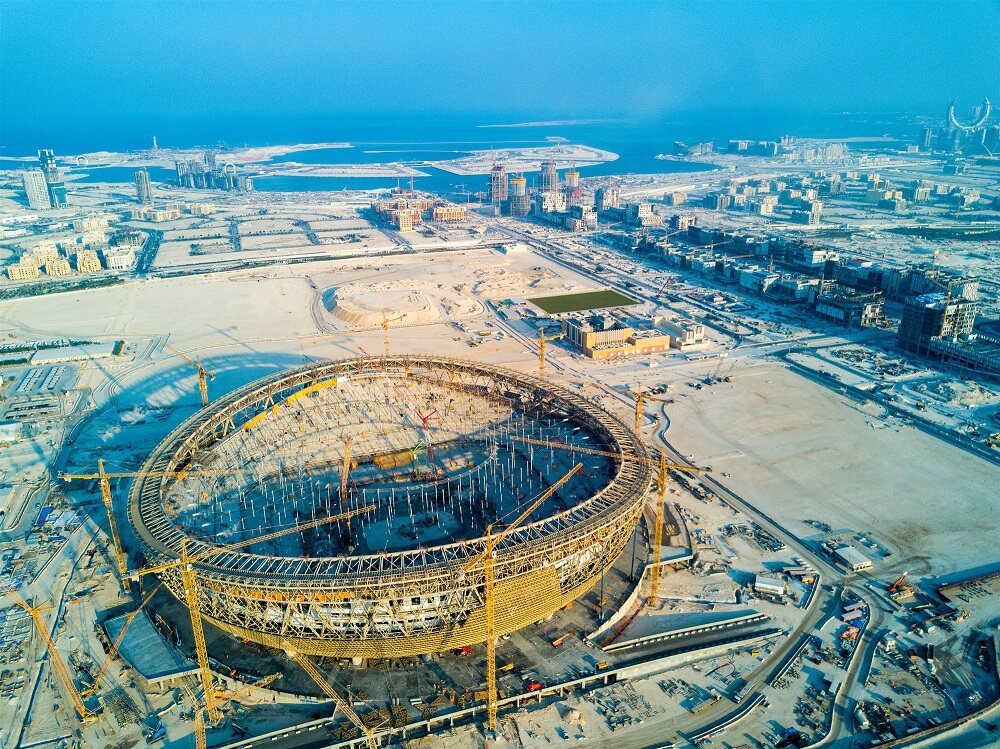
An industry insider with 15 years of engineering experience in Saudi Arabia recently revealed that despite the total investment of over 23 billion US dollars in Saudi Arabia's "four major projects" (King Salman Park, Sports Avenue, Green Riyadh, and Riyadh Arts), which appear to have unlimited business opportunities, there are actually multiple management risks hidden behind them. These projects, coordinated by the Royal Commission of Riyadh, include the world's largest 13 square kilometer urban park, 135 kilometer sports corridor, 7.5 million tree plantations, and thousands of art installations, all backed by an extremely complex engineering management system.
The approval process is like a spider web
According to industry insiders, the approval process of the Royal Commission in Riyadh is astonishingly complex. One typical case is that a regular engineering drawing of a certain enterprise went through a 47 day approval cycle, resulting in a large number of equipment being idle and workers being forced to leave empty, resulting in a direct loss of over 7 million yuan. This lengthy approval process often catches companies newly entering the Saudi market off guard.
Coordination errors come at a heavy cost
Coordination errors are not uncommon during project execution. Due to inconsistent versions of landscape and mechanical and electrical drawings, some companies had to dig up newly laid grass, resulting in a direct loss of 800000 riyals. What is even more headache inducing is that due to information asymmetry between various approval departments, there are often inconsistent requirements before and after.
Change management must be standardized
Another common pitfall is change management. A company was refused payment due to the lack of corresponding records in the system after completing a 2 million riyal engineering change due to a lack of trust in verbal confirmation. These painful lessons indicate that in the Saudi market, any changes must be confirmed in writing and recorded in the official system.
Suggestions for phased implementation
In response to these risks, industry insiders have put forward specific suggestions: in the first week, we should conduct in-depth research on the bidding documents and contact the participating companies to learn from them; In the first month, the company needs to initiate local registration and establish a professional consulting team; Within five months, we should strive to obtain pilot projects and establish a reliable local supply chain system.
The person emphasized that 2025 will be a crucial year for more Chinese companies to enter the Saudi market, and the four major projects can be regarded as the "ultimate test room" in the engineering industry. To establish a foothold here, enterprises cannot rely solely on scale advantages, but also on refined management and strict risk control. These lessons learned will provide important references for Chinese companies planning to enter the Saudi market. Editor/Yang Beihua
Comment





 Praise
 Collect
 Comment

 Share
Share


Write something~