 Search


- Egypt's economy accelerates transformation amidst challenges, creating a more sustainable growth path for the country
- The core of Egypt's current economic growth lies in its endogenous growth model driven by private investment and the coordinated development of non oil manufacturing and modern service industries

At Hurghada International Airport, a tourist from Eastern Europe has just landed and is about to go diving in the Red Sea; In a new factory on the outskirts of Cairo, a newly produced laptop is being packaged and boxed for export to the European market. These seemingly unrelated scenes together constitute the vitality demonstrated by the Egyptian economy in 2025.
The latest data from the Egyptian Ministry of Planning and Economic Development shows that the Egyptian economy achieved a growth rate of 5% in 2024/2025, marking the fastest growth rate in two years. Behind this number are profound changes that Egypt's economic structure is undergoing.
Egypt is moving away from the traditional model of relying on a single income. The International Monetary Fund raised its forecast for Egypt's economic growth rate for the 2024/2025 fiscal year to 4% in its World Economic Outlook released in July 2025. According to statistics released by the Egyptian Ministry of Planning and Economic Development and International Cooperation, the economic growth rate for this fiscal year reached 4.4% and showed a continuous upward trend. The GDP growth rate for the first quarter of 2025/2026 reached 5.3%, far exceeding the same period last year's 3.5%. This figure confirms that the Egyptian economy has entered a new stage characterized by production expansion and increased added value.

The resilience and challenges of traditional advantageous industries
The tourism industry in Egypt is one of the highlights of the country's economic recovery. In 2024, Egypt received 15.755 million tourists, a year-on-year increase of 6%. Entering 2025, this growth momentum is even stronger, and Egypt's most important tourist attraction airport is experiencing significant recovery. Data shows that in March 2025, the air traffic volume at tourist airports in Egypt increased by 67% year-on-year.
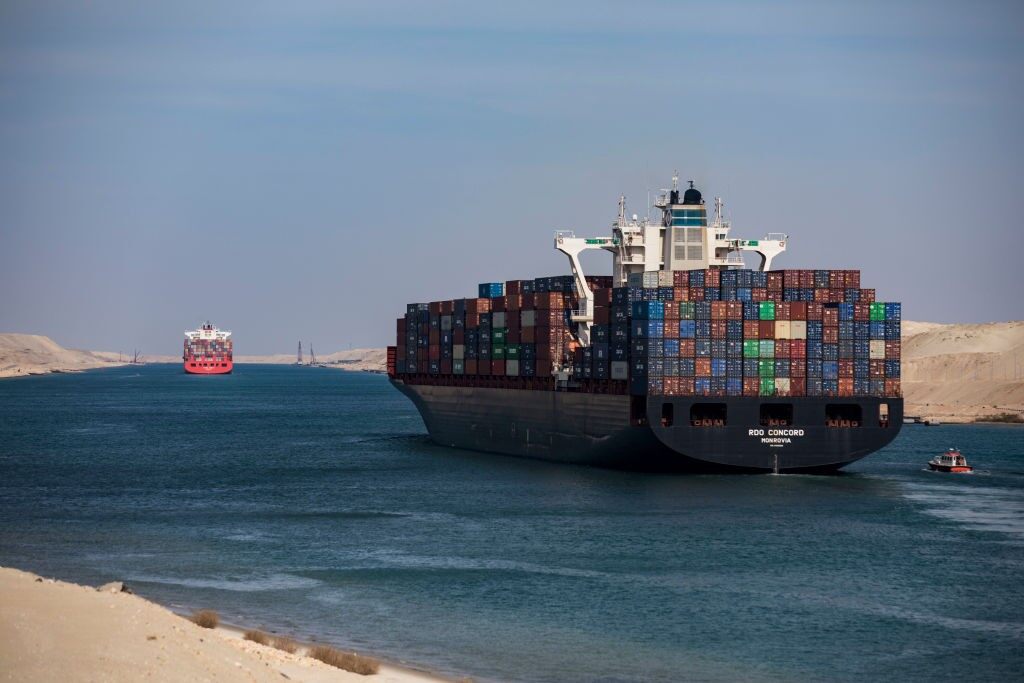
From a regional perspective, the air traffic operation rate at Hurghada International Airport reached its highest, with a year-on-year increase of 122%. The passenger flow at Sharm El Sheikh International Airport has also increased by 120%. However, the revenue from the Suez Canal, a traditional pillar industry in Egypt, shrank significantly by 52% during the same period. Mainly affected by the threat of navigation in the Red Sea and regional geopolitical threats. Due to the slowdown in oil field investment, mining activities have also led to a decrease in domestic oil and gas production, which decreased by 8.9% in this fiscal year.
The Rise of Digital Economy and Information Technology
The information and communication technology industry has been the fastest growing industry in Egypt for five consecutive years, with an annual growth rate of over 16%. By 2023, the contribution rate of this industry to Egypt's GDP has reached 5.8%, indicating that the proportion of the digital economy in Egypt's economic structure is steadily increasing. The Egyptian government actively promotes the Digital Egypt strategy and collaborates with Chinese companies such as Huawei and ZTE to carry out broadband access site construction projects, significantly improving the speed of fixed broadband networks.
The Egyptian government is working hard to create more space for private investment. Under the framework of public investment governance, the government significantly reduced public investment, resulting in a decrease of 60.5%, while private investment increased by 30% during the same period. At present, the proportion of private investment in total investment has risen to 66%, indicating that the Egyptian economy is transitioning towards a private investment driven model. The government's support policies for the private sector have gained international recognition. Dr. Muhasebu pointed out that the country is continuing to implement policies that empower the private sector, which has led to a significant increase in the proportion of private investment.
In the eyes of economists, the real breakthrough of the Egyptian economy lies in the transformation of its growth structure. On the streets of Cairo, new commercial districts are emerging, and the budget for digital capacity building has increased 24 times in the past five years. Keywords: Middle East news, Middle East news and information
From the revival of tourism along the Red Sea coast to the emergence of factories in the Nile Delta, a more diverse economy is taking shape. The Suez Canal is still waiting for the complete recovery of global trade, but Egypt has created new growth poles in multiple areas.Editor/Cheng Liting
Comment


 Praise
 Collect
 Comment

 Share
Share


Write something~