 Search


- Promote the country's shift from traditional trade dependence to localized production and export-oriented manufacturing development
Egyptian Minister of Investment and Foreign Trade Hassan Khatib recently stated in an interview in Cairo that Egypt is increasing efforts to attract Chinese investment in key industrial and technological fields, in order to strengthen the development of local manufacturing and high value-added industries, and promote Egypt's exports to regional and global markets.
"China has become one of Egypt's most important development partners." Khatib said that Egypt's "Vision 2030" is highly consistent with China's the Belt and Road initiative, which has consolidated the foundation of long-term cooperation between the two countries, especially in regional integration, industrial connectivity and expanding cross-border trade.
The Egyptian business community highly praises this, believing that it reflects the deepening of the comprehensive strategic partnership between the two countries. Mustafa Ibrahim, Vice Chairman of the Egyptian Chamber of Commerce China Committee, pointed out that Egypt is advancing its industrial localization strategy. He emphasized that some countries' investments only involve buying existing factories, which is a "transfer of ownership" and not a true investment; China, on the other hand, has built new production facilities from scratch, which reflects the true investment value.
Core hub of Chinese manufacturing industry
A large amount of industrial cooperation is being carried out on the industrial platforms designated by the Egyptian government, among which the Suez Canal Economic Zone has become a core hub for Chinese manufacturing investment. In the past three and a half years, the economic zone has attracted a total investment of 11.6 billion US dollars, with investment from China accounting for about half of it.

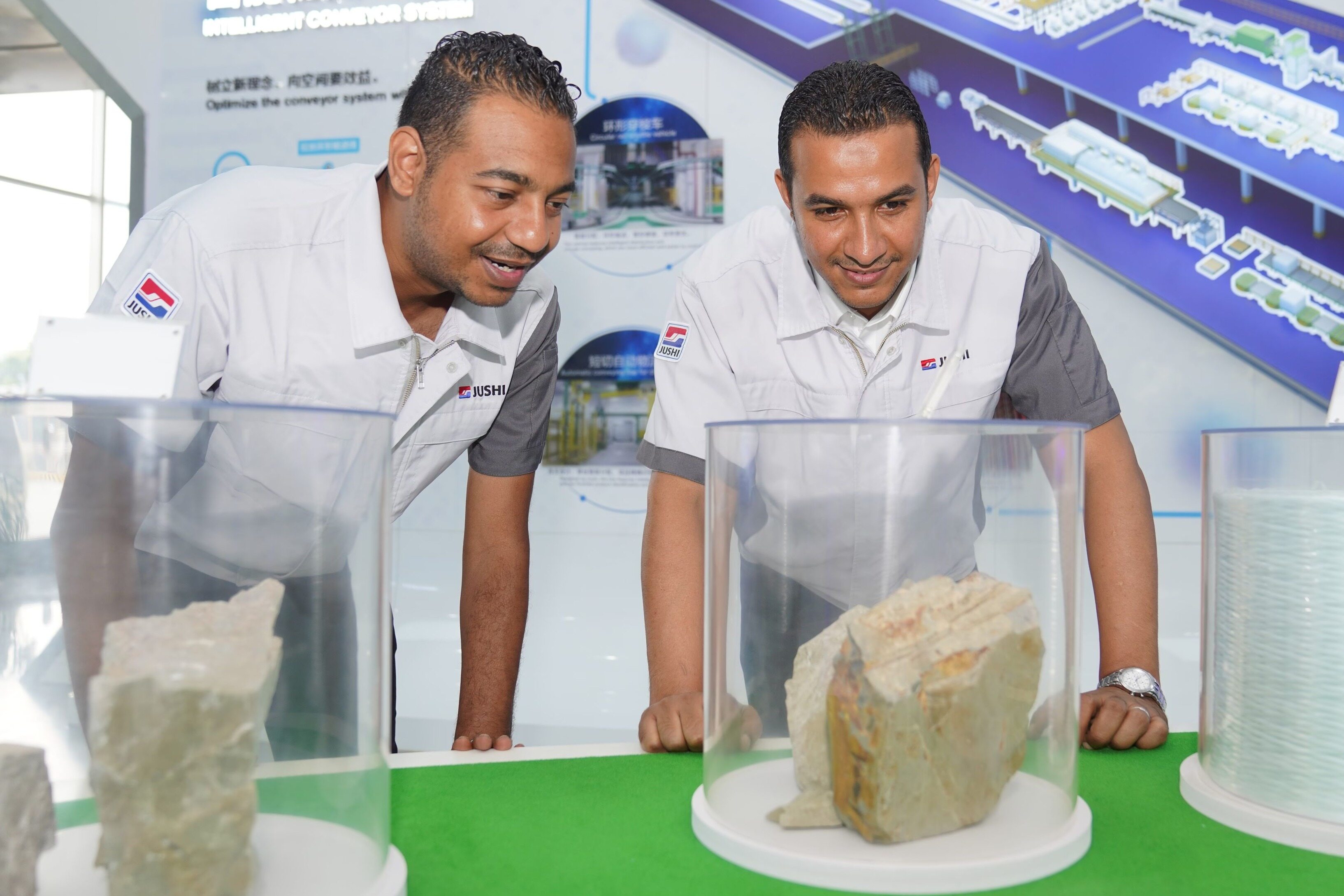
In the Suez Canal Economic Zone, the TEDA Suez Economic and Trade Cooperation Zone jointly built by China and Egypt has gathered over 200 industrial, service, and logistics projects, with a cumulative investment of approximately 3.8 billion US dollars. Chinese fiberglass giant Giant Stone Company has been operating a large-scale production base here for over ten years, making Egypt one of the world's important fiberglass producing countries. In addition, Chinese home appliance manufacturing companies such as Haier and Midea have also expanded their production layout in Egypt.
The recent landing of multiple projects further reflects the importance of Chinese investment in the local manufacturing field: the Suez Canal Economic Zone has approved multiple construction plans, including a $70 million glass products project, a $40 million microfiber production line, and a $100 million complete textile and clothing complex, with most products aimed at the export market.
Export oriented+localization+industrial chain
China's investment in Egypt is shifting from trade and assembly to manufacturing and industrial chain landing. The core value lies in the investment form - building factories, supporting facilities, local employment, and export-oriented, which is indeed more in line with the practical demands of Egypt's industrial localization and foreign exchange income generation, and also explains why Chinese funded projects have achieved higher stability at the policy level.
For Chinese companies, there are three key points to consider when landing in Egypt in the future: firstly, to layout manufacturing with an export-oriented approach and fully utilize Egypt's free trade arrangements with the European Union, Africa, and the Middle East; Secondly, priority should be given to entering mature industrial platforms, such as the Suez Canal Economic Zone, to reduce infrastructure and compliance costs; The third is to embed as much as possible into the local industrial chain, forming local value-added in employment, procurement, and supporting facilities to hedge against exchange rate, policy, and trade barrier risks.
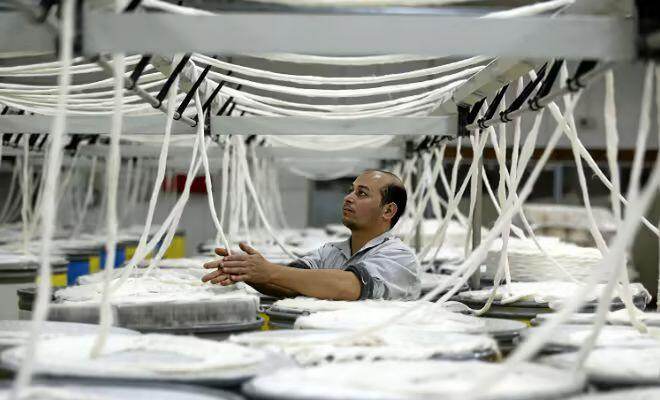
These collaborations not only help promote sustainable industrial growth and job creation in Egypt, but also deepen Egypt's participation in regional and global supply chains, highlighting the strategic and long-term nature of China Egypt economic cooperation. Keywords: Middle East News, International News
With the arrival of the 70th anniversary of the establishment of diplomatic relations between China and Egypt, cooperation between the two countries is ushering in new historical opportunities. Egypt, with its strategic location at the intersection of Asia, Europe, and Africa, competitive labor costs, and extensive trade agreements, has important conditions to become China's gateway to the global market. For Chinese companies, Egypt is becoming a new choice for "going global", and the opportunity for Chinese factories has really come.Editor/Yang Meiling
Comment


 Praise
 Collect
 Comment

 Share
Share


Write something~