 Search


- The AI wave is reshaping the semiconductor industry with unprecedented power
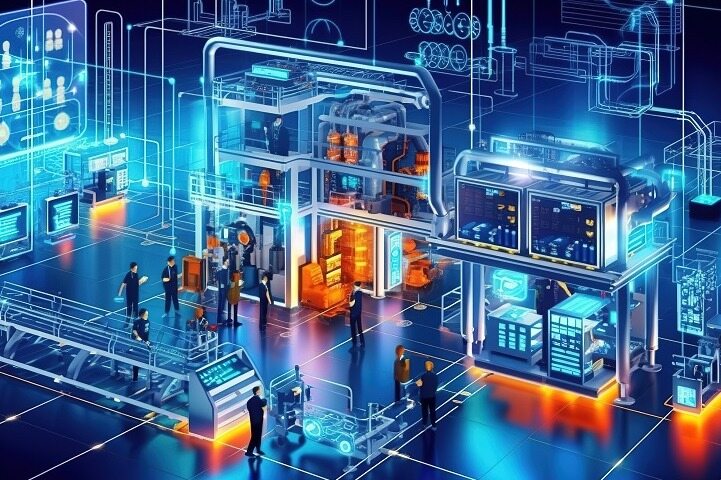
In today's global digital wave, artificial intelligence has deeply integrated into various industries from a technical concept, becoming the core engine driving economic growth. From the training iteration of a billion parameter large model, to the real-time response of intelligent devices on the end side, and to the intelligent decision-making of industrial manufacturing, computing power, as the "core fuel" for AI development, is showing an exponential explosive trend. The semiconductor industry, as the physical carrier of computing power supply, is the cornerstone of AI technology implementation, but it also faces the dilemma of traditional design paradigms and architectures being difficult to adapt to the explosive demand for computing power. This AI computing revolution not only breaks the traditional growth logic of the semiconductor industry, but also creates unprecedented innovation opportunities in terms of technological paths, market patterns, ecosystems, and other dimensions, promoting the industry to embark on a new journey of transformation from "scale expansion" to "value cultivation".

Requirement reconstruction: AI driven semiconductor industry growth logic transformation
The rapid evolution of artificial intelligence is disrupting the traditional growth model of the semiconductor industry. The exponential growth of computing power demand and the diversified expansion of application scenarios together constitute the core driving force of industry development. Unlike the traditional cycle dominated by consumer electronics, AI driven semiconductor growth presents stronger sustainability and structural characteristics. The demand for computing power across all scenarios, from cloud to end-to-end, from training to inference, is reshaping the industry landscape.
The explosive growth of computing power demand has become the core industry engine. The parameter scale of generative AI models has jumped from billions to hundreds of billions, and the training data volume has exceeded the trillion token level. The demand for computing power doubles every 3-4 months, far exceeding the 18-24 month iteration cycle of Moore's Law. AI will drive the semiconductor industry to achieve six consecutive years of growth, setting a record for the longest growth cycle in history. In 2025, global logic semiconductor revenue will increase by 37.1% year-on-year, with AI specific chips such as NVIDIA GPUs and TPUs becoming the main growth points. The revenue share of the data computing sector has exceeded 40%, and it is expected to exceed 50% of the total semiconductor revenue for the first time in 2026. Large scale data centers have become the core demand carrier, and cloud service providers such as Google, Microsoft, and Amazon continue to increase investment. Their AI related expenditures directly drive a surge in demand for products such as GPUs, HBM memory, and high-speed network chips.
The structural differentiation of computing power demand has given rise to diversified market opportunities. The focus of AI computing is gradually expanding from the training of general base large models to the field of inference applications, and it is expected that 80% of AI computing will be used in inference scenarios in the future. Among them, intelligent agent AI, as the core growth point in the field of inference, will gradually surpass training scenarios in terms of computing power demand from 2025. In 2024 alone, its scale will achieve a 140 fold increase, reaching a monthly usage of 140 trillion tokens. This differentiation has driven precise iteration of semiconductor products: cloud training scenarios require a combination of high-performance GPUs, AI accelerators, and high bandwidth memory, while edge inference scenarios focus more on low-power, small-sized, and highly reliable chip solutions. At the same time, the accelerated implementation of end-to-end AI has further enriched market demand, including smartphones PC、 The surge in demand for AI computing power in terminal devices such as smart cars and humanoid robots has driven explosive growth in products such as analog chips, power chips, and MCU chips.
Technological innovation: multidimensional breakthroughs open up new space for industrial growth
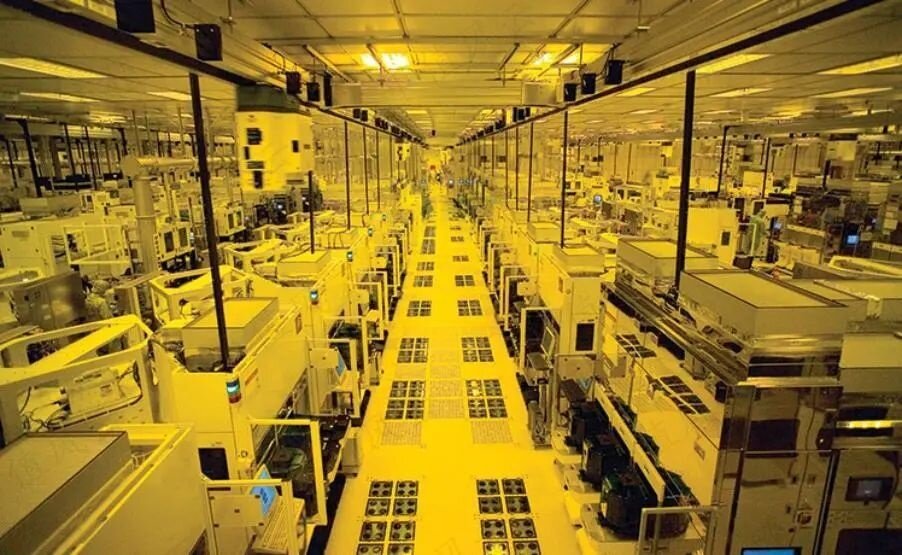
Faced with the explosive demand for AI computing power and structural differentiation, the single development path of traditional semiconductors relying on process miniaturization is no longer sustainable. The industry is shifting from "process miniaturization" to a diversified innovation path centered on material innovation, technological innovation, structural innovation, and integration innovation, forming new development opportunities in multiple dimensions such as chip architecture, storage technology, packaging technology, and interconnection technology.
Specialized AI chips and heterogeneous computing architectures have become the key to industrial upgrading. GPU, as the core carrier of AI computing power, continuously improves performance through architecture optimization, significantly enhancing AI computing efficiency. At the same time, new architectures such as integrated storage and computing, and near memory computing are rapidly emerging. By reconstructing the positional relationship between computing and storage, data handling latency is reduced, significantly improving computing power density and energy efficiency. Song Jiqiang, Director of Intel China Research Institute, pointed out that heterogeneous AI infrastructure is the trend of future development, which can not only improve the performance, efficiency, and cost-effectiveness of current applications, but also maintain long-term effectiveness for future intelligent AI applications. This architectural innovation is not only reflected in the chip design level, but also promotes the competition for "system level solutions". More and more enterprises are beginning to provide integrated services covering chips, algorithms, and software to adapt to complex AI application scenarios.
Breakthroughs in storage and interconnection technology have opened up new growth opportunities. The demand for storage bandwidth and capacity in AI large-scale models is growing exponentially, and traditional storage technology has become the main bottleneck for improving computing power. High bandwidth memory (HBM) is rapidly emerging as a solution, and its market size is expected to grow from approximately $16 billion in 2024 to over $100 billion in 2030, potentially surpassing the size of the entire DRAM industry in 2024. At present, each GPU module has integrated up to 192GB of HBM3e, and its high-speed data transmission capability has become a key support for improving the performance of AI chips. In the field of internet technology, to meet the collaborative work requirements of multiple chips and nodes,
Scenario Empowerment: New Blue Ocean for Market Expansion in the Semiconductor Industry
The AI computing revolution has not only driven the iterative upgrading of semiconductor technology, but also opened up vast market space through scene fusion. The deep penetration of AI applications from cloud data centers to terminal intelligent devices, from industrial manufacturing to consumer electronics, is driving differentiated demand for semiconductor products, forming multiple high growth niche markets.
Cloud based intelligent computing centers have become the core growth pole. The ultra large scale data center is the core carrier for AI model training and inference, and its construction boom has directly driven the explosive demand for high-performance semiconductor products. The rise of Neo Cloud has reshaped the cloud computing market landscape, designed from the beginning for GPU high-density, low latency networks, and AI specific workloads. By mid-2025, these new data centers have raised higher requirements for the performance, energy efficiency, and compatibility of semiconductor products, driving technological upgrades and market expansion of GPU, HBM, high-speed network chips, and other products.
The integration of vertical industries has spurred the demand for customization. The deep integration of AI technology with vertical industries is driving the development of semiconductor products towards customization and specialization. In the field of intelligent vehicles, the demand for AI computing power in functions such as autonomous driving and intelligent cockpit continues to increase, driving the growth of in vehicle AI chips, power semiconductors, sensor chips, and other products; In the industrial field, applications such as industrial automation and predictive maintenance require high reliability and low latency edge AI chips to support the transformation and upgrading of intelligent manufacturing; In the medical field, scenarios such as AI assisted diagnosis and gene sequencing pose special requirements for the accuracy and computing power of semiconductor products. This customized demand in the industry has driven differentiated competition among semiconductor companies. Companies such as Chiplink Integrated have built one-stop solutions covering chip design services, wafer manufacturing, module packaging, and system verification, responding to the fragmented demands of the AI era through a system outsourcing model.
 Industrial Restructuring: Opportunities and Breakthrough Paths for China's Semiconductor Industry
The AI computing revolution brings not only technological and market changes, but also the restructuring of the global semiconductor industry ecosystem. In this transformation, China's semiconductor industry is facing challenges such as technological barriers and ecological monopolies, as well as historical opportunities to break through relying on huge market demand, policy support, and technological innovation.
Building development advantages through the dual drive of policy and market. As the world's largest AI application market and semiconductor consumer market, China has provided a solid foundation for industrial development. At the national level, multiple policies have been introduced to support the development of the semiconductor and AI industries, promote the construction of computing infrastructure and technological innovation. The implementation of the "East West Computing" project has provided a wide range of application scenarios for AI chips, storage devices, and other products. At the same time, the demand for computing power of domestic large-scale Internet enterprises and AI start-ups continues to be strong, providing valuable market verification opportunities for local semiconductor enterprises.
Technological breakthroughs and ecological construction go hand in hand to overcome bottlenecks. Faced with the monopoly of foreign companies in high-end chips, core equipment and other fields, China's semiconductor industry is accelerating technological breakthroughs and making breakthroughs in multiple key areas. In the field of chip design, domestic enterprises have launched multiple AI accelerator chips, achieving performance benchmarking in edge inference scenarios; In the field of packaging and testing, local enterprises actively layout Chiplet technology, and the advanced packaging equipment of CETC Equipment has provided support for the construction of domestic packaging lines; In the field of EDA tools, Hejian has implemented the first domestic UCIe IP interconnect technology verification across process nodes, supporting Chiplet design across process nodes. In terms of ecological construction, domestic enterprises are actively participating in global standard setting, promoting the popularization of interconnection standards such as UCIE, breaking technological monopolies, and enhancing the overall competitiveness of the industry.
Differentiated competition and international cooperation open up development space. In the global semiconductor industry competition landscape, Chinese companies are achieving breakthroughs through differentiated competition strategies. In segmented fields such as end-to-end AI and industrial AI, domestic enterprises have launched more cost-effective products based on their deep understanding of application scenarios and rapid response capabilities; At the same time, China's semiconductor industry actively engages in international cooperation, improving its technological level through technology introduction, joint research and development, and other means. This open and cooperative attitude helps China's semiconductor industry integrate into the global industrial chain and enhance its international competitiveness.
The AI computing revolution is reshaping the technological path, market landscape, and ecosystem of the semiconductor industry. The traditional development model relying on process miniaturization has become a thing of the past, and diversified innovation, scene integration, and ecological synergy have become new themes for industrial development. From large-scale computing power clusters in the cloud to intelligent terminal devices on the end, from disruptive innovation in chip architecture to continuous iteration of packaging technology, the semiconductor industry is ushering in unprecedented development opportunities.
In the future, the semiconductor industry will be deeply bound and mutually beneficial with AI technology. Breakthroughs in semiconductor technology will drive the continuous upgrading of AI computing power, and the development of AI technology will also bring more innovative inspiration and market demand to the semiconductor industry. In this two-way transformation, the semiconductor industry is transforming from a "computing power supplier" to an "AI innovation enabler", injecting continuous power into building an intelligent society and promoting the development of the digital economy, and embarking on a broader new journey of development.Editor/Bian Wenjun
Comment

 Praise
 Collect
 Comment

 Share
Share


Write something~