 Search


- Chinese companies accelerate their layout in the Brazilian energy storage market, helping the global energy transition

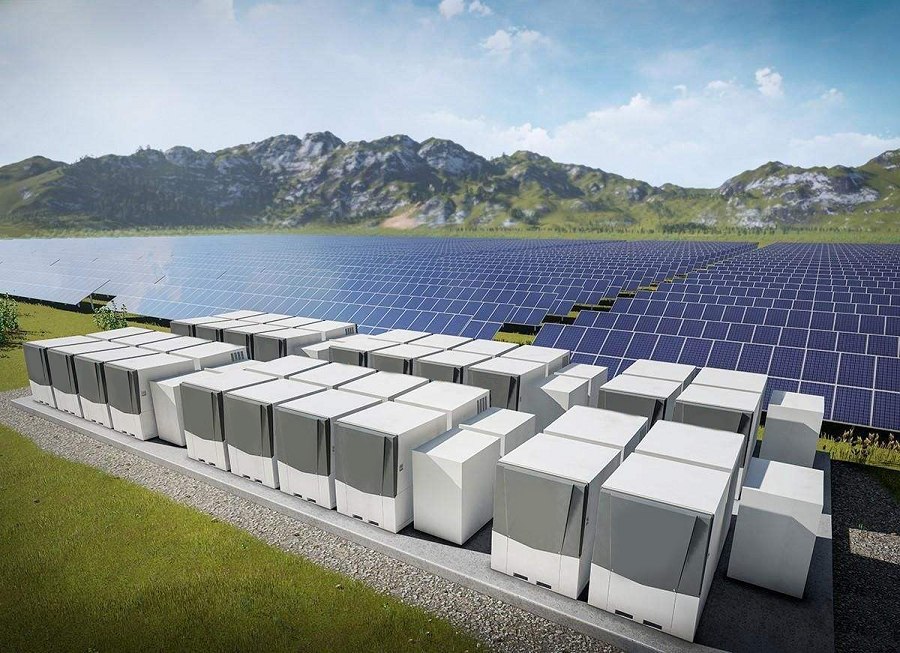
The upcoming battery system auction by the Brazilian federal government is expected to leverage up to 13.9 billion Brazilian reals, approximately 18.6 billion yuan in direct investment, and attract Chinese energy giants such as BYD, CATL, Sunac, and Huawei to accelerate their layout. This bidding, which is seen as a crucial step in Brazil's energy transition, is triggering intense competition in the global energy storage industry chain.
According to the Brazilian Energy Storage Association's prediction, the Brazilian energy storage market will attract 45 billion Brazilian reals in investment by 2030, and will climb to 77 billion Brazilian reals by 2034. The first round of auction plan led by the Ministry of Mines and Energy aims to purchase 2 gigawatts of energy storage capacity, with a requirement for continuous power supply for 4 hours per day. The first batch will be delivered in August 2028. Energy Minister Alexander Silva has hinted that the auction may be held in April 2026.

Global enterprises are building strategic alliances around this auction. Chinese companies include Sunac, BYD, CATL, Huawei, JinkoSolar, JA Solar, TBEA, Oriental Sunrise, and Paineng Technology; Brazilian companies include WEG, Mora Battery, and UCB Power; International giants such as General Electric Vernova, Tesla, and Ingersoll Rand are also actively involved. It is worth noting that Chinese companies generally adopt a pure supplier strategy and do not form a consortium with bidders, but tend to establish follow-up supply cooperation with the winning bidder. As of early February 2026, Sunac Power has contacted 37 potential companies, Huawei has reached out to about 30 potential partners, and TBEA has conducted cooperation negotiations with 80 companies.
Bloomberg New Energy Finance data shows that the cost of energy storage systems in China is only $73 per kilowatt hour, far lower than Europe's $177 and the United States' $219. In early February this year, the Brazilian federal government raised import tariffs on such systems from 16% to 20%. In addition, some local production relies on imported components, resulting in a sharp increase in cost pressure across the entire industry chain. The Latin American head of Bloomberg New Energy Finance pointed out that China maintains significant advantages globally through economies of scale and production costs.
In addition to technological competition, financial capability also becomes a decisive factor. TBEA's revenue in 2024 reached 96 billion yuan, nearly twice the revenue of Brazilian industrial giant WEG during the same period. The company plans to provide financing solutions for major clients: equipment will be delivered first, and installment payments will be made after the power station is put into operation. It is reported that the project of supplying 500 megawatt hours requires an average monthly investment of about 50 million US dollars. On February 6, 2026, TBEA and CUBE ENERGY in Brazil officially reached a cooperation agreement to jointly develop and supply battery energy storage systems with a total capacity of up to 2.4 gigawatt hours, which will be used for reserved capacity auction projects in 2026. Keywords: international, energy storage
Chinese enterprises are facing three major opportunities: seizing the first mover advantage, binding local partners in advance, and establishing service networks; Provide comprehensive solutions combining technology and finance to address high tariff barriers; Using Latin America as a springboard, radiating the entire South American clean energy market. It is worth noting that the policy uncertainty, localization requirements, and increasingly fierce price wars of the Brazilian government also pose challenges. Chinese enterprises need to continue to deepen their cultivation in compliance, supply chain resilience, and brand trust in order to achieve stability and long-term success in this 10 billion dollar market.Editor/Gao Xue
Comment




 Praise
 Collect
 Comment

 Share
Share


Write something~