 Search


- Pre bidding for the renovation and expansion of Hangzhou Ningbo Expressway, with a total length of 113.7 kilometers
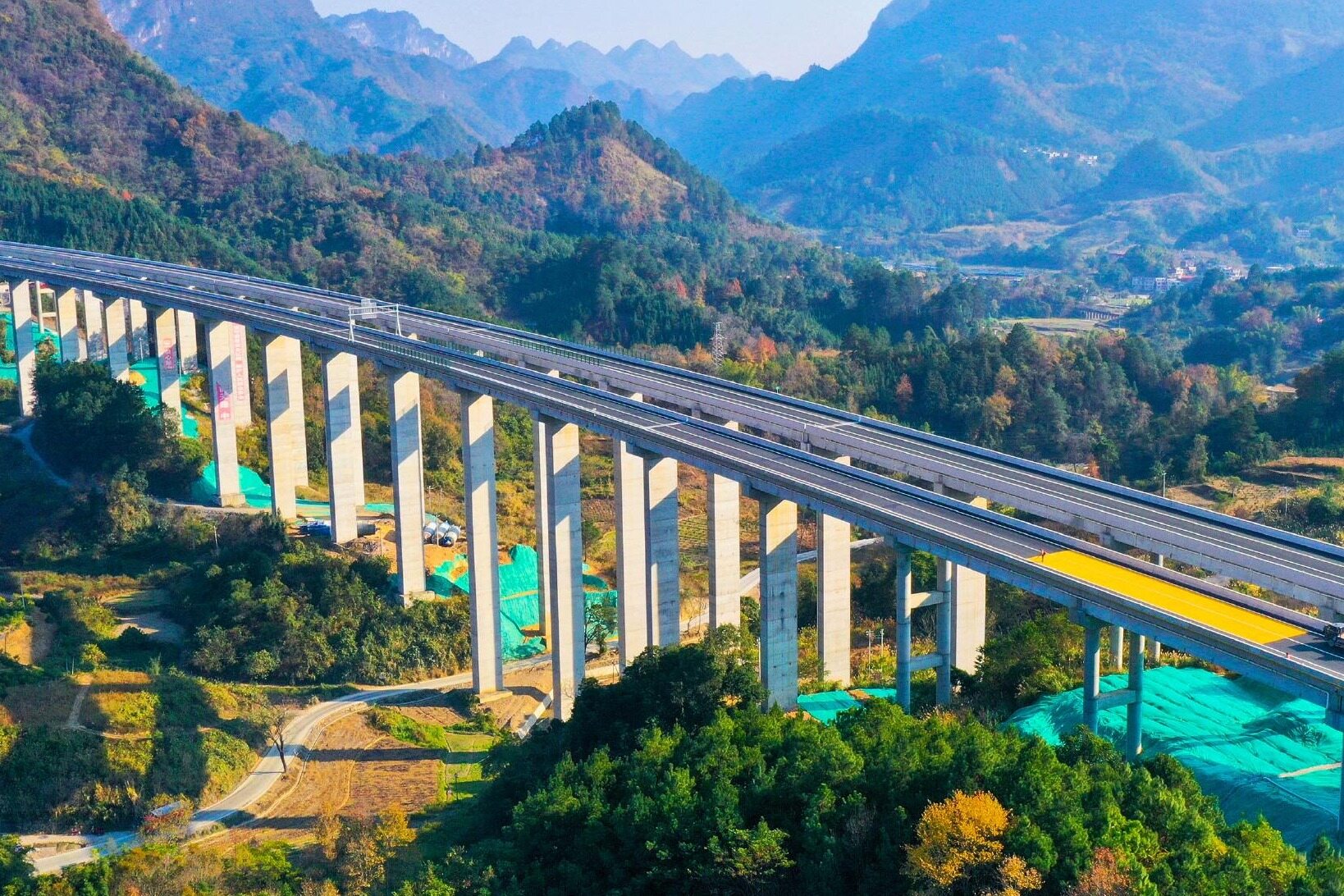
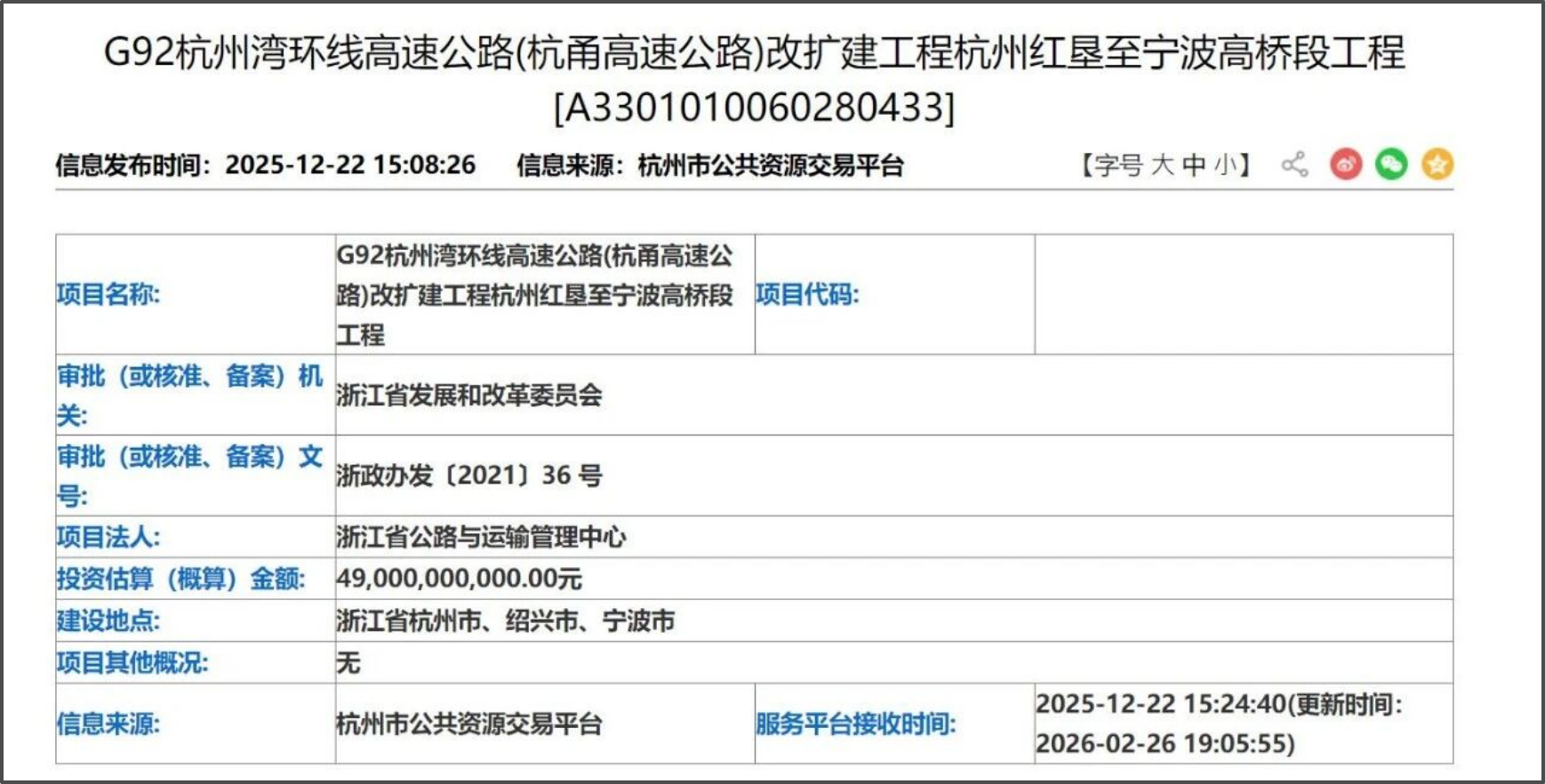
The release of a bidding announcement for engineering feasibility study consultation and evaluation has once again brought the Hangzhou Ningbo Expressway, one of the busiest highways in Zhejiang, into the spotlight. This economic artery that connects the three trillion level cities of Hangzhou, Shaoxing, and Ningbo has been in operation for nearly 30 years since its completion in 1996. The daily traffic volume of 130000 to 170000 has already exceeded the original design carrying capacity. Now, the preliminary work of the Hangzhou Hongken to Ningbo Gaoqiao section of the renovation and expansion project with a total investment of about 49 billion yuan has officially started, and a profound change related to the transportation pattern of the southern wing of Hangzhou Bay is about to kick off.
The old road is overwhelmed and urgently needs to be expanded
The Hangzhou Ningbo section of the G92 Hangzhou Bay Ring Expressway is the first expressway in Zhejiang Province. It was completed and opened to traffic in 1996 and underwent a renovation and expansion between 2000 and 2007. With the rapid development of regional economy, the current traffic volume of most road sections has reached 130000-170000 pcu/d, and the service level has significantly decreased. This renovation and expansion project starts from Hongken in Hangzhou, connects to the Hangzhou Ring Expressway, and ends at Gaoqiao in Ningbo, connecting to the Ningbo Ring Expressway. The route passes through Xiaoshan in Hangzhou, Keqiao in Shaoxing, Yuecheng, Shangyu, Yuyao in Ningbo, and Haishu from west to east, with a total length of about 113.7 kilometers.
Stereoscopic transformation breaks through bottlenecks
According to the preliminary feasibility study plan of the project, this renovation and expansion will basically widen along the old road, and it is planned to widen to the standard of a ten to fourteen lane expressway. The design speed will be maintained at 120 kilometers per hour, and elevated lifting schemes will be considered for some sections. The entire line plans to renovate and expand 6 hub interchanges, 9 general interchanges, and 2 service areas. The estimated total investment for the project is about 49 billion yuan, and the preparation of the feasibility study report for the project has been undertaken by a consortium of Zhejiang Shuzhi Transportation Institute and Hangzhou Transportation Planning and Design Institute.
Reshaping the pattern of the southern wing of Hangzhou Bay
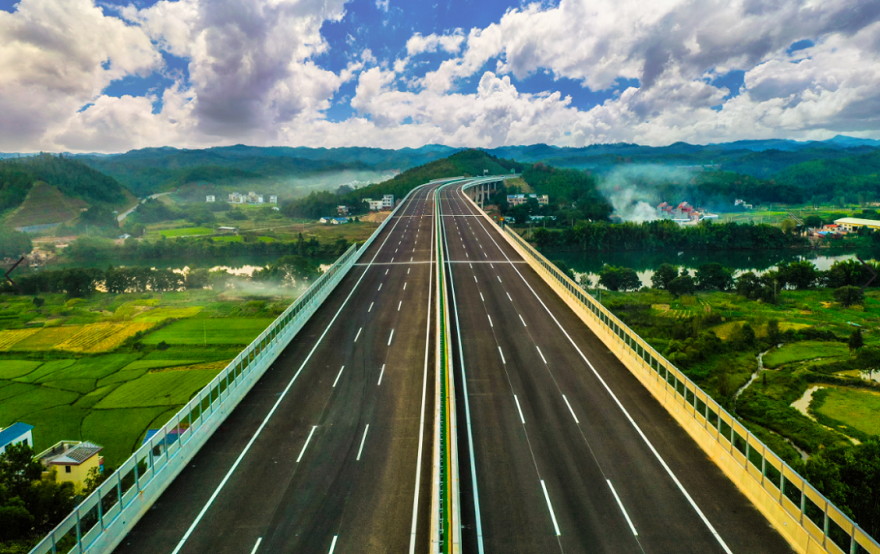
The G92 Hangzhou Bay Area Ring Expressway is one of the six regional ring roads in the national highway network plan and a core component of the fifth ring road network in Zhejiang Province. The planned renovation and expansion of the Hangzhou Hongken to Ningbo Gaoqiao section is an economic artery that connects the three major cities of Hangzhou, Shaoxing, and Ningbo. After the completion of the project, it will effectively alleviate the congestion of the Hangzhou Ningbo Expressway, significantly improve the traffic capacity and service level of the national expressway corridor, and provide a solid infrastructure guarantee for the deepening of industrial synergy, factor flow, and the integrated development of the Yangtze River Delta in the southern wing of Hangzhou Bay. Editor/Gao Xue
Comment




 Praise
 Collect
 Comment

 Share
Share


Write something~