 Search


- The third meeting in the short term highlights the increasingly close railway cooperation between China and Kazakhstan
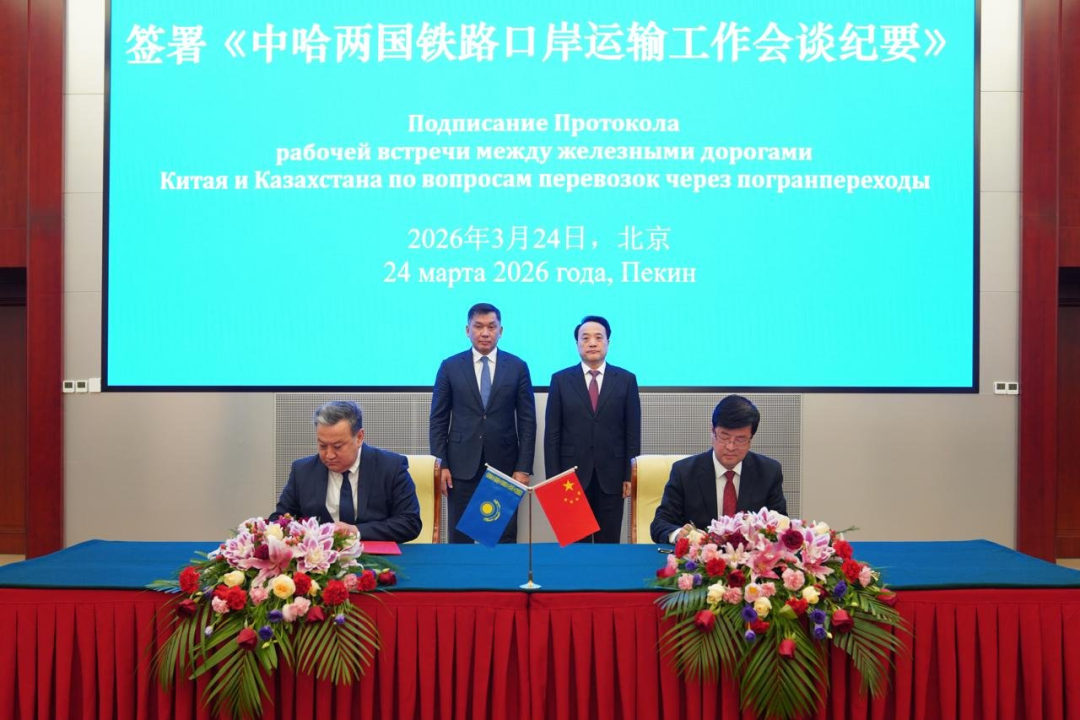
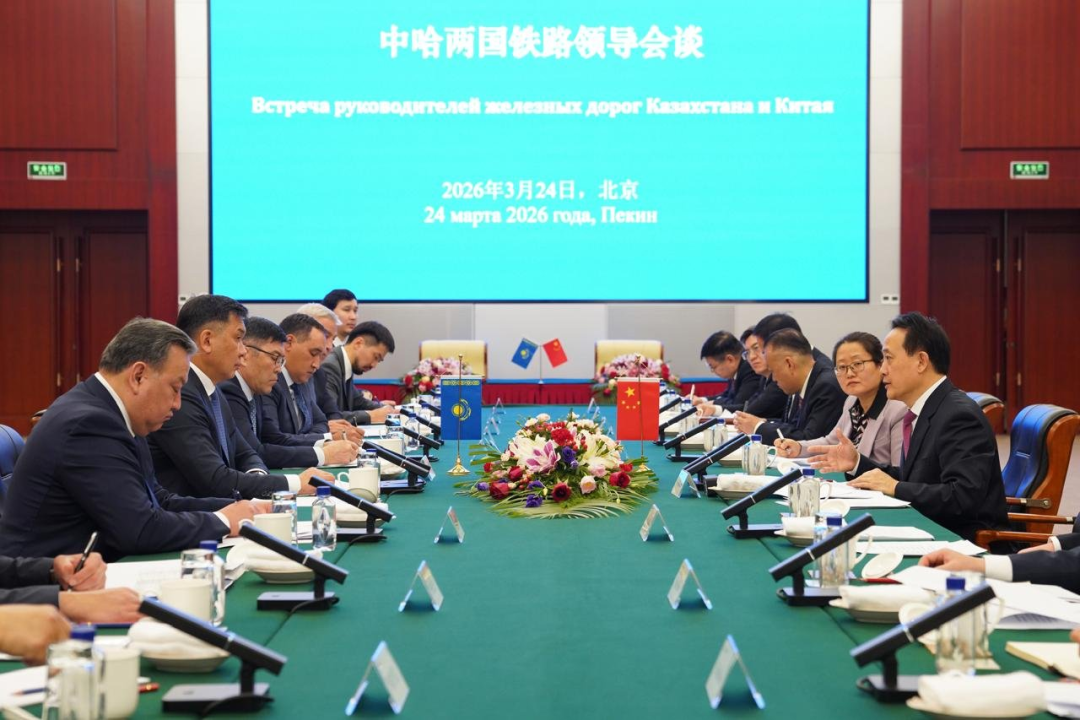
Recently, Talgat Ardebergnov, Chairman of Kazakhstan State Railway Company, visited Beijing and held working talks with Guo Zhuxue, Chairman of China State Railway Group Co., Ltd. The frequent pace of interaction itself becomes the best footnote to the degree of cooperation between both parties. At the meeting table, there was recognition of the achievements of the past year - China expressed satisfaction with the orderly and stable growth of freight volume in 2025; There is a more specific blueprint for the future - both sides have set targets for further increasing cross-border port freight volume and train frequency by 2026.
The four major corridors go in parallel
The core topic of this meeting is focused on the deepening and expansion of cross-border freight transportation. Both sides will focus their joint development on several key international transportation corridors, including the Trans Caspian International Transport Corridor, China Europe, China Central Asia, and China Russia routes.
In order to fully unleash the potential of these corridors, the railway companies of the two countries have reached a consensus: not only should the number of container trains be increased, but efficiency should also be sought from "wisdom". Both parties agree to promote the deep digitization of collaborative processes and make the flow of goods smoother and more predictable by exchanging transportation plans and management information in advance. This means that trains shuttling between the China Kazakhstan border in the future will carry more containers and more efficient data streams.
Port and route upgrade
The achievement of grand goals cannot be achieved without solid infrastructure support. During the talks, a series of specific infrastructure upgrade and renovation projects were put on the agenda, aiming to comprehensively unblock the "arteries" of cross-border transportation.
Both sides plan to simultaneously promote the construction of a double track railway from Alashankou in China to Dostyk in Kazakhstan, and enhance the operational capacity of related freight stations, which is like expanding "multiple lanes" for the busy border passage. At the same time, the modernization and upgrading of the Atenkori Khorgos and Khorgos Jinghe sections will further ensure the smooth flow of international trunk lines.
Of particular concern is that the meeting specifically discussed matters related to the construction of the third cross-border railway port between China and Kazakhstan, the Baktu Tacheng project. Both parties discussed the expected freight volume and main types of goods for this new port, and planned a clear blueprint for the future "new portal".
Freight and passenger dual wheel drive
While fully ensuring the smooth flow of the economy, this meeting also outlined a new vision for enhancing friendly exchanges between the two peoples. In addition to freight transportation, the two sides also discussed plans to operate tourism special trains from China to Kazakhstan and even wider Central Asian countries.
This idea means that in the future, Chinese tourists are expected to travel on specialized tourist trains, crossing the vast grasslands of Kazakhstan and exploring the unique charm of Central Asia more conveniently and comfortably. From "freight transportation" to "passenger transportation", railway cooperation is expanding towards a more comprehensive and humanistic direction, making the Steel Silk Road a friendly road that enhances people to people connectivity.
Through this meeting, it can be seen that China Kazakhstan railway cooperation is evolving from a single transportation channel construction to a comprehensive logistics and cultural exchange system that is three-dimensional, networked, and intelligent, laying a more solid track for the common development of regional economy.Editor/Yang Meiling
Comment




 Praise
 Collect
 Comment

 Share
Share


Write something~