 Search


- Policy support and technological breakthroughs accelerate the large-scale development of China's hydrogen energy industry
The outline of the 15th Five Year Plan clearly proposes to promote the development of emerging fields such as hydrogen energy and nuclear fusion energy, making them new engines of economic growth. Since the beginning of this year, China's hydrogen energy industry has been accelerating its breakthrough in the exploration stage of technology demonstration, gradually entering a new era of coordinated development of scale and commercialization. It is worth noting that seawater can be directly used to produce hydrogen without undergoing desalination treatment. In the Bohai Bay region, China's first 100 kilowatt level factory direct hydrogen production project from seawater has the conditions to move from laboratory research and development to large-scale production. The hydrogen energy transportation corridor is constantly becoming denser and expanding. In the Chengdu Chongqing region, two more hydrogen transmission lines have been successfully connected recently. As of now, two intercity hydrogen transmission lines and one direct trunk line have been built in the region, with a total of over 2000 hydrogen fuel cell vehicles promoted and 41 hydrogen refueling stations built.
The 2026 Government Work Report clearly states that efforts should be made to cultivate new economic growth points such as hydrogen energy and green fuels. Currently, more than 20 provinces in China have listed hydrogen energy as a key emerging industry direction for cultivation in their local "15th Five Year Plan". In the first two months of 2026, there will be a total of 82 hydrogen energy related filing projects nationwide, with a total investment of approximately 47.436 billion yuan. The projects cover various key links in the hydrogen energy industry chain, such as green hydrogen preparation, storage and transportation equipment. As of now, China has built 574 hydrogen refueling stations with a refueling capacity of over 360 tons per day, ranking first in the world in related indicators. According to the plan, by 2030, the number of fuel cell vehicles in China will double compared to 2025, striving to reach 100000 units.
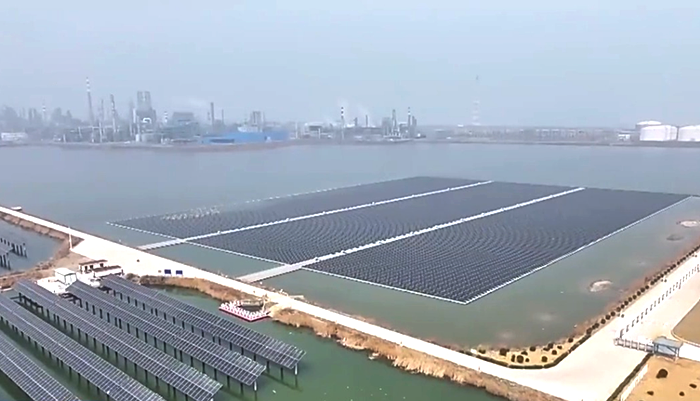
The application scenarios of hydrogen energy are no longer limited to the transportation field. Since 2026, it is gradually expanding to multiple fields such as industry and people's livelihood. In Zhanjiang, Guangdong, China's first million ton nearly zero carbon steel production line has achieved stable operation. The production line has replaced traditional coke with hydrogen for the first time, realizing the green transformation of steel production; In Huangshi, Hubei, the use of hydrogen powered shared bicycles has enabled ordinary people to truly experience the convenience of hydrogen energy. After one refueling, this type of shared bicycle can have a range of up to 90 kilometers.Editor/Gong Ziwei
Comment




 Praise
 Collect
 Comment

 Share
Share


Write something~