 Search


- Focusing on advantageous corridors to replace the entire network and reconstruct new paths

When the blueprint for West East hydrogen delivery collides with a 100000 kilometer natural gas pipeline network, a calm examination of the fate of green hydrogen is unfolding in the laboratory of Peking University. Through deduction of over 135 million power generation records and 200000 pipeline data, researchers have torn open the warm veil of hydrogen blending in the pipeline network, revealing an unexpectedly cruel truth: the highly anticipated hydrogen transmission artery may not be able to carry the future of China's hydrogen energy.
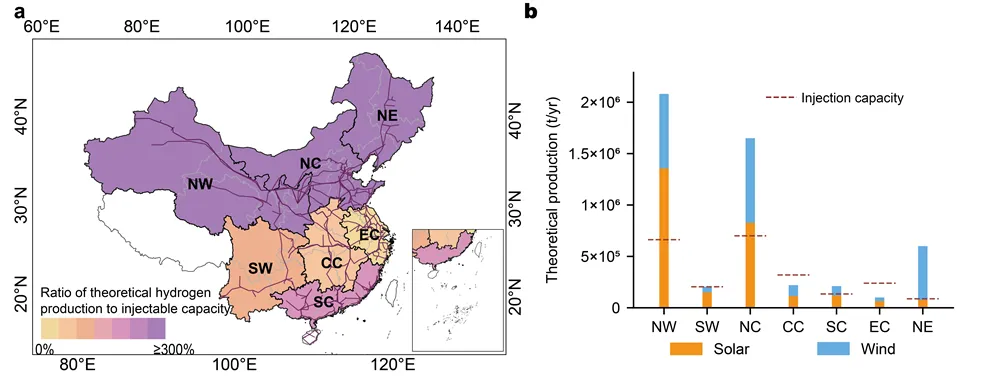
Misalignment between resources and pipeline network
Research data shows that the regions in China with large-scale hydrogen blending capabilities are highly concentrated in the northwest and north China, accounting for over 70% of the country's capacity. However, the northwest, which has the richest scenery resources, faces a transportation distance of up to 2000 kilometers due to its distance from the consumer market. This spatial mismatch between resources and infrastructure has resulted in 96.3% of photovoltaic hydrogen production projects struggling to cross the 6% investment return threshold, and resource endowments have not been transformed into economic advantages.
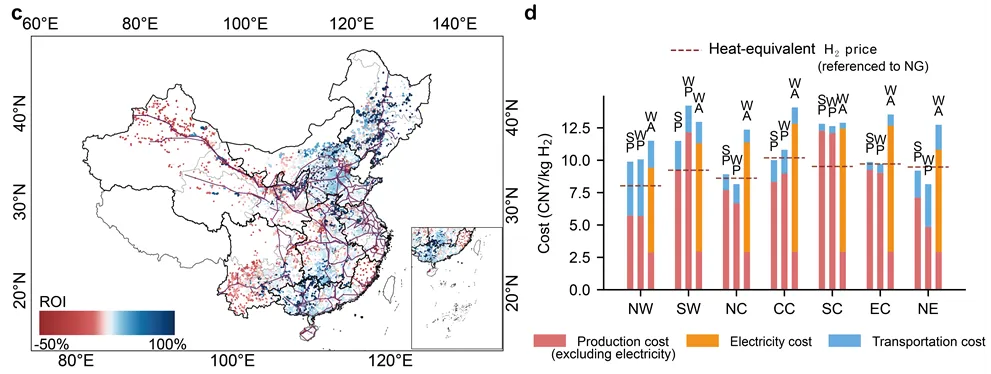
Trapped in the trilemma
Even more severe is the emergence of the trilemma. No region can achieve the three goals of large-scale injection, high investment return, and significant emission reduction simultaneously. Especially the compression energy consumption and leakage caused by long-distance transportation have led to a significant increase in the full lifecycle carbon emissions of some projects in the northwest. When the transportation distance exceeds 1500 kilometers, the carbon reduction benefits of green hydrogen are almost completely consumed by the emissions in the transportation process, and even less environmentally friendly than directly using natural gas. Keywords: social commentary, news and information, hydrogen energy
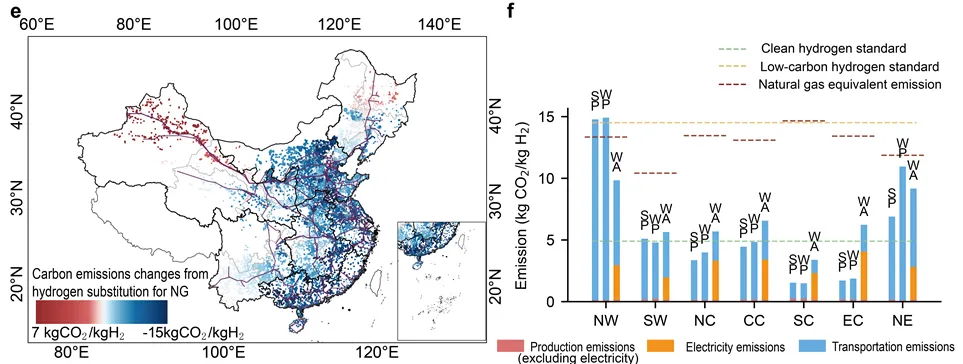
Refactoring the transportation path
Faced with structural constraints, blindly expanding across the entire network has been proven false. Research proposes a new breakthrough direction: abandoning the illusion of sweeping everything in one fell swoop and focusing on a few advantageous corridors such as North China; Promote the local consumption of green hydrogen in Northwest China and develop industrial applications such as synthetic ammonia; Construct dedicated hydrogen transmission facilities independent of the natural gas pipeline network in the eastern load center. Only by shifting from the borrowed route to the specialized route can China's hydrogen energy truly run through the commercial closed loop.Editor/Gao Xue
Comment



 Praise
 Collect
 Comment

 Share
Share


Write something~