 Search


- Ukraine plans to establish a local AI ready sovereign data center and anchor regional digital hub positioning
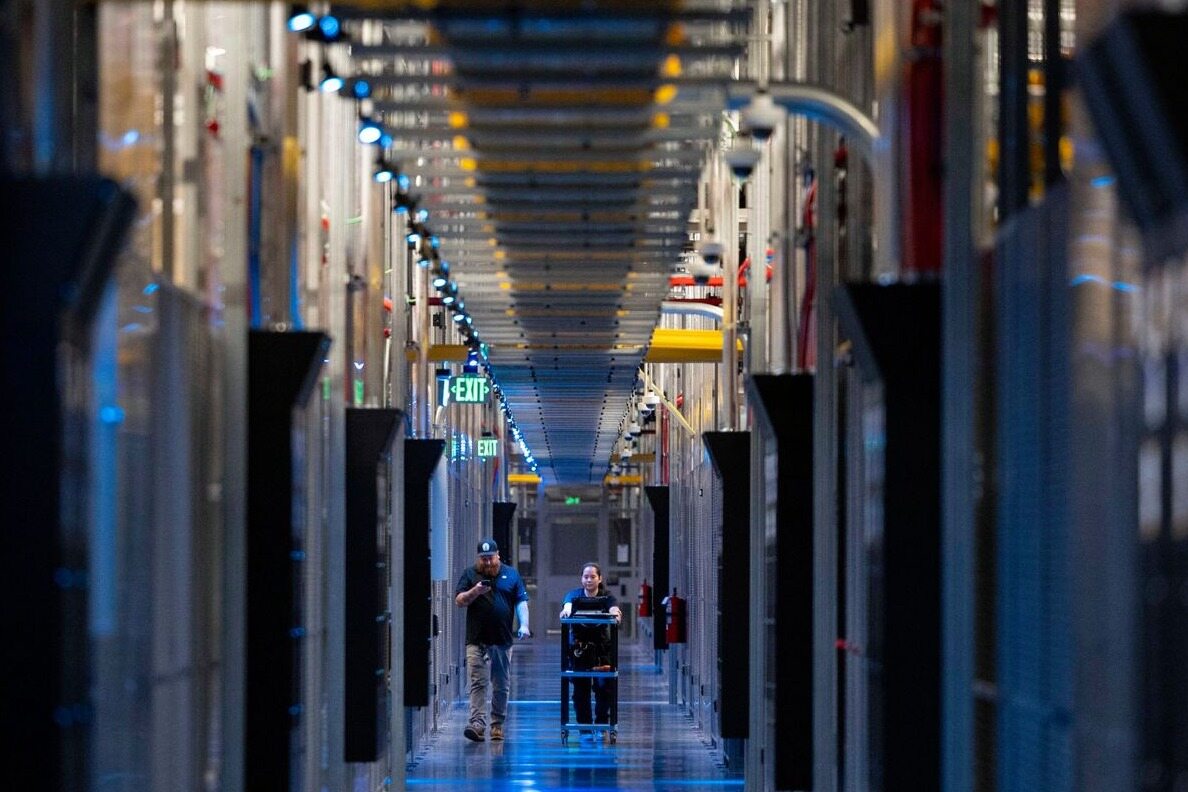
At the 2026 Ukraine Reconstruction Conference held in Gdansk recently, Ukraine's top telecommunications operator Kyivstar Group and the Ukrainian Ministry of Economy signed a cooperation agreement to promote the construction of sovereign data centers with AI ready capabilities in the country, laying the foundation for post-war digital infrastructure reconstruction.
The demand for AI computing power in both the public and private sectors in Ukraine is rapidly increasing. This cooperation document not only targets the landing of new generation data centers, but also hopes to consolidate Ukraine's position as a technology hub in Eastern Europe and undertake the subsequent digital industry transfer to Europe's eastward expansion.

The project will be implemented in stages within the existing capital framework
Kyivstar Group has made it clear that the construction of the entire data center will not significantly exceed the original capital expenditure plan and will strictly follow the existing capital allocation discipline, advancing the project implementation in batches. The parent company VEON Group will provide global operational experience and partial financial support simultaneously, without relying entirely on external reconstruction special grants, to reduce the financial uncertainty of project progress.
As an operator who has been deeply involved in the Ukrainian communication market for many years, Kyivstar has already completed a large number of communication network reconstruction and upgrades nationwide, and has a mature local operation and maintenance team and technical accumulation, so there is no need to build a data center operation system from scratch.
Low latency local computing power adapted to critical scenario requirements
The core advantage of this AI ready data center located in Ukraine is the ability to achieve extremely low data transmission latency, with all core data being processed entirely within Ukraine without the need for cross-border transmission. This is an irreplaceable foundation for local industrial facilities, real-time control robot systems, and various government and livelihood critical task services, which can avoid response lag and data security risks caused by cross-border computing power calls.

Currently, data center investments in Europe are highly concentrated in the UK and Germany, accounting for 27% and 12% of the total investment in Europe, respectively. Industry institutions predict that in the next five years, the demand for computing power in Eastern Europe will be rapidly released. Countries with location advantages such as Ukraine have the opportunity to undertake some of the spillover computing power investments and gradually break the computing power monopoly of Western European countries. Keywords: AI computing power data center, high-tech
At present, the project is still in the early planning stage, and the specific investment scale has not been fully determined. The details of energy supply guarantee and technical team building will gradually be implemented in the future.Editor/Cheng Liting
Comment







 Praise
 Collect
 Comment

 Share
Share


Write something~