 Search


- Build water conservancy projects to help Africa establish a solid food security bottom line through infrastructure construction

In the dry monsoon of Tanzania, a transformation about water is quietly reshaping the land. The canal water from China Railway Construction broke through the blockade of drought, completely rewriting the fate of Kongogo Village in Dodoma Province, which had relied on the weather for thousands of years.
Difficulties encountered in village development
Once, the income and basic needs of the villagers in Kongogo Village, Dodoma Province, central Tanzania were completely dependent on the weather. The livelihood of the local farmer Saki's family depends entirely on the rainfall situation: abundant rainfall during the rainy season can ensure a bountiful harvest; Once the rainfall is delayed, the whole family will face food shortages.
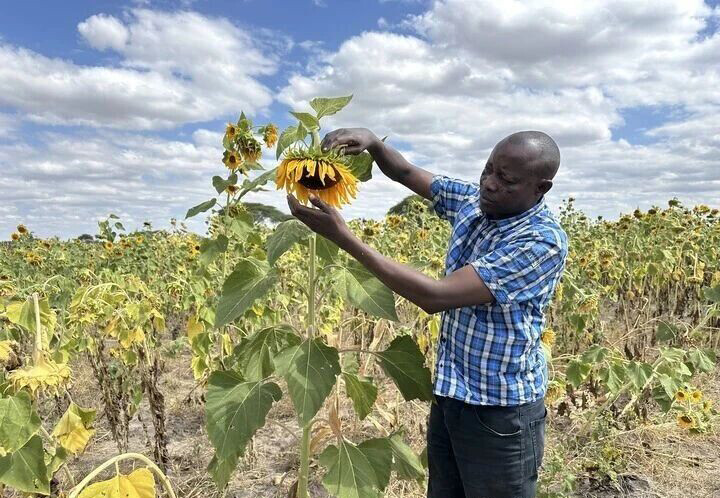
More than 1100 households in the village have relied on farming for generations to make a living. The water conservancy infrastructure in the jurisdiction is blank, and the traditional farming mode has low yields and extremely unstable harvests. Drought and water shortage have long constrained the development of local agriculture. Now, an irrigation project undertaken by a Chinese enterprise has completely reversed the development dilemma of the village. The rural irrigation project undertaken by China Railway Construction Engineering Group East Africa Company has entered the final stage of construction. A 6-kilometer main canal, 9-kilometer branch canal, and 14 kilometer access road have been built to establish a comprehensive agricultural water supply network, which can accurately transport water resources to various agricultural fields in the area.
Upgrade farming mode
Project leader Lin Chongliang stated that after the project is put into operation, the local area will completely abandon the rain fed agricultural model and enter a new stage of modern water-saving irrigation. A stable irrigation water source will significantly increase regional grain production capacity. Farmer Saki is full of expectations for this. He estimates that after the project is implemented, the annual output of rice paddies per hectare can reach 30-50 bags of grain. Even in extreme drought weather, it can guarantee a minimum yield of 15 bags, providing dual protection for household food and economic income.
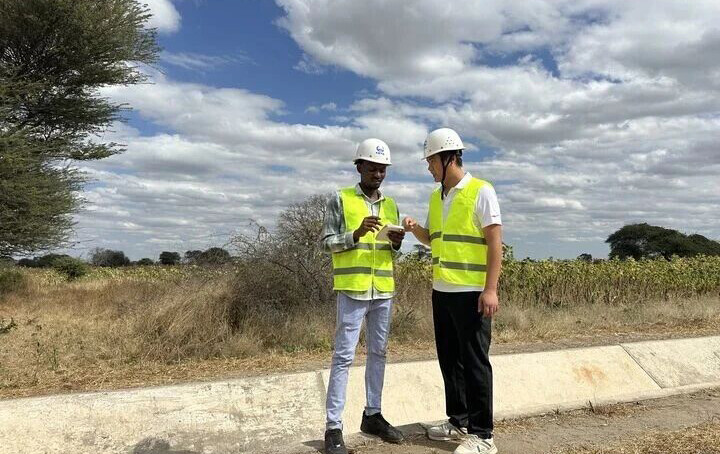
Bahati, a regulatory engineer from the Tanzanian Ministry of Agriculture, introduced that the project covers an area of about 400 hectares of farmland and is a landmark project for local agricultural modernization. The project adopts advanced gravity water diversion technology, which does not require fuel pumping equipment and significantly reduces agricultural planting costs; At the same time, we will assist the local area in upgrading the traditional one crop cultivation to a two crop cultivation mode, maximizing the utilization of land productivity.
Assist in long-term development
During the project construction period, the Chinese team extensively recruited local labor, conducted professional skills training, and cultivated local engineering and technical talents. After joining, local youth Mayala became proficient in professional skills such as terrain surveying and engineering positioning, which not only increased her family's income but also provided her with a long-term stable career development path. Bahati stated that this localized talent training model can ensure that local personnel can independently complete facility operation and maintenance after project delivery, and guarantee the long-term stable and effective performance of the project. Keywords: Tanzania, irrigation engineering, China Railway Construction Engineering
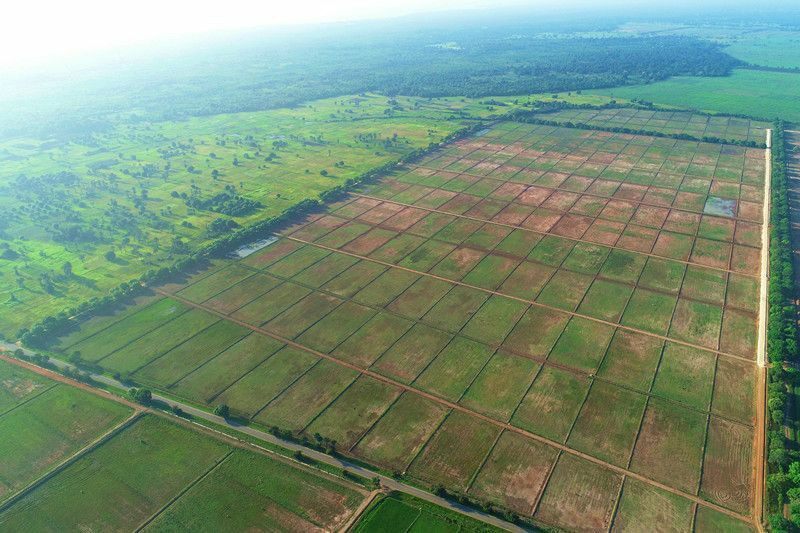
In recent years, Tanzania has vigorously promoted the layout of agricultural infrastructure. From 2020 to 2025, 780 irrigation related projects will be implemented nationwide, covering over 500000 hectares of farmland with a total investment of about 500 million US dollars. The Kongogo Irrigation Project is a typical practice of the country's food security strategy. The gurgling canal water injects vitality into rural development. Saki said that stable agricultural harvests will support children's education, improve living conditions, and help the whole village move towards a stable and prosperous new life.Editor/Gong Ziwei
Comment







 Praise
 Collect
 Comment

 Share
Share


Write something~