 Search


- The West African deepwater exploration boom extends to the less popular Harper Basin in Liberia

The new wave of deepwater oil and gas exploration in West Africa is extending to the previously overlooked Harper Basin in Liberia. The Liberian upstream subsidiary of French energy giant TotalEnergies and Canadian oil and gas explorer BluEnergies, which focuses on the West African market, are advancing a systematic exploration plan in three core offshore blocks, with the goal of identifying a batch of oil and gas reservoirs with drillable value.
This move coincides with the industry window for global oil giants to cluster and layout deepwater blocks in West Africa, and also brings the exploration value of the Harper Basin back to the center of the mainstream oil and gas market's vision.
Simultaneous advancement of underwater surveying and mapping
The cooperation between the two parties covers three blocks, LB-26, LB-30, and LB-31. One of the core tasks is to reprocess the historical 3D seismic data with a total area of 6167 square kilometers. This part of the work is undertaken by the professional oil and gas data service provider TGS, and the overall progress has exceeded 50%. The preliminary processing results have been produced.
The new processing flow focuses on enhancing the imaging clarity of seismic profiles and the accuracy of AVO attribute analysis, to supplement the original 3D exploration data completed in 2013 and help exploration teams more accurately identify the distribution characteristics of underground oil and gas reservoirs. Another underwater multibeam echo sounding exploration was carried out by GeoPartners, covering an area of 4045 square kilometers and a water depth range of 500 to 3500 meters. With the support of the Gyre research vessel under TDI Brooks, data collection began on June 19, 2026 and is expected to be completed by the third quarter.
This set of underwater topographic mapping can accurately locate geological anomalies on the seabed, providing safety support for subsequent drilling platform site selection and avoiding potential underwater geological risks.
Exploration value will be further released
The current project team is still synchronously conducting basin heat flow measurement work to collect sediment temperature and thermal evolution historical data in the unexplored area of the Harper Basin. This part of the work is expected to be completed in the fourth quarter of 2026. After integrating all newly collected data, the exploration team can complete a new round of more refined 3D seismic interpretation, fully outlining potential oil and gas reservoirs in the block that have not been fully identified before.
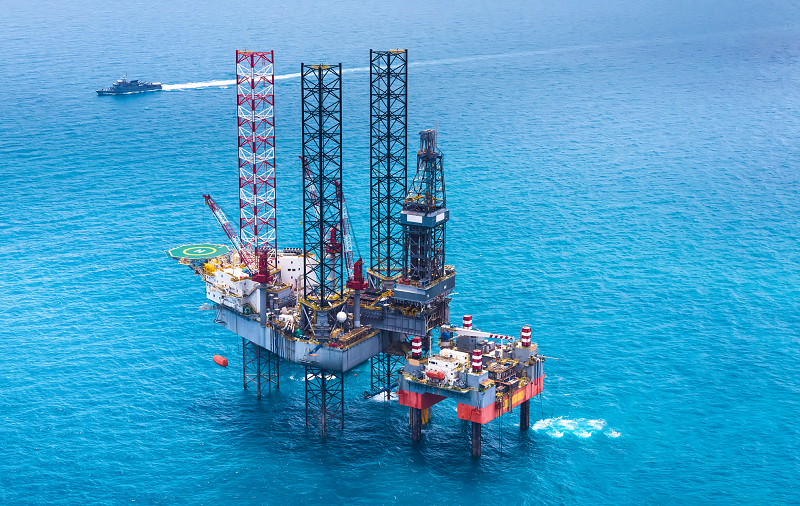
BluEnergies was the first to complete the early layout of the Harper Basin as early as 2023, and the foresight of this decision is being confirmed by industry trends. The discovery of the Jubilee oil field in Ghana, the Venus oil field in Namibia, and a series of new discoveries near the coast of Cote d'Ivoire have repeatedly proven the high commercial value of fan-shaped oil and gas reservoirs at the bottom of the basin on the West African transition edge. Currently, global oil giants are concentrated on obtaining deep-water block licenses on the western edge of Africa, which has also attracted more capital attention to the exploration prospects of the Harper Basin. Keywords: underwater exploration, oil
With the completion of the entire exploration plan by the end of 2026, this previously underestimated West African offshore area is likely to produce a batch of commercially viable drillable targets, becoming a new growth pole on the West African oil and gas map.Editor/Cheng Liting
Comment



 Praise
 Collect
 Comment

 Share
Share


Write something~