 Search


- Vietnam's railway planning is implemented, accelerating connectivity with China, Laos, and Cambodia

Ah Hui, a truck driver at the border port of Lang Son Province in Vietnam, sighed as he looked at the narrow meter gauge railway in front of him - the 167 kilometer journey from Hanoi to Lang Son takes nearly five hours for the train to sway and travel at a speed of less than 60 kilometers per hour. At the same time, a decision numbered 1093 had just been signed in the office of the Vietnamese Ministry of Construction. This document will completely change the future travel mode of Ahui and countless Vietnamese people: build 16 standard gauge railways and 2 high-speed railways with a total mileage of over 4000 kilometers, and accelerate railway interconnection with China, Laos, and Cambodia.
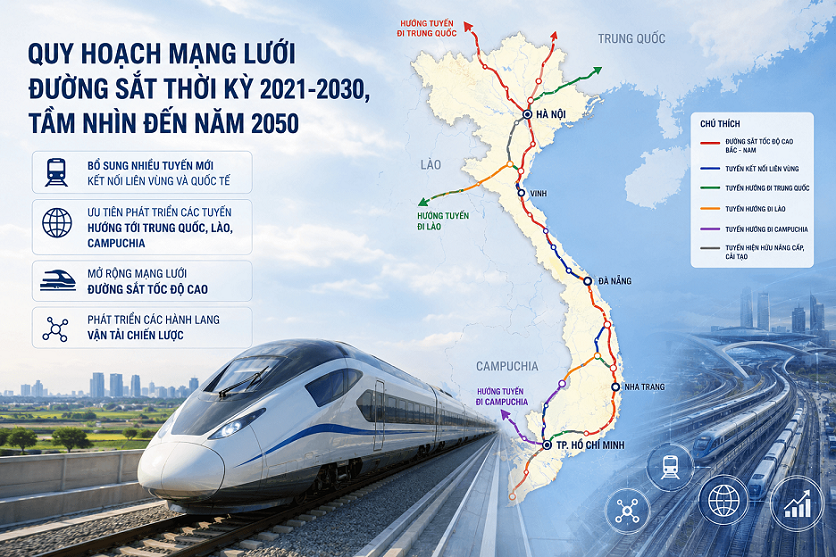
Ten new lines of standard gauge railways to be launched before 2030
Deputy Minister of Construction of Vietnam, Nguyen Minh Fai, signed Decision No. 1093, approving the adjustment of the railway network plan from 2021 to 2030 and the long-term plan until 2050. Vietnam's existing railway network consists of 7 main lines, with a total length of approximately 2510 kilometers. 83% of them are meter gauge, while standard gauge accounts for only 6.8%. The average speed is less than 60 kilometers per hour, and the transportation capacity is extremely limited. According to the new plan, the construction of 10 standard gauge railways will be launched before 2030: the northern region includes a total length of 363 kilometers from Laojie to Hanoi to Haifang Line, 156 kilometers from Hanoi to Tongdeng Line, 187 kilometers from Haiphong to Halong to Mangjie Line, and 31 kilometers from Yuhui to Jinshan section of the eastern ring road in Hanoi; The southern region includes a 132 kilometer line from Binhe to Tou Tong, a 128 kilometer line from Ho Chi Minh City to Lu Ning, a 320 kilometer line from Ho Chi Minh City to Can Tho to Jin Ou, and a 33 kilometer line from Anping to Saigon to Xinjian; The central region includes the 105 kilometer Yong'an Port to Mujia Line and the 84 kilometer Tazhan to Dalat Line. Six additional routes are planned to be promoted after 2030, with a total additional mileage of over 900 kilometers.
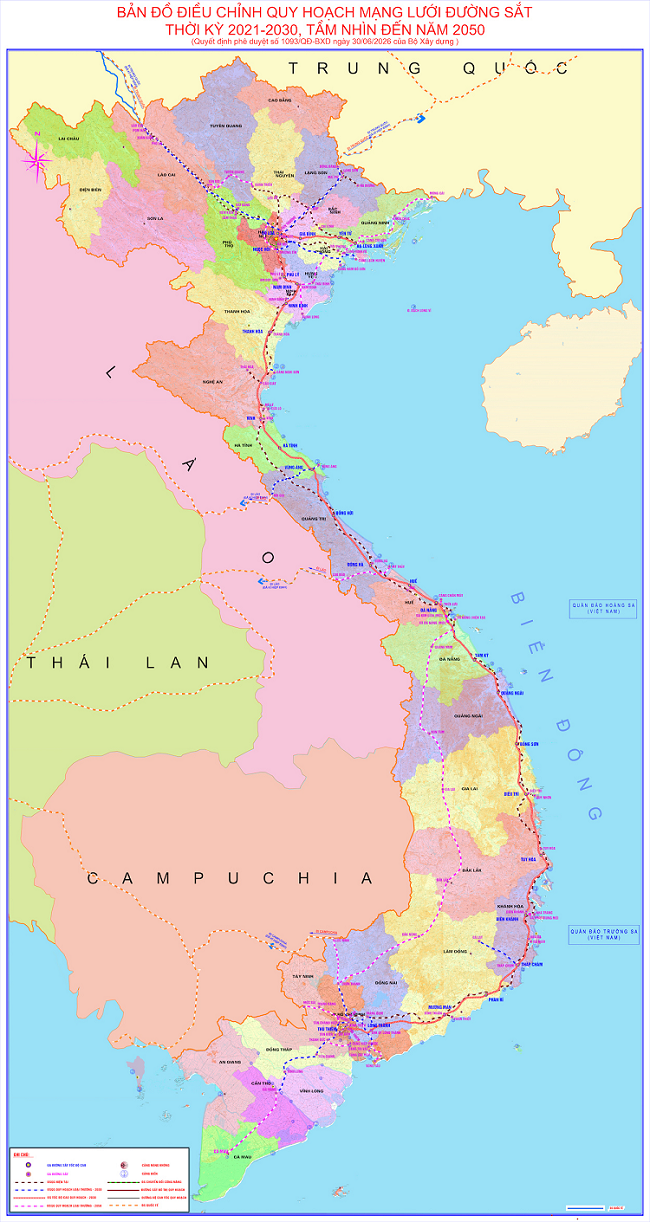
Two high-speed railways connect the north and south with Hanoi and Guangning
In terms of high-speed railways, the plan specifies the construction of two lines. The North South High Speed Railway has a total length of 1541 kilometers and is the central axis of Vietnam's railway network. It is planned to be implemented in two stages around 2030, connecting Hanoi to Ho Chi Minh City and significantly reducing the travel time of the current meter gauge line from over 30 hours to around 5 hours. The Hanoi Guangning high-speed railway has a total length of 120 kilometers and is planned to be invested and implemented before 2030, connecting the capital Hanoi with the important economic center of Guangning Province in the north, serving the growing demand for intercity passenger flow along the line. The Ministry of Construction has clearly stated that new railway projects will be implemented in stages based on transportation needs and funding capabilities, ensuring investment efficiency and prioritizing support for regional interconnectivity and cross-border railway construction. Keywords: Infrastructure News Network, Railway, High speed Railway
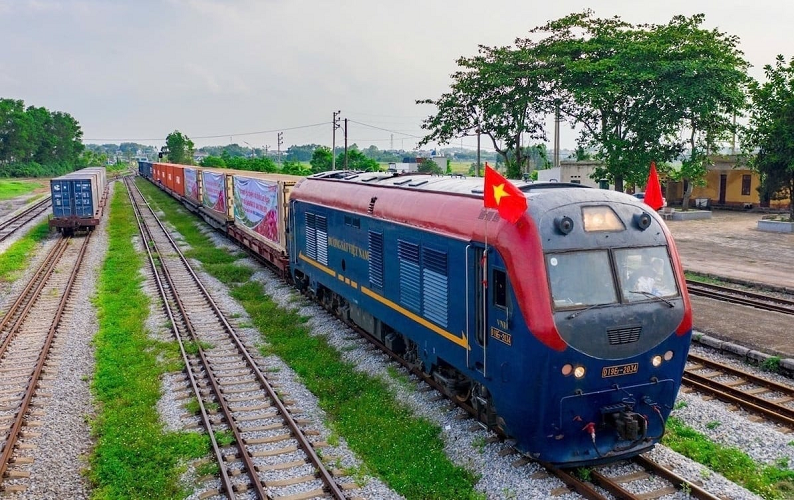
Comprehensive acceleration and docking of cross-border channels between China, Laos and Cambodia
The plan places special emphasis on strengthening railway connectivity with neighboring countries. The Haiphong to Halong to Mangjie railway will connect the border of Guangxi, China and become an important freight channel in the Beibu Gulf Economic Circle; The Meishui to Labor Insurance Railway connects Laos and opens up a sea outlet channel from central Vietnam to Laos and the Mekong River region; The Ho Chi Minh City to Xining railway will connect Cambodia, serving bilateral trade and personnel exchanges between Vietnam and Cambodia. In addition, new lines such as the Ningping Xing'an Haiphong Coastal Railway and the Taiyuan Xuanguang Laojie Railway have further strengthened the domestic road network. According to preliminary assessments, Vietnam will add over 4000 kilometers of railways by 2050, which has great potential for cooperation with Chinese rail transit companies. At present, many enterprises such as China Railway, China Railway Construction Corporation, CRRC, CRSC and CRSC have actively laid out the Vietnam market. The implementation of this plan is a key link for the the Belt and Road connectivity to be implemented in Southeast Asia. After the new railways are put into use in succession, Vietnam will significantly improve its position as a hub in the land transport network in Southeast Asia, and continue to empower regional economic integration and smooth trade.Editor/Gao Xue
Comment


 Praise
 Collect
 Comment

 Share
Share


Write something~