 Search


- Multi party unified allocation of various transportation resources to eliminate transit delays and transportation mismatches
- A new cross-border multimodal transport model has been implemented, connecting the complete freight channel from China and South Korea to Central Asia
The tide of the Yellow Sea and Bohai Sea has pushed the shipping route onto the backbone of the Eurasian continent. When the containers at Yantai Port were unloaded from the ship, they immediately boarded the train and crossed the border westward, finally handing over the relay baton of logistics to the same pair of hands. This is not only a shortcut that saves five days, but also a new starting point for cross-border transportation to bid farewell to the twists and turns.
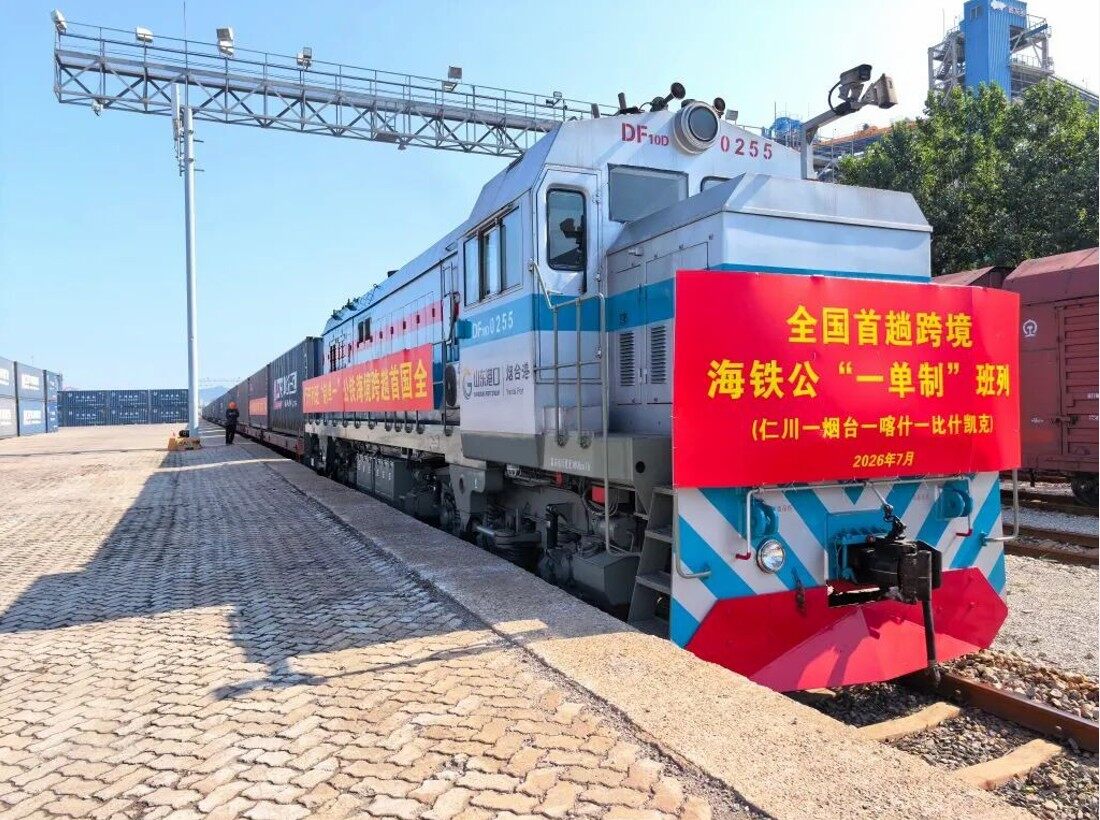
The first intermodal train in the country has been launched
At around 10am on July 21, 2026, the X80442 freight train carrying complete vehicles and automotive parts departed from Yantai Port, marking the official launch of China's first cross-border sea rail public intermodal single unit train. According to relevant information from China Railway Group, this train innovation has launched a one-stop logistics solution that integrates sea, rail, and road transportation. The transportation speed, business processing procedures, and various capacity allocation and coordination capabilities have been greatly optimized.
The advantages of one-stop intermodal transportation are prominent
In terms of logistics transportation costs and efficiency, this route seamlessly connects the sea, railway, and road transportation links. The goods are first transported by ship from Incheon, South Korea to Yantai Port, then landed and directly transported by railway to Kashgar. They are then cleared by registered freight vehicles and sent by road to the capital of Kyrgyzstan, Bishkek. The entire transportation cycle of the route is 12 days, saving 5 days compared to traditional transportation routes.
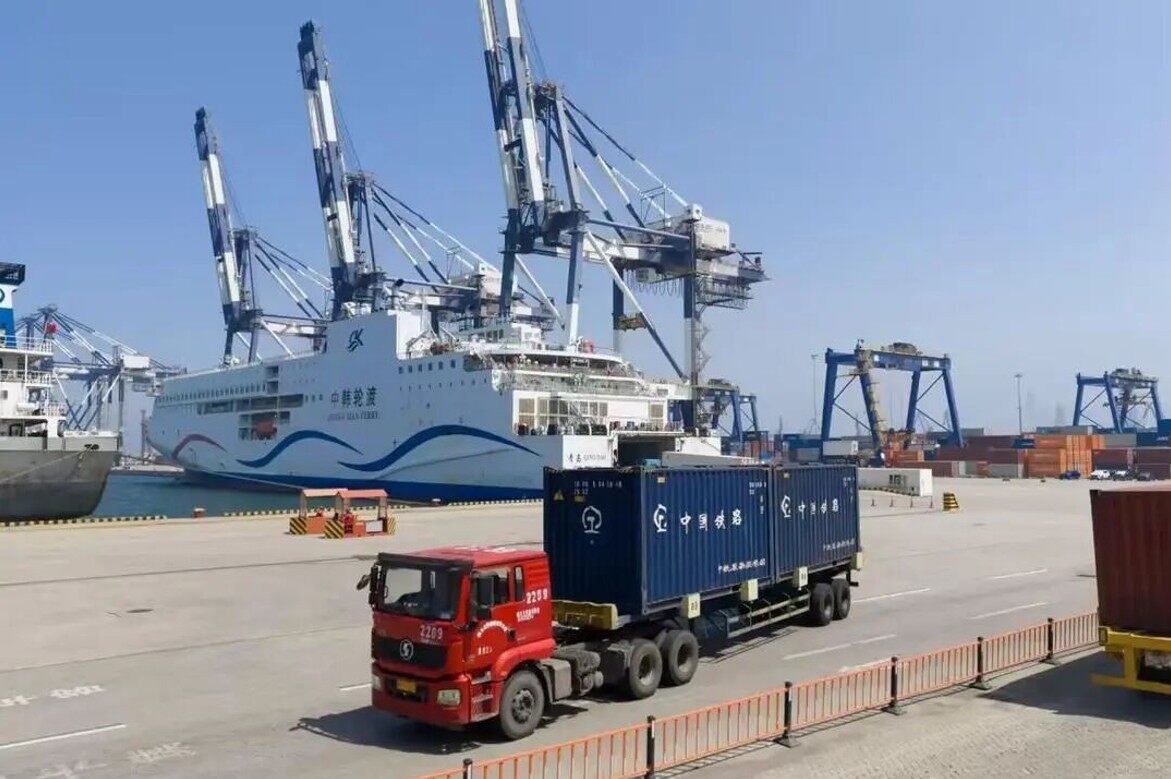
At the service level of business processing, this train has completed the full coverage of the entire process of sea, railway, and highway transportation through a single system. Relying on the official railway platform, the entire freight documents are uniformly issued, and the documents of each transportation link are mutually recognized, bridging the pain points of document fragmentation in different transportation industries. Enterprises only need to submit a one-time commission to enjoy integrated services such as unified document circulation, one-time settlement, container non replacement throughout the entire process, and dedicated follow-up throughout the entire process, effectively improving the drawbacks of traditional cross-border logistics procedures that are cumbersome and require multiple service providers to be connected.
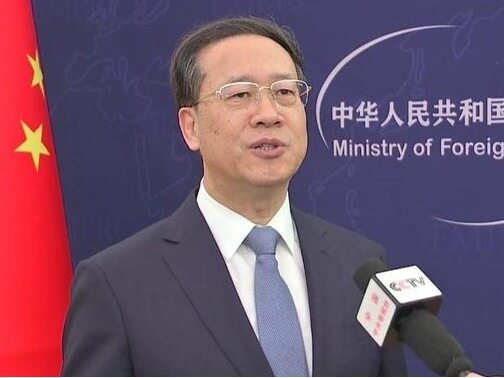
Liu Tao from the Transportation Management Department of Shandong Provincial Department of Transport stated that the integration of multiple resources to unify the allocation of goods, containers, and transportation vehicles, accurately connecting key nodes such as port transfer, railway trunk transportation, and port transit, avoiding imbalances in transportation capacity allocation and backlog of goods transit, and significantly improving the overall logistics operation efficiency.
Continuously expanding the scope of intermodal transportation services
In the future, China Railway Container and China Railway Jinan Bureau will continue to deepen cooperation with ports, shipping, road logistics, and foreign trade enterprises, extend the application scenarios of multimodal transport single document system, promote the property rights certificate attribute of intermodal transport documents, build an interconnected cross-border logistics network, construct a platform for coordinated development of industrial trade and logistics, and promote the high-quality development of foreign trade industry.Editor/Gong Ziwei
Comment


 Praise
 Collect
 Comment

 Share
Share


Write something~