 Search


- Southeast Asia's digital economy is rapidly advancing, and the computing power gap has become a new blue ocean

In a conference room in Jakarta, technology companies from China and Indonesian officials sit together, with numbers jumping on electronic screens outlining an enticing blueprint. With the global popularity of generative AI applications such as ChatGPT, a wave of computing infrastructure expansion is quietly underway in Southeast Asia thousands of miles away. As the largest economy in ASEAN, Indonesia is no longer just synonymous with palm oil and minerals. Now, it is trying to build itself into the "data heart" of the entire region.
A billion dollar market is about to emerge
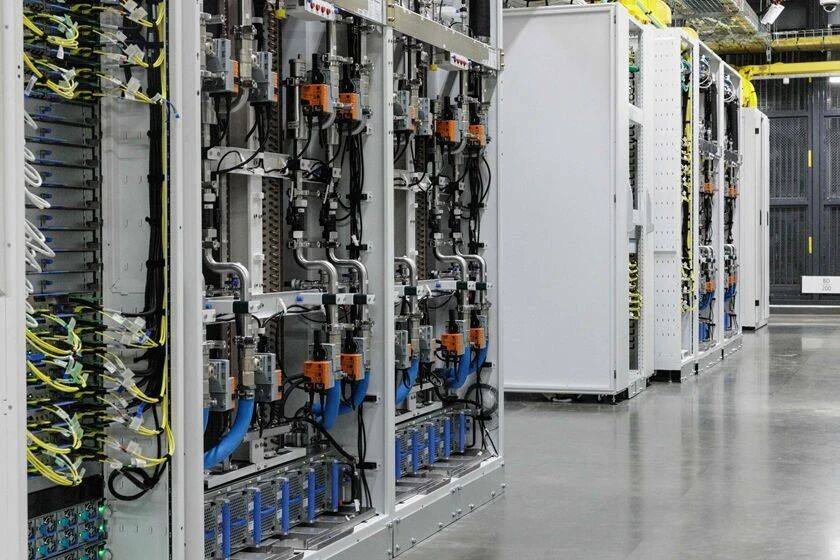
The confidence that supports this investment fair is a series of astonishing forecast data. According to market research firm Mordor Intelligence, the size of the Indonesian data center market is expected to double in the coming years. Starting from $1.44 billion in 2025, it is expected to rapidly climb to $1.83 billion by 2026, and reach $3.48 billion by 2031, with a high compound annual growth rate of 13.71%.
The source of this strong demand is Indonesia's huge young population dividend and extremely high mobile Internet penetration rate. With the continuous expansion of Internet access, Indonesia's digital economy is ushering in an explosive period. It is expected that by 2030, the Gross Merchandise Volume (GMV) of Indonesia's digital economy will soar to between 180 billion and 340 billion US dollars. The huge demand for online transactions and data processing has made high-performance data centers no longer an option, but a necessary infrastructure to support economic operations.

Intensive release of policy dividends
In order to seize this wave, the Indonesian government has carried out drastic reforms at the regulatory level. At this forum, Andy Mullana, Deputy Minister of Investment Services at the Indonesian Ministry of Investment and Downstream Industries, highlighted the preferential policies for foreign investors. At present, foreign investment is encouraged to have priority access to 25 special economic zones and 181 industrial parks across the country, enjoying one-stop services.
Among them, the plan called "Direct Construction Investment Facilitation" is particularly impressive. Under this mechanism, investors can enjoy the benefits of first building, then approving or expedited approval in specific areas, greatly shortening the project landing cycle. In addition, Indonesia has also introduced import tariff exemptions for mechanical equipment and raw materials, aimed at reducing upfront construction costs and enabling data centers to rise faster.

Building a regional computing hub
In addition to simplifying the process, the financial and tax support of real money has attracted the attention of many Chinese enterprises. The Indonesian government offers highly competitive long-term tax holidays and tax incentives for specific investments. It is worth mentioning that in order to encourage enterprises to improve their localization technology level, Indonesia has also established an excess tax reduction policy specifically for subsidizing vocational skills training and research and development activities of enterprises.
As Southeast Asia's position in the global industrial chain becomes increasingly prominent, its strategic location advantage is becoming more apparent. Indonesia is trying to transform its geographical advantage into computing power advantage through this series of combination punches, and undertake digital business demands from around the world. For Chinese technology companies seeking overseas expansion, this is not only a good opportunity to participate in Southeast Asian digital infrastructure, but also a crucial step in laying out global computing power networks.Editor/Yang Meiling
Comment






 Praise
 Collect
 Comment

 Share
Share


Write something~