 Search


- Comprehensive emission reduction of 95.15%, becoming the world's first zero carbon airport

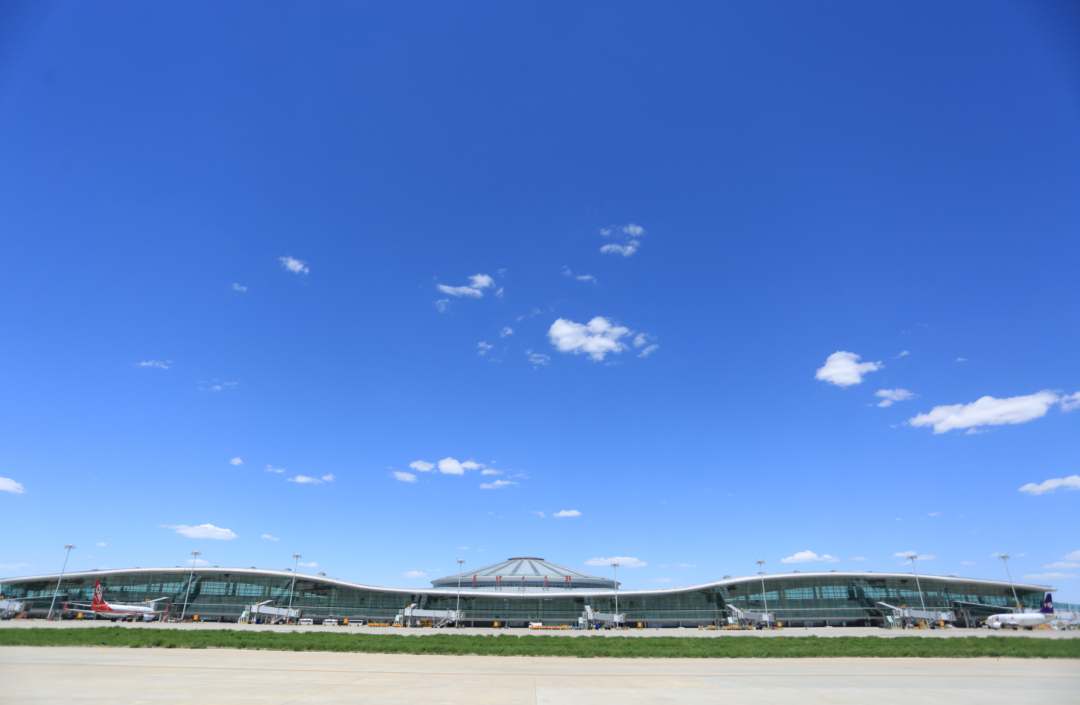
In the summer grasslands of Ordos, the sunlight shines on the photovoltaic panels on the roof of the terminal building, reflecting and dazzling. Before March 15, 2025, this airport, like most airports in the country, relied on gas boilers for heating in winter and Freon units for cooling in summer. The electricity meters ran rapidly, and the natural gas meters followed suit. After that day, the boiler room cooled down and the refrigeration room quieted down, replaced by underground cross seasonal soil energy storage wells and a cold and hot integrated system using carbon dioxide as the working fluid. On July 25, 2026, the results conference was held, and the China Quality Certification Center and the China Association of Transportation and Communications gave an appraisal: the comprehensive emission reduction rate is 95.15%, and the remaining less than 5% of carbon emissions have a compliant offset plan. The net carbon emissions are less than or equal to zero - the world's first zero carbon airport, located in Inner Mongolia.
23 years to sharpen a sword
In 2003, Professor Zhang Xinrong from Peking University first proposed the thermodynamic cycle theory of transcritical carbon dioxide power generation internationally. At that time, no one expected that this set of formulas on paper would be stuffed into an underground computer room at a northern airport more than twenty years later.
The team has successively tackled several hard bones such as carbon dioxide power generation, heat pump heating, ice making and cooling, and energy storage peak shaving, and developed a complete set of carbon dioxide cold and heat integrated energy supply equipment with a wide temperature range and large-scale. It was equipped with two additional partners: a cross seasonal soil energy storage system coupled with a carbon dioxide system, and an AI intelligent holographic 3D smart energy management platform. In 2024, Ordos Airport launched a zero carbon technology demonstration project, with Peking University Ordos Energy Research Institute, Airport Management Group, and Shengyuan Energy Group joining forces to tackle the challenge.

In traditional thinking, cooling in summer involves throwing away the tropical elements indoors to the outside, while heating in winter involves starting a new stove and burning gas. Zhang Xinrong often gives an analogy: It's like throwing out the heat from a room in summer, but not delivering it to the place that needs it. The carbon dioxide integrated cooling and heating system does this by twisting these two things together - the same working fluid, cold in summer and hot in winter, while also consuming the fluctuating wind, solar, and green electricity.
The scenery turns cold and hot
Ordos does not lack wind or light. An 8-megawatt photovoltaic power station has been erected around the airport, equipped with 2.93 megawatt/11.7 megawatt hour energy storage cabinets, with nickel hydrogen batteries as the main force, providing peak shaving during cloudy and sunny days and nights.
Green electricity comes in, not mixed with traditional power grids, but directly drives the transcritical carbon dioxide cooling and heating system: cooling in summer, heating in winter, and all gas boilers and Freon units are retired. In the three seasons of spring, summer, and autumn, excess heat from the surface layer is stored in the soil and extracted for use in winter - this cross seasonal soil energy storage system is specifically designed to address the old problem of the mismatch between green electricity and cold and hot demand over time.
At the top level, there is also a thinking digital brain. The AI intelligent computing platform integrates digital twins, combining static data of airport space with real-time dynamics of cooling, heating, electricity, and energy storage, predicting load, scheduling supply and demand, and improving green electricity consumption rate and comprehensive energy efficiency. Since the system was put into operation on March 15, 2025, clean energy has accounted for over 90%, with an annual consumption of wind and solar power exceeding 21 million kWh. The annual energy consumption for heating and cooling has decreased by 60%, and operating costs have decreased by 50%. It saves more than 2 million cubic meters of natural gas per year, achieves an electricity efficiency of 3.0, and has zero fossil fuels, zero fluorocarbons, and zero cooling water.

Replicable Chinese solution
This set of things is not only for airport use. The team and participating parties clarified at the press conference that the technical route has the conditions to be replicated in civil aviation airports, industrial parks, computing centers, and manufacturing factories.
The background board is actually very hard: about 80% of global heating and 60% of power generation still rely on fossil fuels, and the fluorine-containing refrigerants in air conditioning and heat pumps are still driving up the trend of warming. This model room in Ordos is like welding wind, light, storage, cooling, heating, and electricity into a chain, with completely independent intellectual property rights. It has been selected as a typical case of green and low-carbon by the Ministry of Ecology and Environment in 2025, and in actual testing, it has easily replaced about 3500 kilograms of Freon, with a cross seasonal storage and extraction efficiency of over 70%.keywords:Engineering infrastructure
From a thermodynamic cycle draft in 2003 to a net carbon emissions reduction of an airport by 2026, there are 23 years in between. Zhang Xinrong said that the next step is to move this system to run in more scenarios. The wind on the grassland is still blowing, the light on the photovoltaic panels is still drying, and the heat in the underground energy storage wells is already waiting for the next winter.Editor/Yang Meiling
Comment





 Praise
 Collect
 Comment

 Share
Share


Write something~