 Search


- Avoid simply exporting technology when going to Africa, focus on actual business value
- African procurement balances technology and supply chain, with increasing emphasis on security rights and responsibilities

The equatorial sunlight passes through the shared office area in Nairobi, and the Chinese character codes on the screen are driving the Swahili voice response. While the Silicon Valley model is still calculating charging by character, open-source architecture from China has quietly embedded itself in the digital fabric of the African continent.
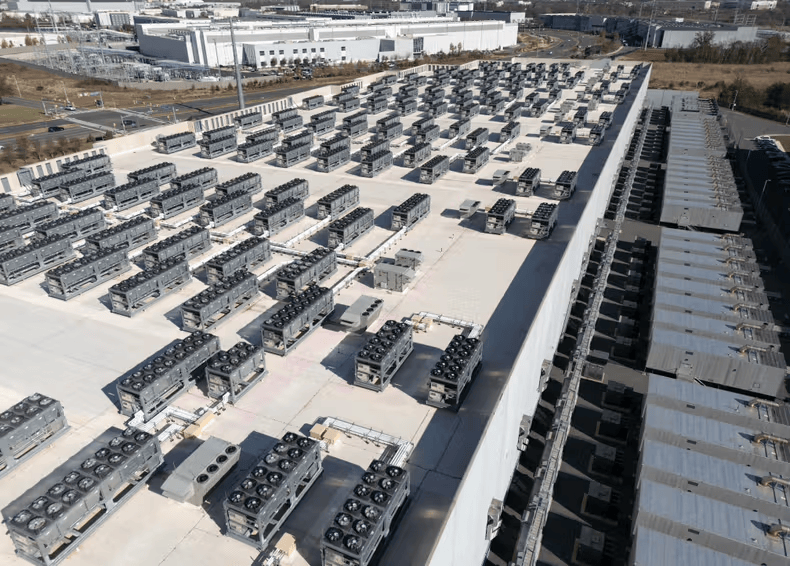
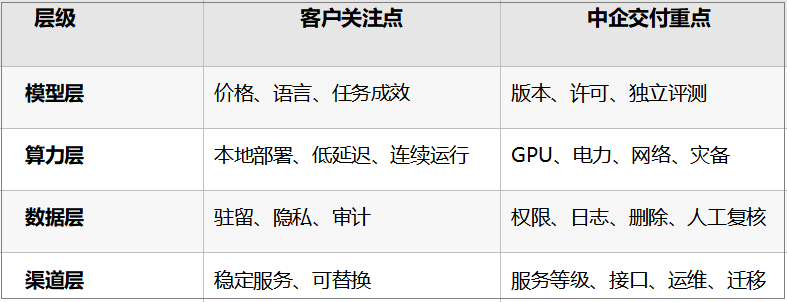
On August 5, 2026, The New York Times reported that domestically produced large models are rapidly becoming popular in Africa, covering four countries including Uganda and Kenya. Local developers use Qianwen and DeepSeek for local language, education, finance, and other scenarios. Relying on cloud services, computing power centers, and mobile payments, AI is gradually being integrated into actual business operations. The price advantage is obvious, but commercial implementation requires overcoming four difficulties: models, computing power, data, and channels.
There are still shortcomings in multilingual adaptation
The non-profit organization Sunbird AI in Uganda has developed the Sunflower series model based on Qianwen 3, which supports English and 31 regional languages. It has implemented public services in agriculture, healthcare, and education, with local teams supplementing industry data. However, there are limitations to the practical application of the model, as the effects vary greatly among different languages, and high-risk scenarios such as medical and legal must be manually reviewed. The existing evaluation samples are limited and cannot support large-scale use such as long texts and complex reasoning.
Open source and low price attract developers
According to OpenRouter data, the proportion of DeepSeek calls will significantly increase in the first half of 2026, and in June, the global call volume of Chinese models exceeded that of American models. Domestic models have a strong price advantage, significantly reducing testing costs for African startups, and allowing more budget to be invested in local data processing. Open weight supports local deployment for secondary development, and enterprises need to standardize the labeling of weights, code, and third-party component licenses.

Infrastructure policies test the ability to implement them
Local computing power, networks, and mobile payments in Africa have already been deployed by Chinese enterprises, becoming important channels for AI to reach institutional customers. At the same time, the African Union and Kenya have successively introduced AI regulatory policies, emphasizing industrial autonomy and security. Multiple countries have established the World Artificial Intelligence Cooperation Organization, and supply chain stability has been included in procurement evaluation.
Chinese enterprises going to Africa cannot simply sell models, but focus on delivering actual business results: firstly, signing contracts with local language evaluation materials and clarifying review requirements; Secondly, the cloud service provider shall provide a complete three-year total cost and specify the later operation and maintenance quotation; Thirdly, priority should be given to pilot scenarios such as customer service and agricultural Q&A, with strict delineation of rights and responsibilities for high-risk businesses; The fourth is to retain multiple model alternatives and ensure data classification and migration. Keywords: African AI, Domestic Large Models, Computing Infrastructure
In the future, the number of joint AI laboratories and local large-scale model projects in Africa will continue to increase. Domestic AI has obtained the admission ticket, and the core lies in delivering verifiable business results. Relying on the cooperation opportunity of jointly building the the Belt and Road, domestic AI will continue to help Africa's digital construction.Editor/Gong Ziwei
Comment




 Praise
 Collect
 Comment

 Share
Share


Write something~