 Search


- Chinese Bridge Technology Goes Overseas, Building a Secure Base for Overseas Super Engineering Safety
The construction of a super bridge in the high-altitude canyon area of Georgia has achieved a key technological breakthrough, and a top domestic research team has completed a complete set of wind tunnel experiments to overcome the construction difficulties in extreme weather conditions. High precision measurement technology fills the gaps in overseas engineering and highlights the business card of China's infrastructure going global.
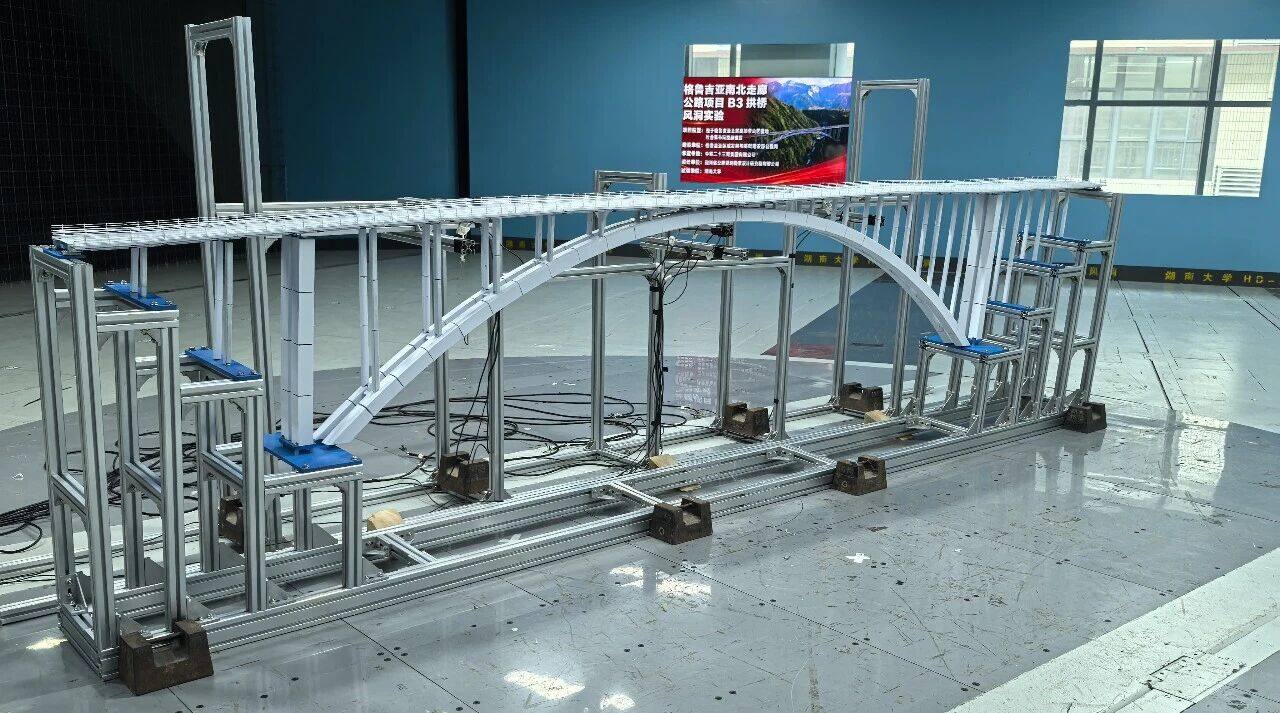
Overcoming extreme working conditions
The core project of the North South Corridor Highway in Georgia, B3 Arch Bridge, has completed full condition wind tunnel experiments and achieved wind resistance verification throughout the entire life cycle of construction and operation. This bridge is the longest span concrete arch bridge in the Caucasus region and the fourth longest in the world. It has long faced extreme environmental tests such as 9-level winds, extreme cold temperatures of minus 20 degrees Celsius, and 2-meter thick snow, making it technically difficult. This experiment successfully solved the construction and operation safety problems caused by multiple environments, laying a solid technical foundation for the left arch closure in 2026.
This large bridge, constructed by China Railway 23rd Bureau, has a total length of 437.875 meters, a net span of 286 meters for the main arch, and a net clearance of 164 meters from the bridge deck to the valley floor. It adopts mature cable-stayed cantilever casting technology and is the core control project of the local highway project. The previous project has completed wind tunnel testing for cantilever construction, effectively avoiding high-risk construction risks.
Improve the security system
The focus of this experiment is to verify the long-term wind resistance performance of the bridge during operation, while conducting special tests for the high-risk condition of asymmetric closure of the left arch ring in 2026. Canyon turbulence and double arch airflow interference can easily cause uneven structural stress, posing extremely high construction risks. The technical team thoroughly investigates various wind-induced safety hazards through precise wind field simulation. The entire experiment follows FIDIC and European engineering standards, and the data is authoritative and reliable.
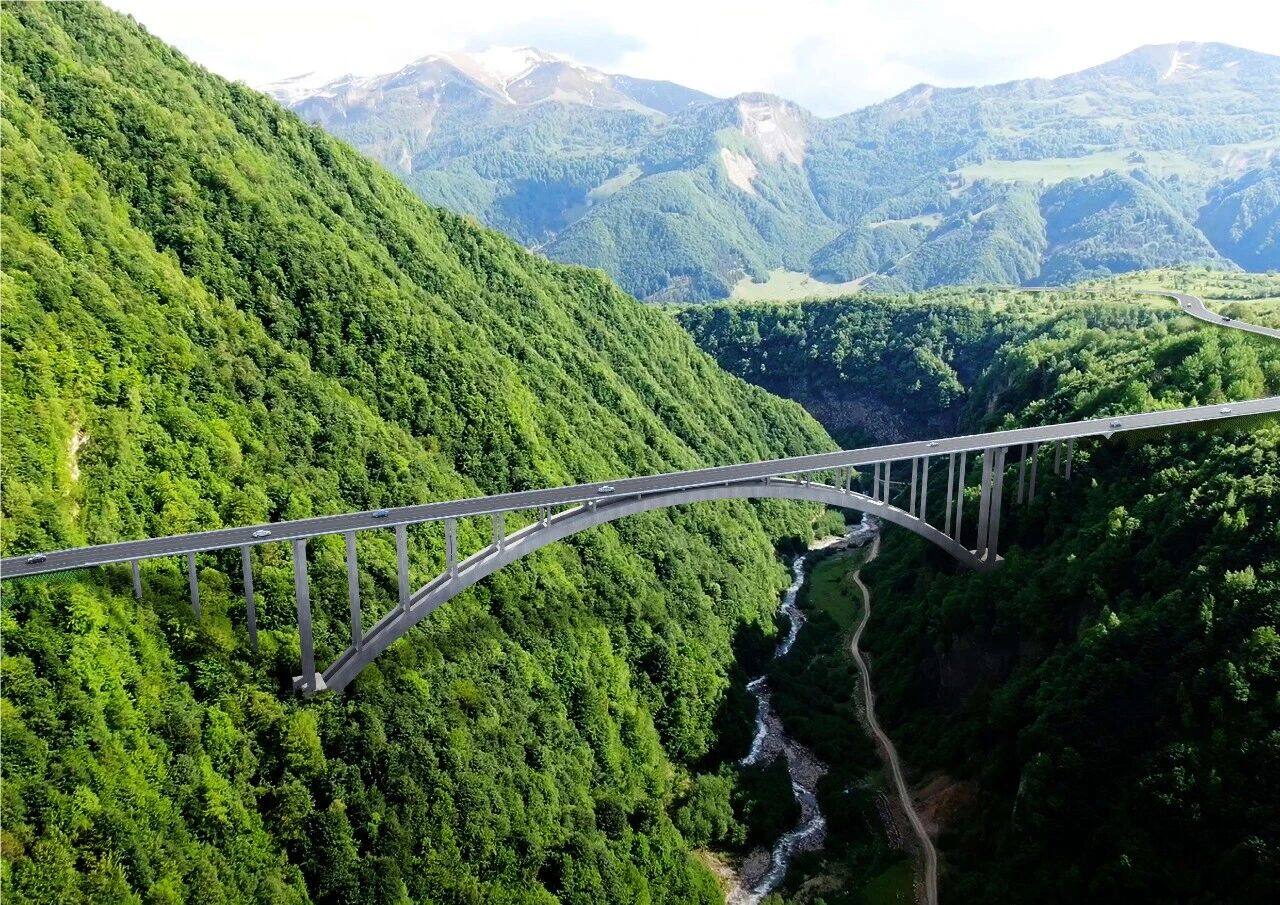
The actual test results show that the bridge can withstand extreme winds that occur once every 100 years. During the construction phase, the structural deformation and stress are within a safe range, and all indicators fully comply with international construction standards. The project integrates the results of two rounds of experiments, optimizes wind and vibration resistance processes, and establishes a full process safety guarantee system. Keywords: Bridge technology going global, Georgian infrastructure, super arch bridge
Showcasing overseas strength
This project abandons the traditional theoretical evaluation mode and adopts a physical model for full condition testing, greatly improving the accuracy of safety assessment and achieving the upgrade of wind resistance technology for large-span arch bridges. As a benchmark infrastructure project along the the Belt and Road, the project relies on the top domestic scientific research force to export a complete set of bridge construction plans that are suitable for cold and complex environments and meet European and American standards. The follow-up team will steadily advance the construction to ensure the timely landing of the 2026 joint construction node and continue to demonstrate China's infrastructure hard core strength. Editor/Min Jing
Comment

 Praise
 Collect
 Comment

 Share
Share


Write something~