 Search


- After the opening of the road, the travel time from Yichang to Chongqing will be reduced from 4 to 5 hours to about 2 hours
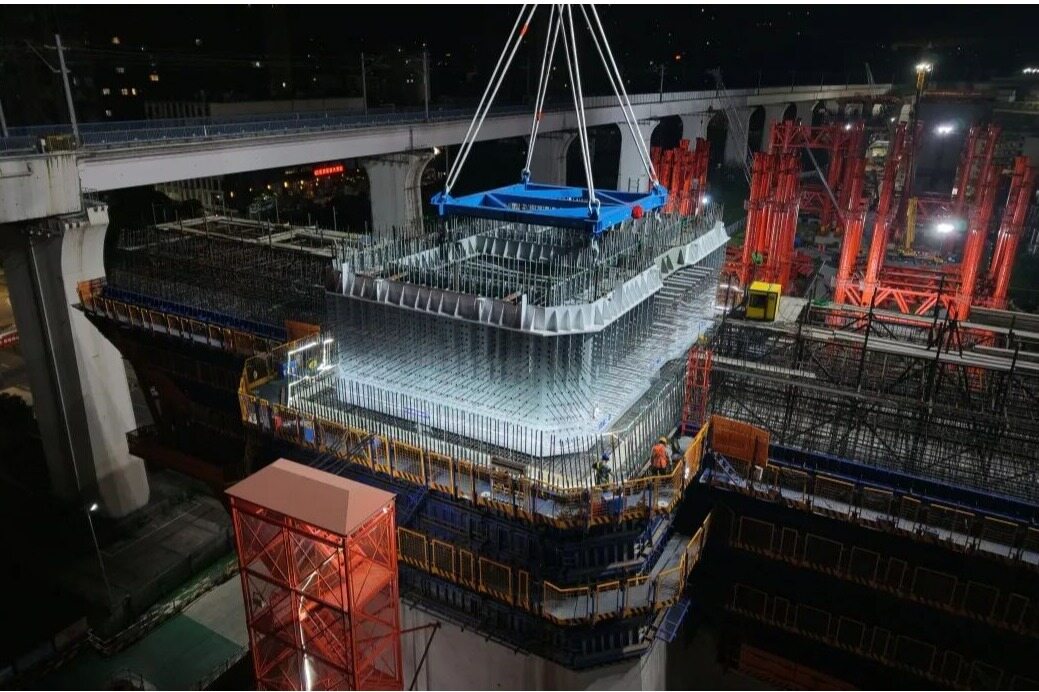
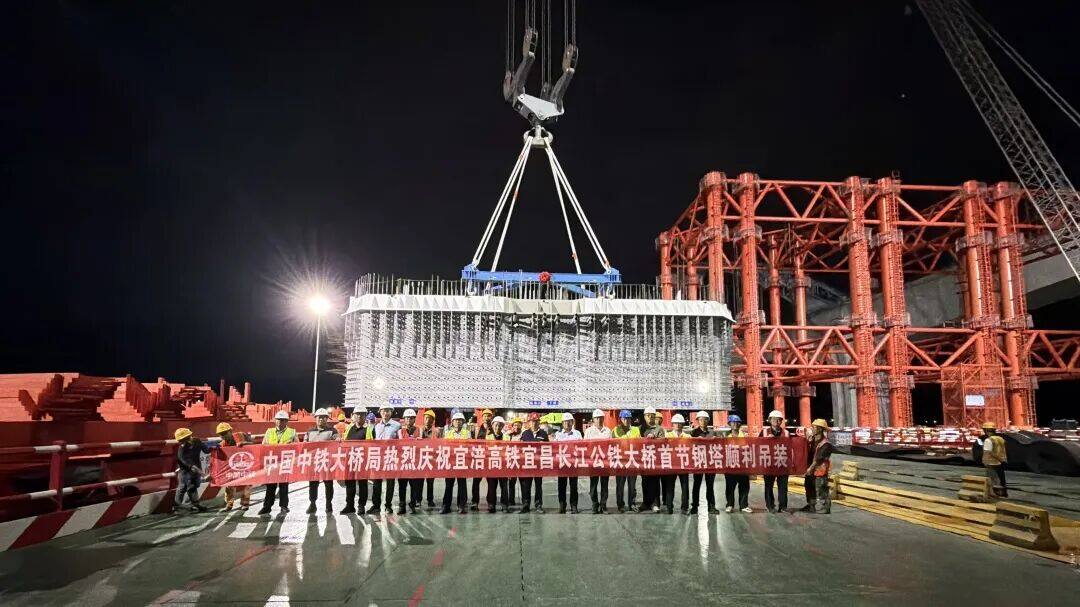
In the early morning of the Yangtze River in Yichang, the fog has not yet dissipated. A yellow steel boom slowly lifted the steel tower section weighing 330.4 tons and 4.75 meters high, steadily sending it to a height of 30 meters. On the early morning of August 30th, with the millimeter level alignment between the components and the lower tower column of Pier 7, the main tower of Yichang Yangtze River Highway Railway Bridge on Yifu High speed Railway officially bid farewell to the concrete structure of the lower tower column and entered a new stage of middle tower column construction.
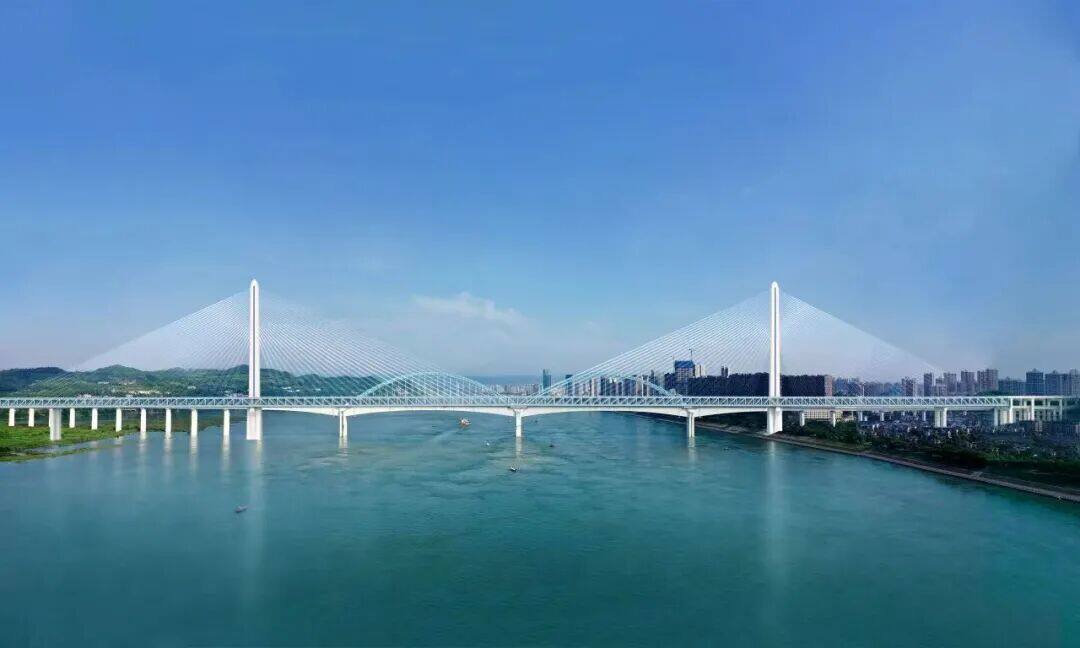
This bridge is a key control project for the entire Yifu High speed Railway and also a shared river crossing channel between the Shanghai Chongqing Chengdu High speed Railway and the Hunan Hunan High speed Railway. The total length of the main line is 2782 meters, the main bridge across the river is 1563 meters, and the main span is 800 meters. It adopts a four main truss and four cable plane steel truss cable-stayed bridge scheme, and the main tower is the world's first steel truss single column tower structure. It is the world's first railway track three use steel truss cable-stayed bridge with upper and lower tracks.
The first section of the steel tower is in place
The Z0 section of Pier 7 lifted this time is the joint section under the middle tower column, and also the core conversion node connecting the concrete of the lower tower column and the steel-concrete structure of the middle tower column. It needs to be accurately embedded into the lower tower column support, with a steel structure outer wall plate thickness of 50 millimeters, and a large number of steel holes and shear nails arranged on the wall panels and stiffeners, specifically used to stably transmit the load between the steel structure and concrete.
The steel tower segments are first vertically pre assembled in the factory and then transported to the site. The base guide device is initially positioned roughly, and four 200 ton 3D jacks are synchronously fine tuned to achieve millimeter level precise positioning, meeting the design standards.
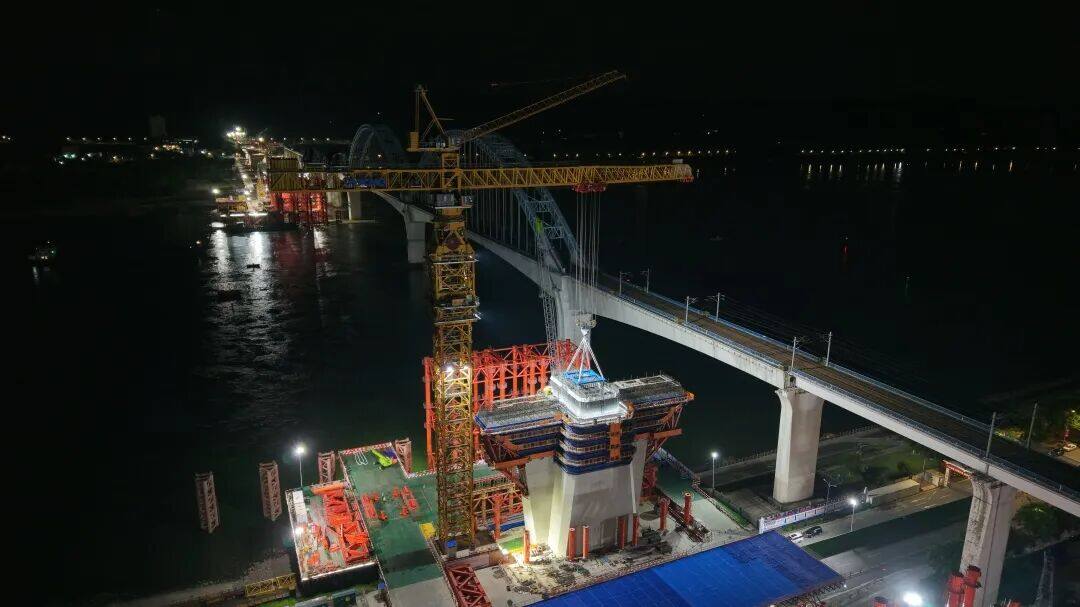
Giant arm tower crane escort
The XGT15000-600S ultra large tower crane, independently developed by China Railway Bridge Bureau and XCMG Group, is responsible for carrying this large tonnage hoisting. It has a rated lifting torque of 15000 tons and a maximum lifting capacity of 600 tons. It has previously undergone practical testing on national level projects such as the Changtai Yangtze River Bridge, Ma'anshan Yangtze River Highway and Railway Bridge, and Zhangjinggao Yangtze River Bridge. This time, four attached walls were set up on the Yichang River to provide a stable and precise lifting support for the steel tower.
To avoid interference from railway operating lines, the project department operates at night at railway skylight points and staggered waterway window periods, implementing one machine, one person dedicated protection and four fixed management, ensuring the safe placement of 342 ton components in adjacent line operating environments.
Channel changes space-time
The Yichang Yangtze River Railway Bridge is not just the "throat" of the Yifu High speed Railway. The upper level will run a four lane high-speed railway with a speed of 350 kilometers per hour, while the lower level will run a six lane municipal road and reserve two lines of rail transit. After the opening of the railway, the travel time from Yichang to Chongqing will be reduced from 4 to 5 hours to about 2 hours, and key cross river nodes in the comprehensive three-dimensional transportation corridor of the Yangtze River Economic Belt will be added.
The main tower climbing into the middle tower column means that this world-class bridge has shifted from "rooting out of water" to "growing into the air". Next, the tower columns will be capped, steel beams will be erected, and diagonal cables will be hung in sequence. There will be another steel rainbow connecting Sichuan, Chongqing, and Central China on the Yangtze River.Editor/Yang Meiling
Comment


 Praise
 Collect
 Comment

 Share
Share


Write something~