 Search


- Farewell to personnel exchanges and economic and trade settlements between the two countries, exchange of foreign exchange and transit
- Provide replicable models for China ASEAN digital finance cooperation
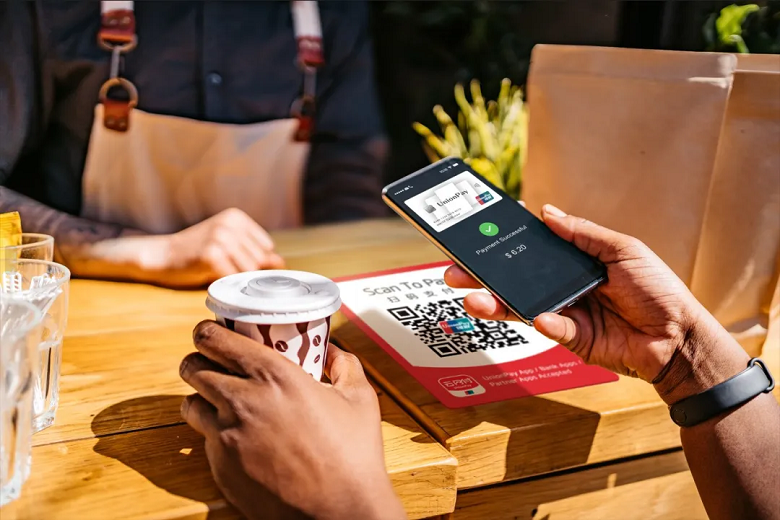
Wanxiang in the morning, the morning market by the Mekong River has just opened. A Chinese tourist took out his phone in front of a coffee stall, opened the digital RMB app, scanned the QR code hung by the stall owner, and completed the payment a few seconds later - without currency exchange, counting, or overseas card swiping fees. This kind of scene has already happened once in Laos by the end of 2025.
On September 18, 2026, the People's Bank of China and the Bank of the Lao People's Democratic Republic jointly held the China Laos Cross border Digital Payment Interconnection Launch Conference in Nanning, Guangxi, officially putting this tested channel on the track of large-scale operation. Vice Governor of the People's Bank of China, Lu Lei, and Vice Governor of the Bank of the Lao People's Democratic Republic, Surissak Samnuong, attended and delivered speeches.

Wallet crossing the border
Barcode payment is the most deeply felt aspect for ordinary people. The construction and operation of the Digital RMB International Operation Center has completed the cross-border system connection between the Digital RMB Cross border Settlement Comprehensive Service Platform (CBETS) and the Lao National Payment Network (LAPNet), realizing the cross-border interconnection of digital RMB and local barcode payments in Laos. By the end of 2025, real transaction verification has been completed and both internal and external functions have been implemented, allowing Chinese residents to use digital RMB wallets opened by digital RMB business operators to scan QR codes and make payments at local commercial banks and acquiring merchants in Laos.
Behind this pathway is the constantly escalating flow of people. By 2025, the number of Chinese tourists visiting Laos will exceed one million; Since the opening of the China Laos Railway, 73.38 million passengers have been sent, including 840000 cross-border passengers from more than 120 countries and regions, driving the consumption growth of scenic spots, hotels, catering and other industries along the line by more than 35%. The more frequently a person walks, the tighter the payment must follow. At present, China and Laos are jointly promoting functional upgrades and scene expansion to further facilitate personnel exchanges and cultural tourism consumption between the two countries; In the next stage, supporting Laotian residents to use their own digital wallets to scan and consume codes in China through outsourcing has also been included in the cooperation direction.

Acceleration of fund outflow
Besides personal QR code scanning, corporate settlement is another main thread. Some local banks in Laos have connected to CBETS and launched the new CBETS trade settlement and investment financing service, Digital Coin Payment, which supports 24/7 digital, intelligent, and convenient closed-loop cross-border payment settlement and investment financing business.
On the day of the kick-off meeting, this service was officially launched at the China ASEAN Forum on Financial Cooperation and Development, and the trade digital service platforms in Shanghai, Guangxi, and Fujian were the first to be integrated. China Construction Bank has relied on this service to achieve peer-to-peer cross-border remittance between the China Laos Interconnection Company and the Southern Power Grid Lancang Mekong International Company through on chain wallets, with funds arriving in real-time, breaking the old problems of multi-level transfer and lagging timeliness in traditional cross-border remittances. For enterprises, one less layer of transit means one less cost and one less risk of exchange rate fluctuations.
The numbers on the track are still increasing: as of the end of 2025, the cumulative transaction volume of the multilateral central bank digital currency bridge is equivalent to nearly 500 billion yuan, and the Digital RMB International Operation Center has officially opened in Shanghai on September 24, 2025. By 2025, the bilateral trade volume between China and Laos will reach 9.82 billion US dollars, a year-on-year increase of 19.3%. The smoother the channel, the more capital flow needs to be accelerated.
Towards a wider stage
The interconnection of cross-border digital payments between China and Laos is an important measure to implement the consensus reached by the leaders of the two countries and deepen bilateral financial cooperation. It is also a milestone achievement reached under the framework of the Memorandum of Understanding on Strengthening Financial Innovation, Digital Payments, and Legal Digital Currency Cooperation signed by the central bank governors of both sides in June 2026. It is based on the institutional docking between central banks, exploring a replicable and promotable path for the co construction and sharing of cross-border payment infrastructure, and providing a model for deepening digital financial cooperation between China and ASEAN.
Next, the People's Bank of China will strengthen policy communication and regulatory coordination with banks in the Lao People's Democratic Republic to ensure smooth and orderly operation of interconnectivity, guide relevant participating institutions to continuously optimize customer experience, expand application scope in an orderly manner, and serve high-level opening up to the outside world. Officials from relevant departments of the central banks of China and Laos, as well as officials from commercial banks and participating enterprises, attended the meeting.
From a train or a highway, to a single scan of a code and real-time payment, interconnectivity is becoming increasingly refined and closer.Editor/Yang Meiling
Comment



 Praise
 Collect
 Comment

 Share
Share


Write something~