 Search


- Connect the inland hinterland directly to the Beibu Gulf and ASEAN markets
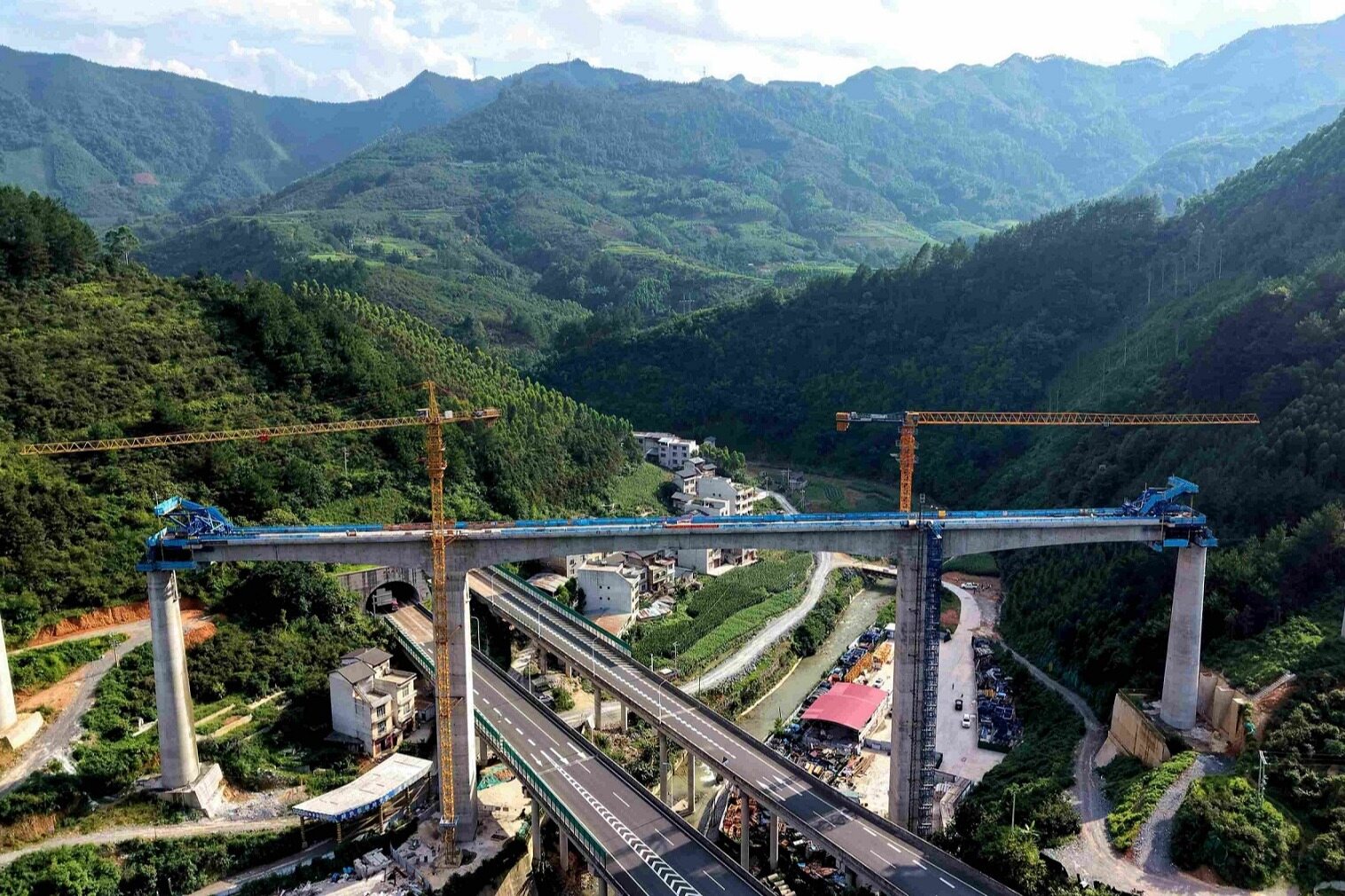
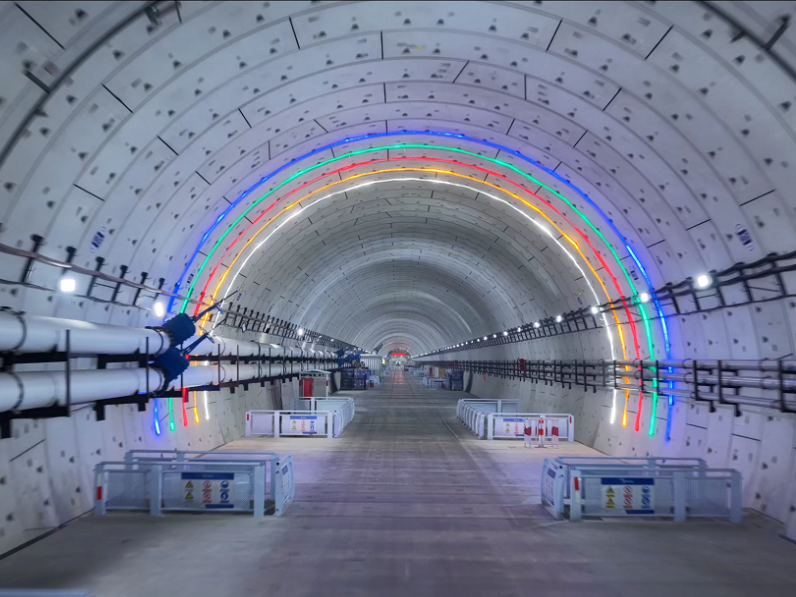
The morning mist has not yet dissipated, and the roar of wind guns can already be heard deep in the mountains of Wangmo County in southwestern Guizhou. At the entrance of the No. 2 inclined shaft of the Dayi Tunnel, a five-star red flag resounded in the autumn wind, and slag trucks shuttled back and forth. Workers crouched beside the palm face to calibrate the position of the inverted arch wharf. The construction team leader Chen Xingcheng wiped the sweat off his forehead, and his palm face was moving forward at a speed of 3 meters per day. Recently, the main tunnel excavation of the longest tunnel on the Guizhou section of the Huangbai Railway broke through halfway, with a total footage of 6840.1 meters, accounting for 50.76%, adding another significant milestone to the project construction.
The ten thousand meter long tunnel is gnawing like this
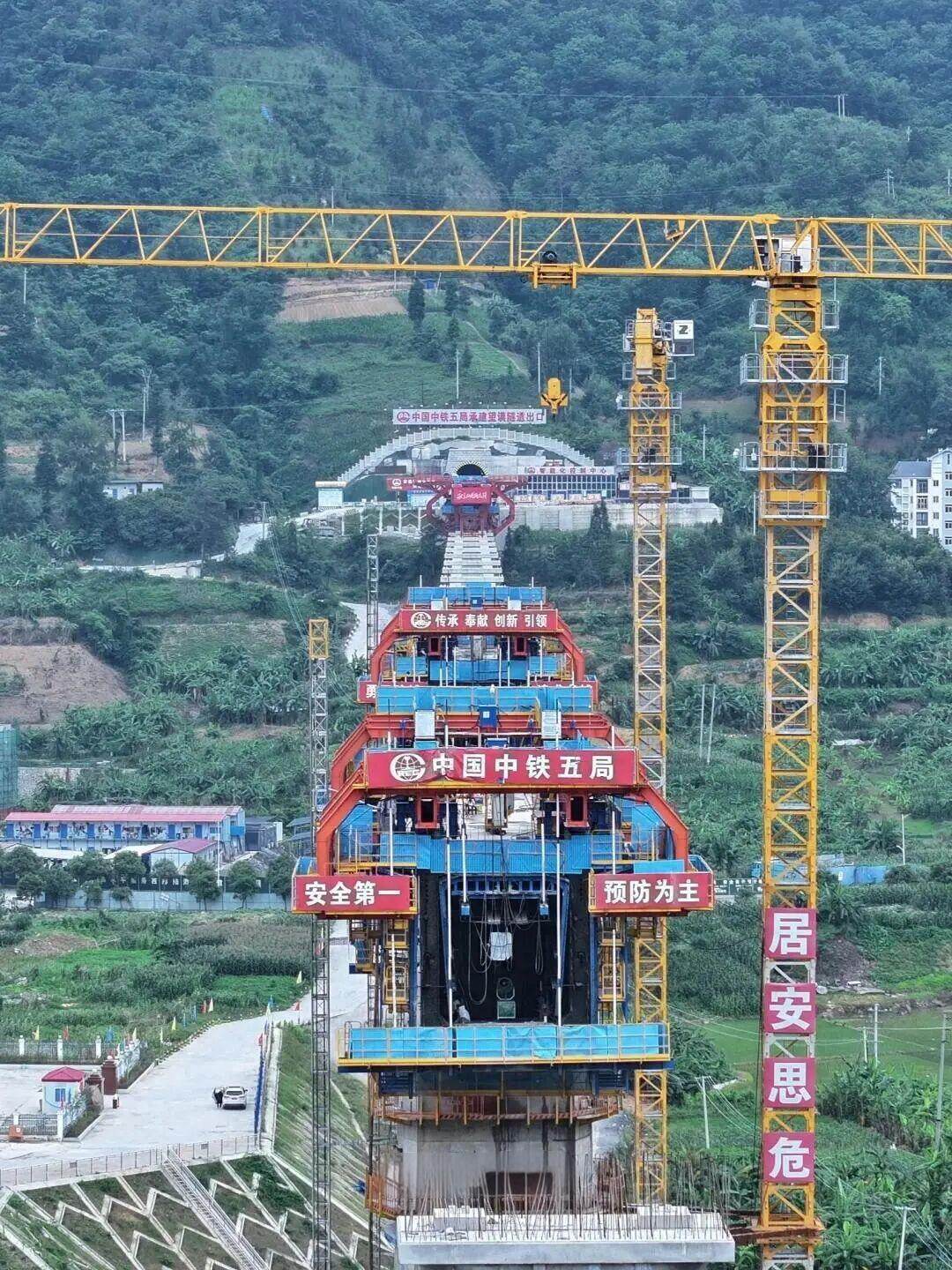
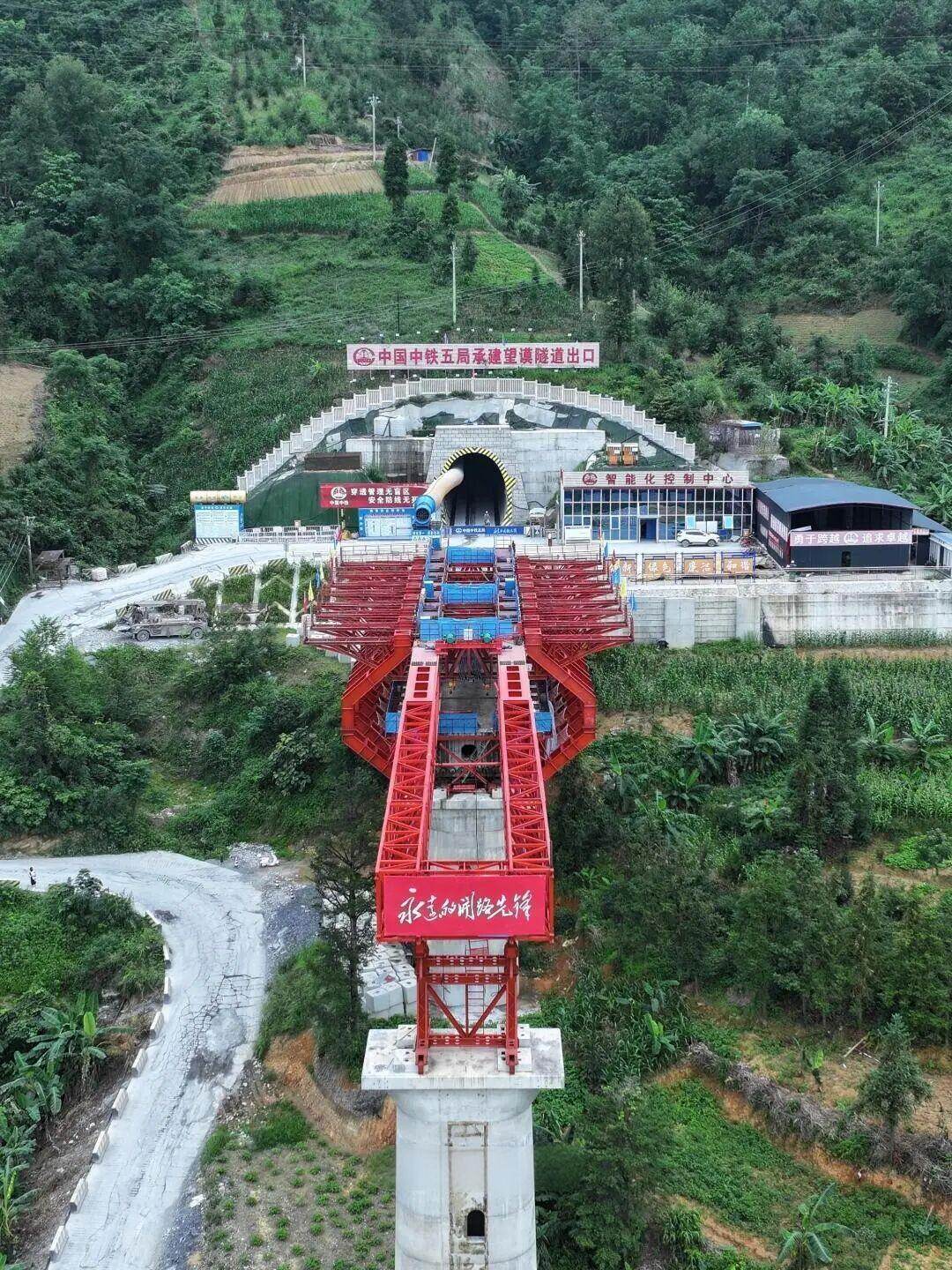
The Guizhou section 4, constructed by China Railway Fifth Bureau Guizhou Company, has a total length of 32 kilometers and a bridge and tunnel ratio of up to 93%, making it a high-risk heavy bridge and tunnel section along the entire line. The total length of the Dayi Tunnel within the pipeline is 13475 meters, with a shallowest burial depth of only 12 meters and a maximum burial depth of 467 meters. It also passes through structures such as highway ramps. The length is right in front of us, but the schedule doesn't wait for anyone. The builders divided a long tunnel into several sections for excavation, using an auxiliary tunnel scheme consisting of one rescue evacuation inclined shaft and three inclined shafts. The entrance and four inclined shafts were excavated simultaneously at five construction sites, using the idea of short excavation of the long tunnel to turn the impossible into the possible. From entering the tunnel construction to now halfway through excavation, this tunnel is steadily enclosing from multiple working faces in the middle of the mountain.
Struggling in Karst
Wangmo is a typical karst landform, with high mountains and deep valleys, overlapping caves, faults, bedding planes, and large deformations of soft rocks. Risks such as sudden mud and water influx, unstable cave entrances, and bottom bulging deformation are closely related, and the construction site is limited, with strict ecological protection requirements. The control projects such as the Dayi Tunnel, Wangmo River Grand Bridge, and Wangmo Station are like the numerous passes that must be overcome on the road construction in the new era. The Wangmo River Grand Bridge has a total length of 1287 meters, spanning municipal roads, Wangmo River, and Provincial Highway 209, and crossing residential areas for a large distance. The construction difficulty of high pier pile foundations and continuous beam rigid structures is not small. Faced with technical challenges such as rock fragmentation and roadbed settlement, the project department has established a technical research team relying on the Labor Model Innovation Studio, strictly following the principles of weak blasting, short footage, strong support, early closure, and frequent measurement. A total of 11 construction difficulties have been overcome, 5 practical construction methods have been developed, and 2 utility model patents have been obtained to solve the problem of road construction in karst mountainous areas through technological innovation.
Across the mountain is the sea
The value of this railway is not in the mountains, but outside the mountains. As a crucial strategic backbone project of the Western Land Sea New Corridor West Line, the Huangbai Railway has a total length of 315 kilometers and is a national first-class single track electrified railway with a designed speed of 160 kilometers per hour. It will start construction in December 2023 and is planned to be completed and opened to traffic in 2028. The route is connected to the Shanghai Kunming Railway to the north and the Nankun Railway to the south, closely linking Guizhou and Guangxi, and connecting the transportation arteries of central and western Guizhou directly to the Pinglu Canal and the mouth of the Beibu Gulf. With the completion and opening of the Pinglu Canal, the Huangbai Railway will be connected to it in the future, forming a multimodal transportation line that connects the railway, Youjiang Channel, Pinglu Canal, and Beibu Gulf Port. According to the plan, the annual cargo transportation capacity can reach 16 million tons. At that time, bulk materials such as coal and fertilizers from Sichuan, Chongqing, and Guizhou will no longer have to take long detours to sail south, and the history of Wangmo County without railways will come to an end.keywords:Engineering infrastructure
A railway that connects mountains and the sea. The project adheres to green priority, maximizes the protection of forest landforms and native vegetation, achieves coordinated development of engineering construction and ecological protection, and revitalizes the revolutionary old areas with green vitality in the direction of rail extension.Editor/Yang Meiling
Comment

 Praise
 Collect
 Comment

 Share
Share


Write something~