 Search


- Key breakthrough of the world's longest sea crossing high-speed railway bridge
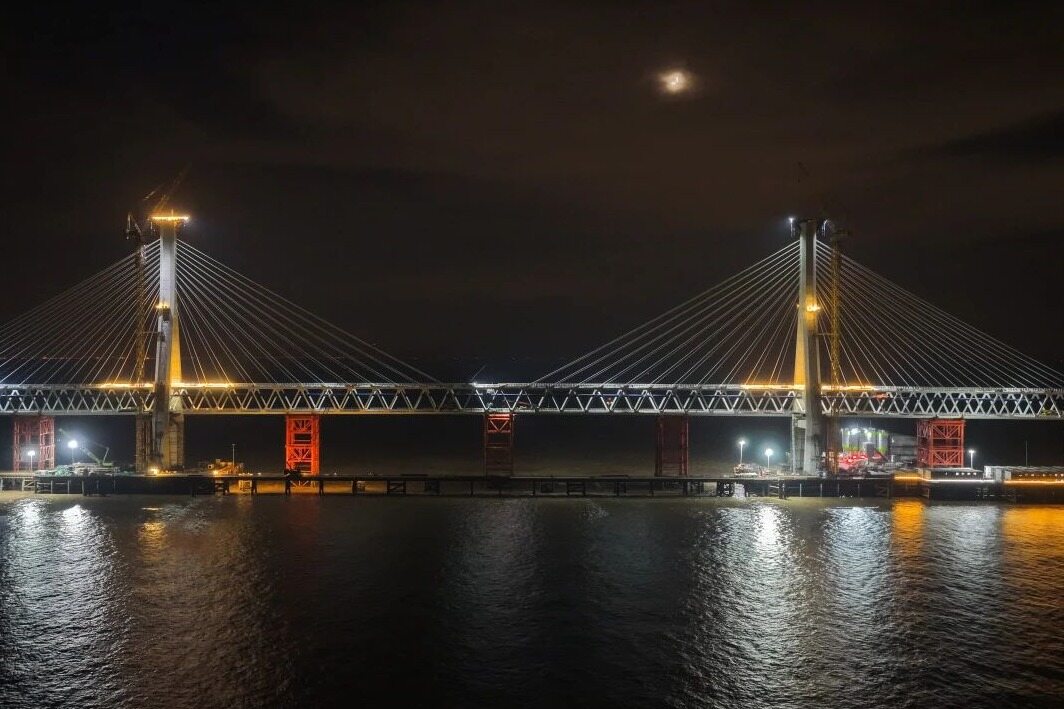
Recently, the night in the Hangzhou Bay area has been deep, and the construction team is making final adjustments to the posture on both sides of the South Channel Bridge and Longkou. With the precise docking of steel truss beams using double-sided push technology, the closure deviation is controlled at the millimeter level, and the world's longest sea crossing high-speed railway bridge, the Tongyong High speed Railway Hangzhou Bay Cross sea Railway Bridge South Channel Bridge, is successfully closed. This is the first successfully closed waterway bridge among the three major bridges, laying a solid foundation for subsequent cable tensioning, bridge deck construction, and full bridge system conversion.
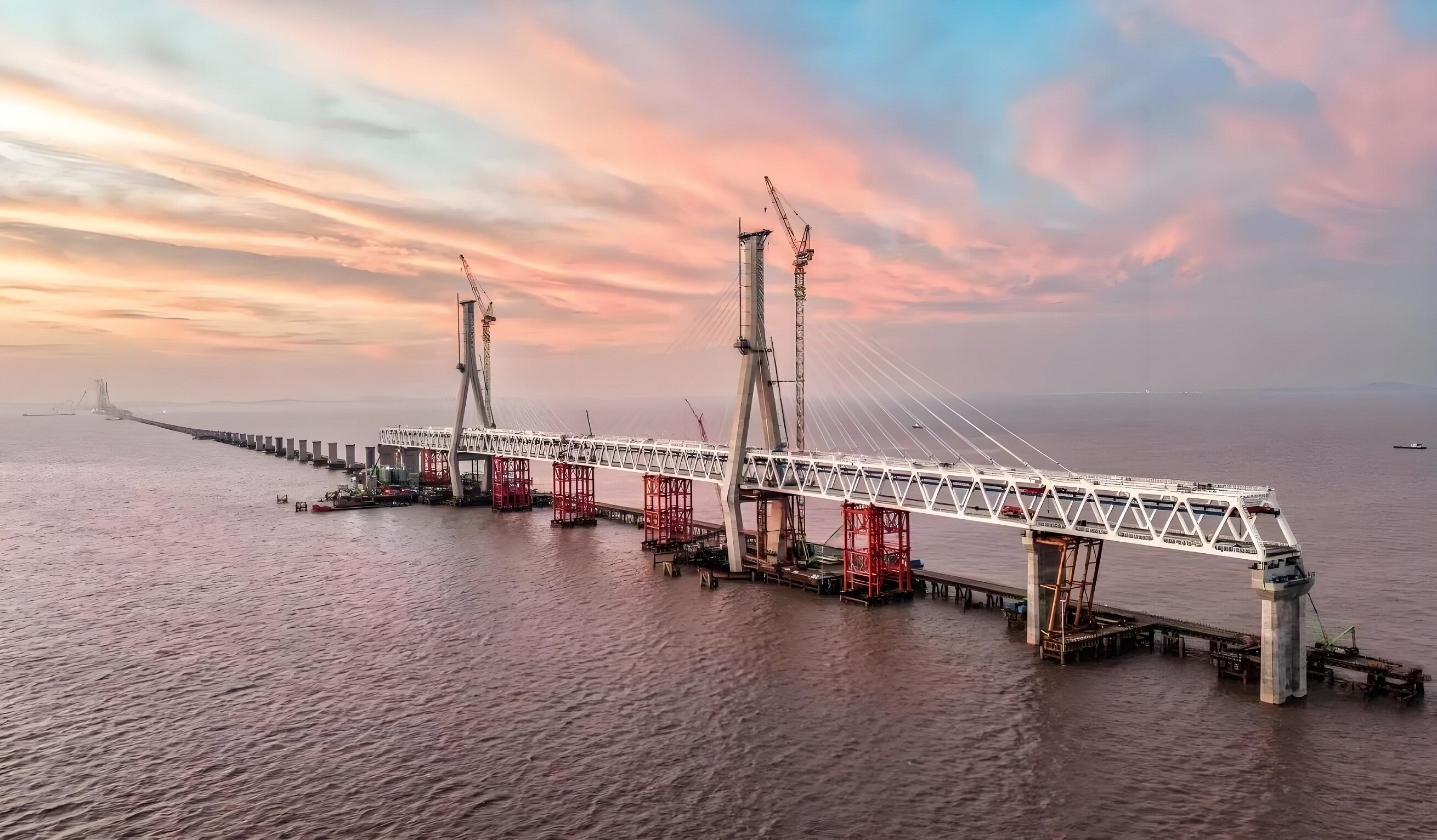
The South Channel Bridge has been successfully closed
The Nanhang Road Bridge is located in the central sea area of Hangzhou Bay, with a total length of 814.5 meters. It adopts a steel truss combined beam cable-stayed bridge structure, with a main span of 364 meters, which can meet the navigation needs of 3000 ton ships. The two main towers are 157.5 meters high and are diamond shaped concrete structures. They were topped out on May 6 and June 24, 2026 respectively. The total weight of the main bridge steel truss is about 10700 tons, divided into 58 sections and equipped with 96 parallel steel wire stay cables. The construction team adopts the process of beam first and cable later. The steel components are manufactured and assembled into 10 large sections in the factory, transported to the bridge site in batches, and lifted by a 2200 ton crane ship at sea. Since the first section of the steel truss beam was erected on June 4, 2026, the team completed the installation of all sections in 52 days, followed by approximately two and a half months to complete the steel beam connection and prefabricated bridge deck installation.
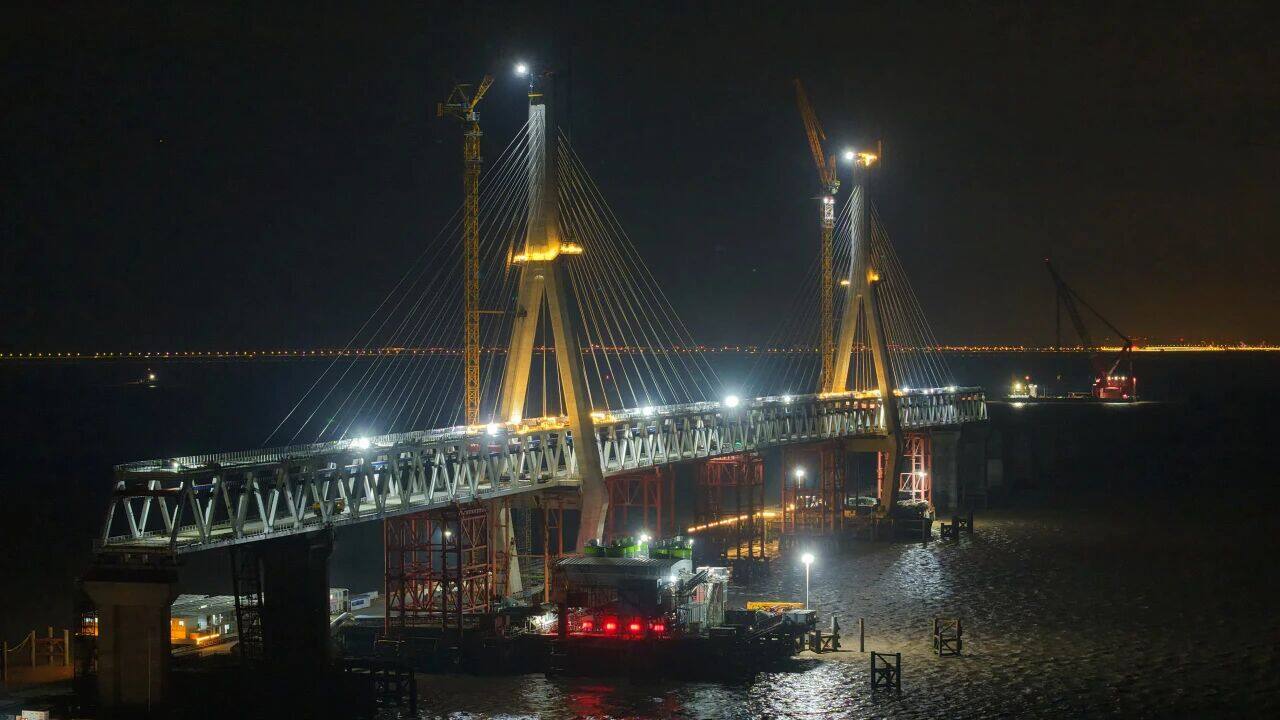
Breakthrough in world-class cross sea engineering
Hangzhou Bay is one of the three major tidal bays in the world, with a maximum tidal range of nearly 9 meters and a maximum flow rate of 5.3 meters per second. The average annual wind speed is above level 6 for about 180 days, and the effective construction window at sea is less than 200 days a year. This time, the double side pushing process was adopted for the closure of the bridge, which is a technical practice of a large-span steel truss cable-stayed bridge in a strong tidal bay environment. The construction team set up longitudinal wind resistant steel cow legs and transverse temporary limiters in two main towers, adjusted the posture of the joint by means of inclined cables, compression weights, etc., and combined with Beidou positioning and digital positioning technology to accurately adjust the position of the steel beams. The closure operation is scheduled during the stable temperature period at night to reduce the impact of temperature and sunlight changes on the steel beam expansion and closure accuracy. At present, the offshore pile foundation and pier body of the bridge have been fully completed, and the installation of prefabricated box girders for the sea approach bridge is accelerating. All three waterway bridges have been capped. Keywords: Infrastructure news and information, transportation, cross sea bridges
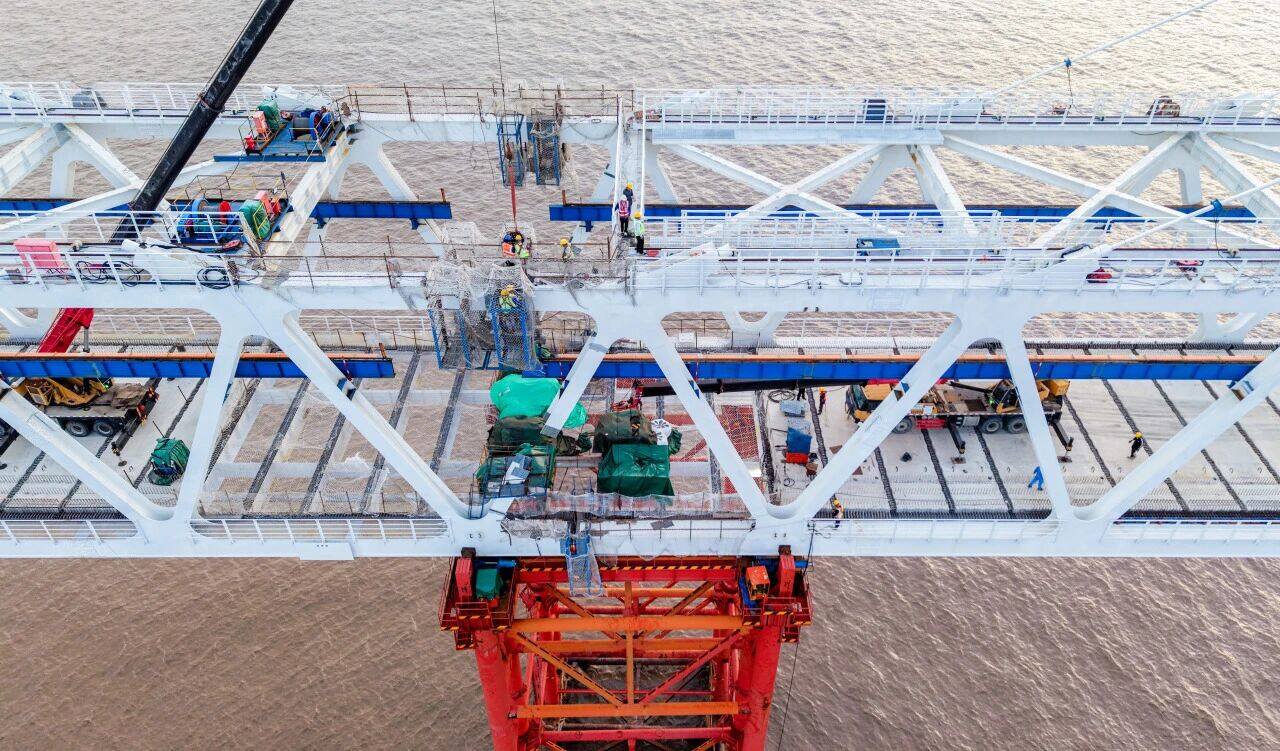
The Yangtze River Delta railway network is accelerating again
The Hangzhou Bay Cross Sea Railway Bridge is a controlled project of the Tongyong High speed Railway. It is located upstream of the existing Hangzhou Bay Cross Sea Highway Bridge, starting from Haiyan in Jiaxing in the north and ending at Cixi in Ningbo in the south. It has a total length of 29.2 kilometers and a design speed of 350 kilometers per hour. It is currently the world's longest and highest standard cluster type cross sea railway bridge under construction. The Tongyong High speed Railway is an important component of the coastal corridor of China's eight vertical and eight horizontal high-speed railway network, with a newly built line length of 301 kilometers and a designed speed of 350 kilometers per hour. After the completion of the project, it will further improve the railway network layout in the Yangtze River Delta region, strengthen the rapid connection between cities along the route, and help build a rail based Yangtze River Delta, injecting strong momentum into the high-quality development of the Yangtze River Delta integration.Editor/Gao Xue
Comment

 Praise
 Collect
 Comment

 Share


Write something~