 Search


- Assist in the continuous development of the permanent comprehensive strategic partnership between Kazakhstan and China
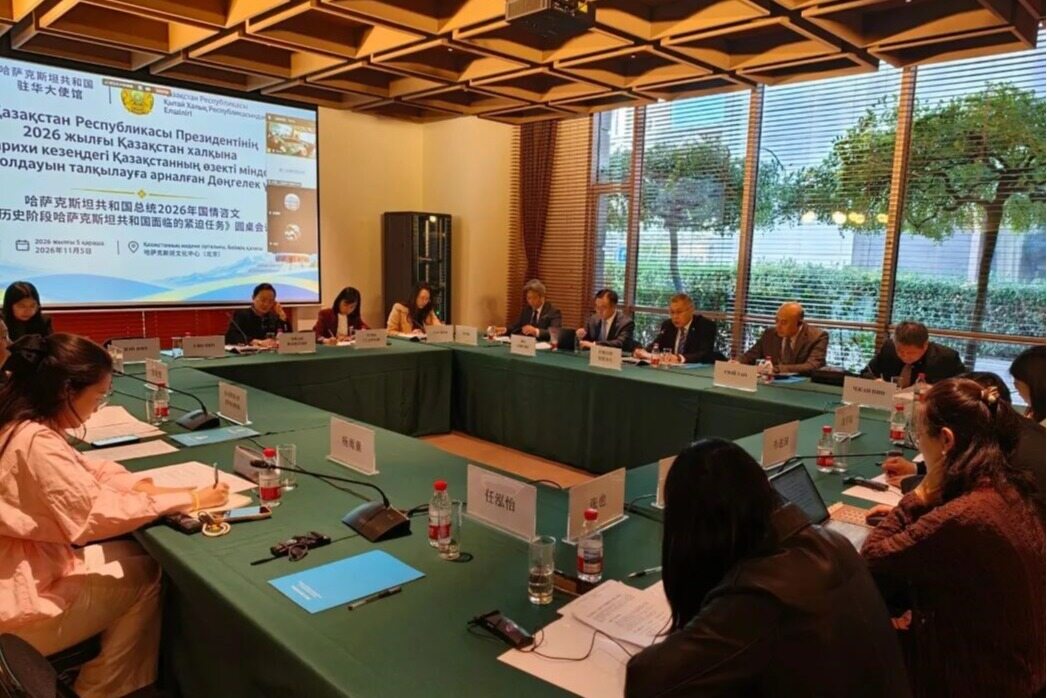
Beijing, November 5, 2026- A roundtable meeting was held at the Kazakhstan Cultural Center in Beijing to discuss the State of the Union Address delivered by President Tokayev of the Republic of Kazakhstan and various international initiatives of Kazakhstan. This event is hosted by the Embassy of the Republic of Kazakhstan in China and attended by representatives from leading Chinese think tanks and research institutions.
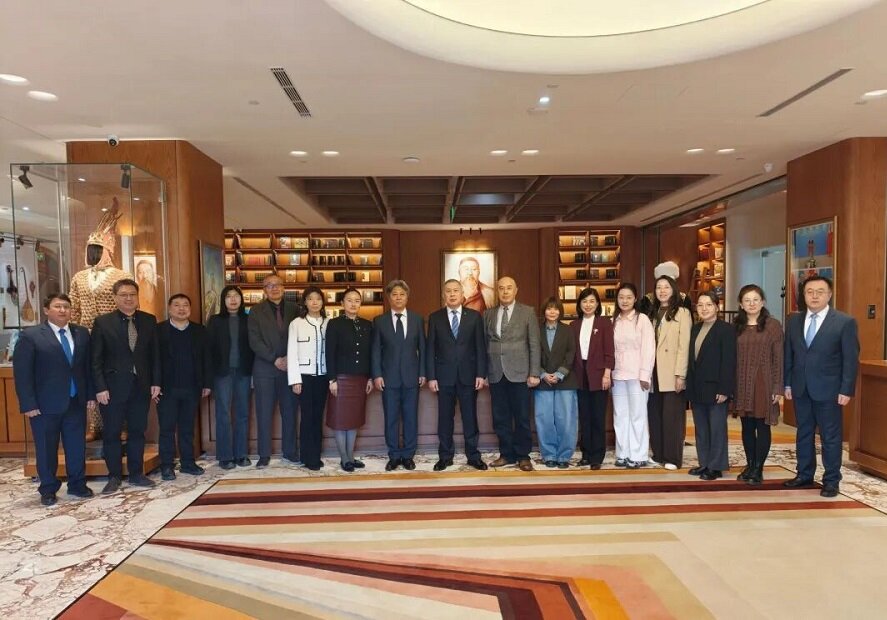
Representatives from 15 key scientific research and think tank institutions in China attended the conference, including the Chinese Academy of Social Sciences, the China Institute of Modern International Relations, the Development Research Center of the State Council of China, East China Normal University, Northwest University, Dalian Foreign Studies University, Lanzhou University, as well as representatives from relevant departments of the Communist Party of China Central Committee and the Chinese People's Association for Friendship with Foreign Countries.
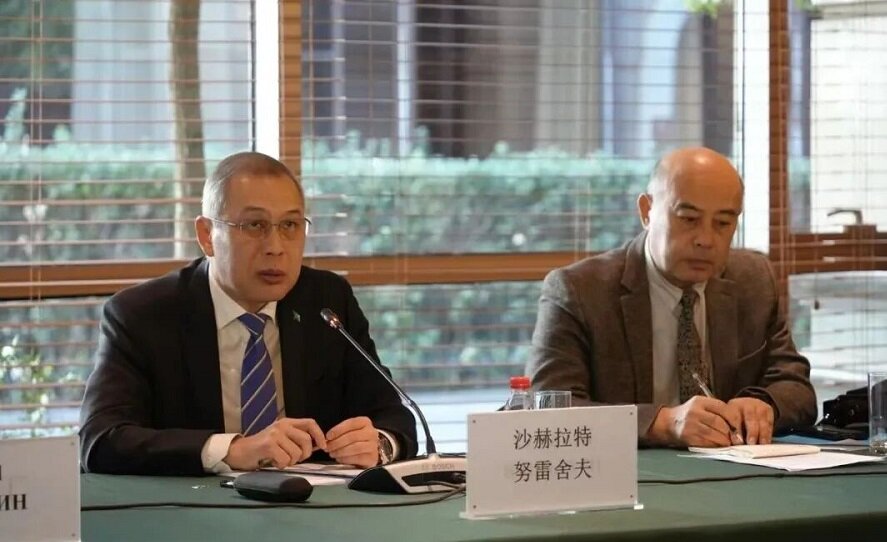
In his speech, the Ambassador of the Republic of Kazakhstan to China, Shahrat Nureshev, introduced the core content of the President's State of the Union Address to the attending guests, focusing on priority directions for socio-economic development, modernization of infrastructure, digital transformation, and the implementation of artificial intelligence. He also specifically introduced various international initiatives of the Republic of Kazakhstan aimed at maintaining regional stability, developing multilateral cooperation, and achieving sustainable development.
The ambassador emphasized that the permanent comprehensive strategic partnership between Kazakhstan and China is at a high level of development, and the various reforms being promoted by Kazakhstan bring new opportunities for deepening practical cooperation between the two countries.
During the seminar, Chinese experts highly praised this State of the Union Address, believing that it has strategic attributes and focuses on the long-term development of the country.
Ding Xiaoxing, Deputy Secretary General of the Academic Committee of the China Academy of Modern International Relations, stated that Kazakhstan has completed a large-scale political reform phase and is now entering an active process of economic modernization. He believes that the "People's Construction" initiative is expected to become an important driving force for promoting the diversification of the country's economy, and large-scale infrastructure projects will also open up new prospects for cooperation between Kazakhstan and China in the fields of transportation, energy, and industry.
Xu Tao, Deputy Director of the Institute of Eurasian Social Development at the Development Research Center of the State Council of China, pointed out that this State of the Union Address is not just a speech to the people, but also a grand strategic document that outlines the path for the country's development in the coming years. He also paid attention to the social orientation of the speech, emphasizing the policy shift from inclusive social subsidies to targeted assistance, raising the minimum wage standard, and increasing investment in education and healthcare.
Zhang Ning, Director of the Central Asia and Caucasus Research Office at the Institute of Russian, Eastern European, and Central Asian Studies of the Chinese Academy of Social Sciences, believes that this State of the Union Address is a strategic plan that marks a shift in the focus of reform from institutional construction to creating a new economic development model. The expert emphasized the core role of President Tokayev in promoting large-scale political and socio-economic reforms in the country, calling him a politician with a global vision and strategic foresight, and a true chief designer of the "New Kazakhstan".
The attendees also discussed the prospects for cooperation in areas such as agriculture, water-saving technology, interconnectivity, and professional talent cultivation, and unanimously agreed that there is enormous potential for joint projects in these directions.
At the end of the event, both sides expressed their willingness to continue strengthening the dialogue between think tanks, expanding scientific and academic exchanges, and assisting in the continuous development of the permanent comprehensive strategic partnership between Kazakhstan and China.Editor/Min Jing
Comment

 Praise
 Collect
 Comment

 Share


Write something~