 Search


- A set of rules to connect cross-border data, payments, and documents in ASEAN
- The scale of regional digital economy can reach a maximum of 2 trillion US dollars by 2030
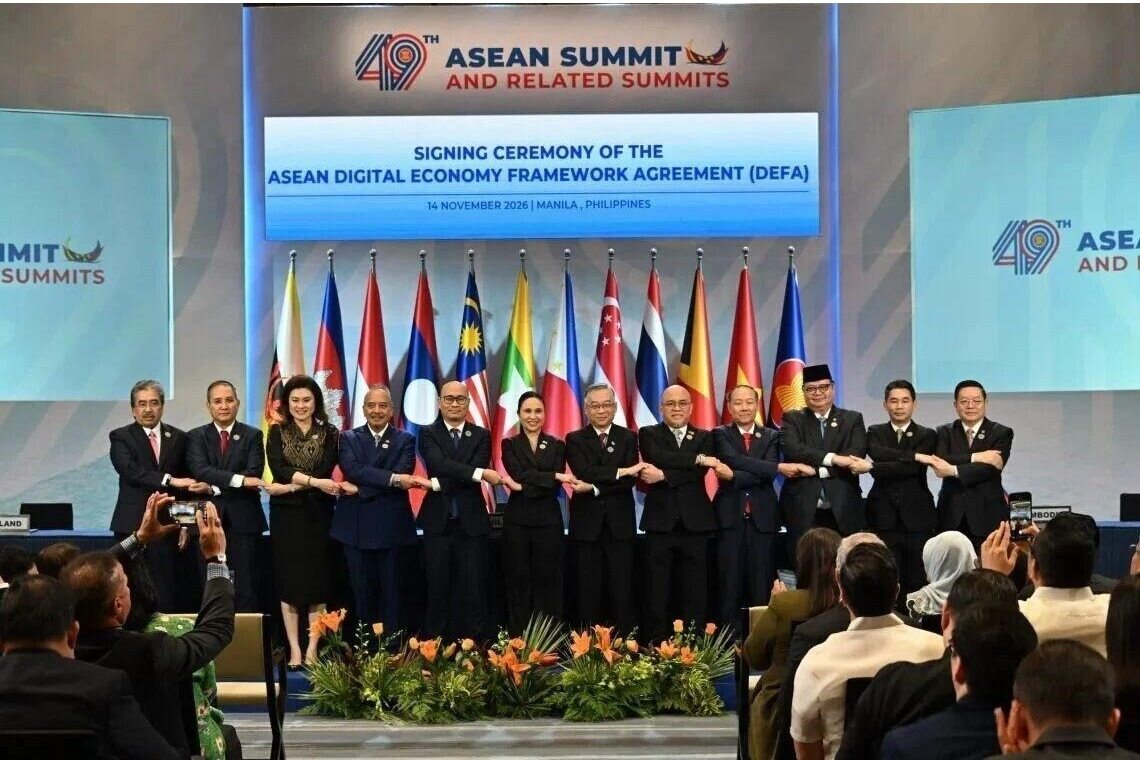
On November 15, 2026, the opening ceremony of the 49th ASEAN Summit was held in Manila. Philippine President and 2026 ASEAN Chair Marcos handed over the agreement text to ASEAN Secretary General Gao Jinhong. The text was signed on November 14th, during the 28th ASEAN Economic Community Council meeting, when ASEAN member states officially signed the ASEAN Digital Economy Framework Agreement. Outside the venue, a small and medium-sized e-commerce company that does cross-border business understands its weight better: repeating qualifications, repeating compliance, reconnecting payment interfaces, and stacking costs before the goods are released from the warehouse.
From soft guidance to hard rules
This is the first independently established and legally binding regional digital economy agreement in ASEAN, expected to come into effect in early 2027. The previous data management framework and cross-border data flow demonstration contract terms did not require member states to amend their laws, but only served as non binding guidelines; The original ASEAN e-commerce agreement only covered a corner of e-commerce, and after the agreement takes effect, the scope of cooperation will expand to a wider range of fields. The RCEP e-commerce chapter is also principled. Enterprises still need to investigate the law country by country.

Nine domains share one ruler
The agreement incorporates emerging technologies such as cross-border data flow, digital trade, e-commerce, electronic payments, digital identity authentication, source code protection, network security, personal data protection, and artificial intelligence into common rules and standards, promoting the interconnection of digital systems among member countries and reducing the duplication of procedures and additional costs caused by different regulatory systems for cross-border operations. In daily life, paperless trade, electronic documents, and digital payments are running in the region. Indonesia's QRIS, Thailand's PromptPay, Vietnam's VietQR and other standards have their own systems, and cross-border payments need to be connected one by one. After the standardization of rules, cross-border operations in industries such as technology, e-commerce, finance, logistics, and supply chain will be more convenient. Small and medium-sized enterprises are expected to enter regional markets and expand their business scale through more unified digital rules; Digital payments and electronic documents are listed as priority projects.

How many steps are there before it takes effect
Unification does not mean a one size fits all approach. The agreement reserves regulatory space for each member state, allowing for exceptions based on actual needs such as personal privacy, trade secrets, and national security, while balancing interconnectivity and regulatory needs of each country. The negotiations will start in 2023 and be completed in May 2026. Signing is just the starting point: member states will advance domestic approval procedures and develop specific implementation plans to prepare for the agreement to come into effect in 2027. The ASEAN Senior Economic Officials' Meeting previously stated that with the smooth implementation of the agreement, the scale of ASEAN's digital economy could reach a maximum of $2 trillion by 2030. The ASEAN Secretariat stated that the agreement is an important step for ASEAN to build an open, secure, interconnected, competitive, and inclusive regional digital economy. For that small e-commerce company, the rules need to go a step further before they become a missing form at checkout.Editor/Yang Meiling
Comment







 Praise
 Collect
 Comment

 Share


Write something~