 Search


- Chuanhua settled in Chengdu, with the advantage of channels accelerating the shift towards hub advantages
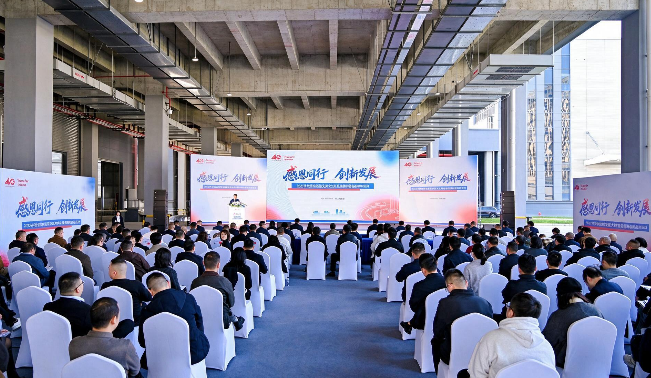
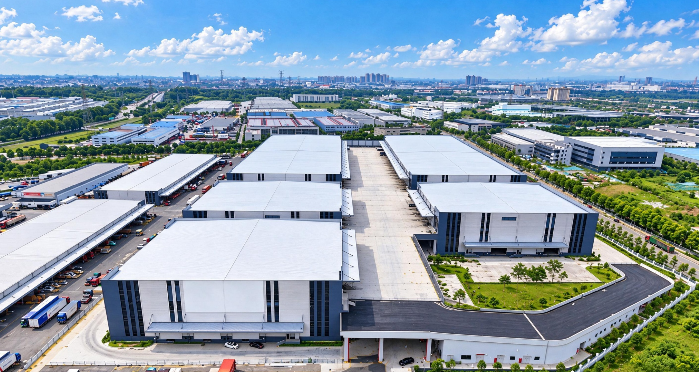
On the morning of November 13, 2026, the logistics supervisor of an equipment manufacturing enterprise in Chengdu verified the Sichuan Cheban plan. In the past, Laohulu Port was surrounded by the urban area, and the entry and exit of heavy trucks and residents' travel were mutually constrained. The queuing during peak seasons made the delivery nodes fragile. On that day, the 2026 Chuanhua Logistics Supply Chain Development Conference and Chengdu Two Ports Innovation Launch Event were held at Chengdu Smart Port, and Chengdu Smart Port and Chengdu East Center Phase II were put into operation. For Southwest Logistics, this is not an additional park, but a test of how channel capacity can become hub capacity.
Leaving exam questions after the exit of Laogang
Comments suggest that urban expansion has pushed old logistics nodes to the edge, and if relocation only involves changing addresses, it is still difficult to break away from the old logic of distribution centers. The new node should be close to the industrial belt, organizing warehousing, distribution, transportation, and digital systems, otherwise no matter how large the park is, it cannot retain stable sources of goods. Chuanhua has been stationed in Sichuan for many years, and the two ports in Chengdu are expected to play a dual core role, linking nodes such as Mianyang, Nanchong, Guangyuan, Yibin, etc., forming a local area network within Sichuan and connecting to the national network. The key is not in the area, but in whether the procurement, production, and sales processes of Southwest manufacturing enterprises can be connected.
The landing of the product is considered a hub
The highlight of Xingang lies not in the high standard warehouses and distribution venues themselves, but in the service organization. The comments suggest that large customers require industry-specific supply chain solutions, small and medium-sized customers need shared warehouses and joint distribution, and dedicated line enterprises need front-end cargo collection, arrival distribution, and same city joint distribution. If the platform only charges rent, the node value is limited; If we can help manufacturing and commercial enterprises reduce inventory, lower terminal costs, and improve loading rates for dedicated lines, then the hub will have stickiness. Scenarios such as alcohol, new energy, and chemical industries have different requirements for temperature control, turnover, and performance. Standardized venues must be combined with differentiated services.
Ecological synergy determines future momentum
Chuanhua proposes to transform into an AI driven industrial technology group, and Chengdu's two ports will combine offline networks with online digital freight, upgrading park management with intelligent equipment. Comments suggest that AI and digitization are not just decorations, but should be applied to loading, warehousing, settlement, and full process visualization. The customer's performance is stable, the shipper is willing to submit long-term orders, and the dedicated line and transportation partners are willing to follow up. The shift from channel advantage to hub advantage relies not on a single route, but on the synergy of cargo sources, shippers, dedicated lines, technology, and local policies. Setting sail is just the beginning. The next step is to see if the business density can continue to increase and if the scenario openness can turn into real orders. Keywords: social commentary, news and information, smart logistics, logistics hub
The competition of Southwest Logistics is ultimately not a competition between parks, but a competition of supply chain organizational capabilities. If the two ports in Chengdu can combine manufacturing demand, transportation resources, and digital tools into one rope, the channel advantage will have the opportunity to settle into a hub advantage.Editor/Gao Xue
Comment



 Praise
 Collect
 Comment

 Share


Write something~