 Search


- Sangyuanwei, built in the Song Dynasty, gradually formed a large-scale foundation water conservancy project
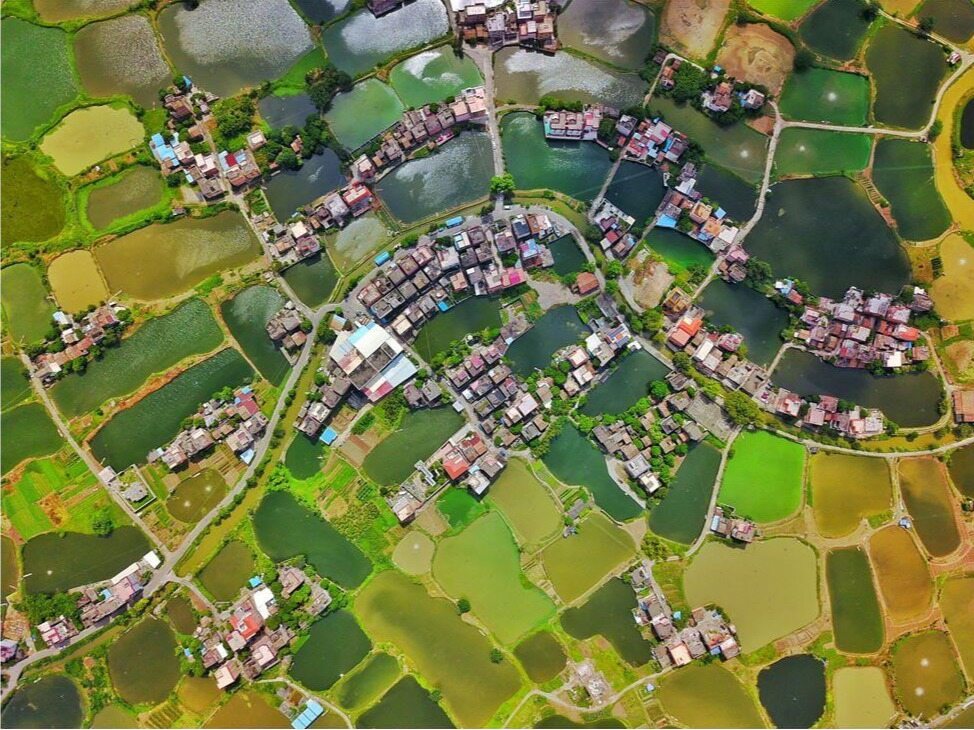
Sangyuanwei is located in Nanhai District and Shunde District of Foshan City. It was built in the Song Dynasty. After several times of construction and improvement, it gradually formed a large-scale foundation integrating reclamation, irrigation, flood control, drought resistance, transportation, transportation, and aquaculture. Surrounding water conservancy projects. On December 8, 2020, Foshan Mulberry Garden was selected as the seventh batch of World Irrigation Project Heritage.
Evolution
The Pearl River Delta was inhabited for a long time by humans, but until the Tang Dynasty, it was still a sparsely populated area yet to be developed. After the mid-Tang Dynasty, due to years of war in the north, a large number of people from the Central Plains moved south, which not only brought a lot of labor, but also brought many advanced production technologies, which promoted the rapid economic development of the area south of the Yangtze River. Beginning in the Song Dynasty, as the population increased, people began to cultivate fields in lower-lying areas. Sangyuanwei, which was built in the early 12th century, was a large-scale embankment built in the Pearl River Delta during this period.
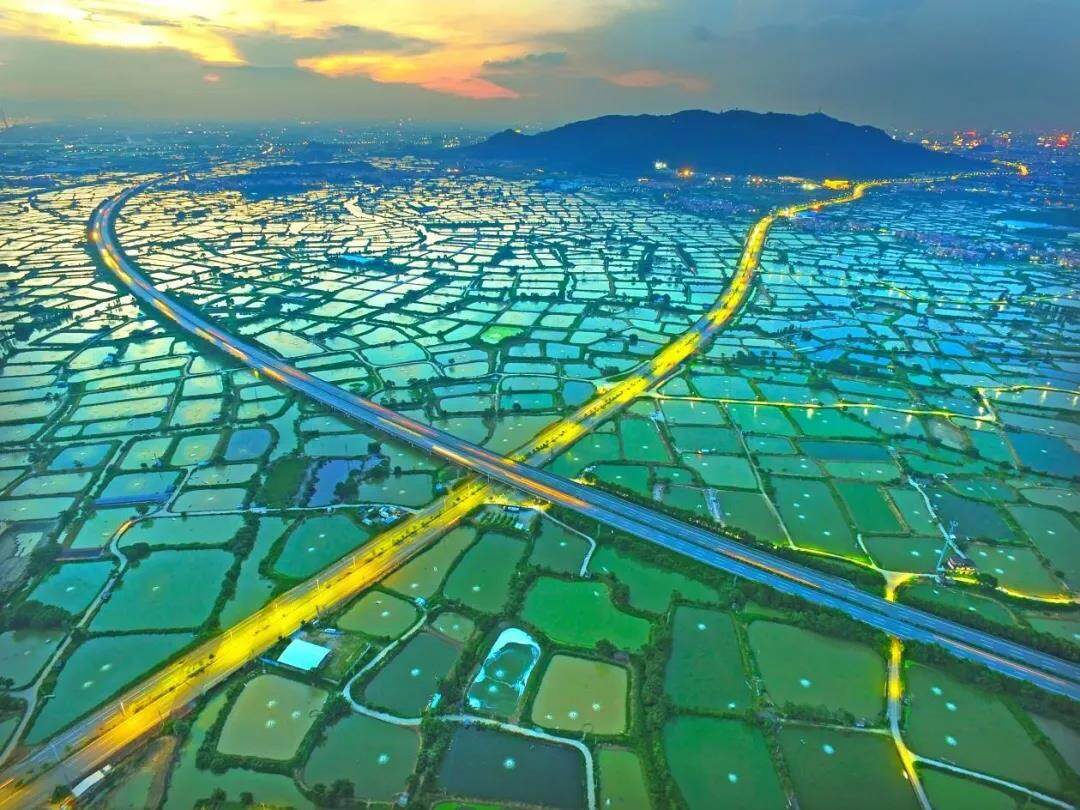
Sangyuan Wai Current Situation Map
The exact age of the creation of Sang Yuanwei is no longer available. According to various documents, it was roughly built during the Chongning and Daguan reigns of Huizong of the Song Dynasty (1102~1110). At that time, Zhang Chaodong, Xian Zhang on Guangnan Road, was passing by Jiujiang and encountered a flood. He witnessed the huge damage caused by the flood to the local residents. "After arriving in the province, he immediately asked the county to gather people from the county to prepare for the construction of a foundation embankment to prevent water damage." . He also asked for instructions and was approved. The construction of the siege was presided over by He Zhizhong, Shangshu of the Ministry of Industry. In Xiqiao Mountain, two flood control embankments were built along both sides of the West and Beijiang Rivers. After three years of construction, the east and west bases were finally completed. Later, the Jizan Hengji was built upstream to resist the upstream floods. The bottom and surface of the embankment of Sangyuan Wall in Song Dynasty were relatively wide. Since the water level of the West and North Rivers was still low at that time, the solid embankment was not high. According to other dikes at that time, the dike height of Sangyuanwei was about 1~2m.
In the Yuan Dynasty, the west dike of Sangyuanwei was further heightened and thickened. The height of the dike was about 1 feet 2 feet, or about 4m.
Jizan Yokoki
In order to prevent the threat of floods, the Ming Dynasty continued to increase the height and thickness of the east and west dikes. The height of the dikes was generally about 1.5 to 2 feet, that is, about 5 to 6 meters, and the dike line was further extended. Since the Song and Yuan dynasties built many embankments along the West and North Rivers, the sediment carried in the upper reaches of the West and North Rivers was constrained in the channel, deposited on the riverbed, or transported by the river water to the downstream, causing the riverbed to gradually become higher and the estuary The extension speeds up. It turned out that the practice of "letting it out on the south side of Sangyuanwei" can no longer adapt to the situation of the estuary at this time. Whenever floods swell, not only the accumulated water in the enclosure cannot be discharged, but also the floods "often flow in from the backflow port." In order to eliminate the problem of backflow, in the 29th year of Hongwu (1396), under the organization of Chen Bomin, a native of Jiujiangbao, the famous historically famous construction of blocking the backflow port in Sangyuanwei was built. At this point, Sangyuanwei has been encircled.
In addition, in order to control the amount of water inside and outside the enclosure, the ancients built sinuses and gates on the embankment. Since then, Sangyuanwei has formed an irrigation system with embankments along the river, surrounded by rivers, and irrigation ditches within the enclosure. Normally, the water volume inside and outside the enclosure is adjusted through the sluice sinus for farmland irrigation and irrigation; the gate of the Dou sluice is closed when the flood season comes.
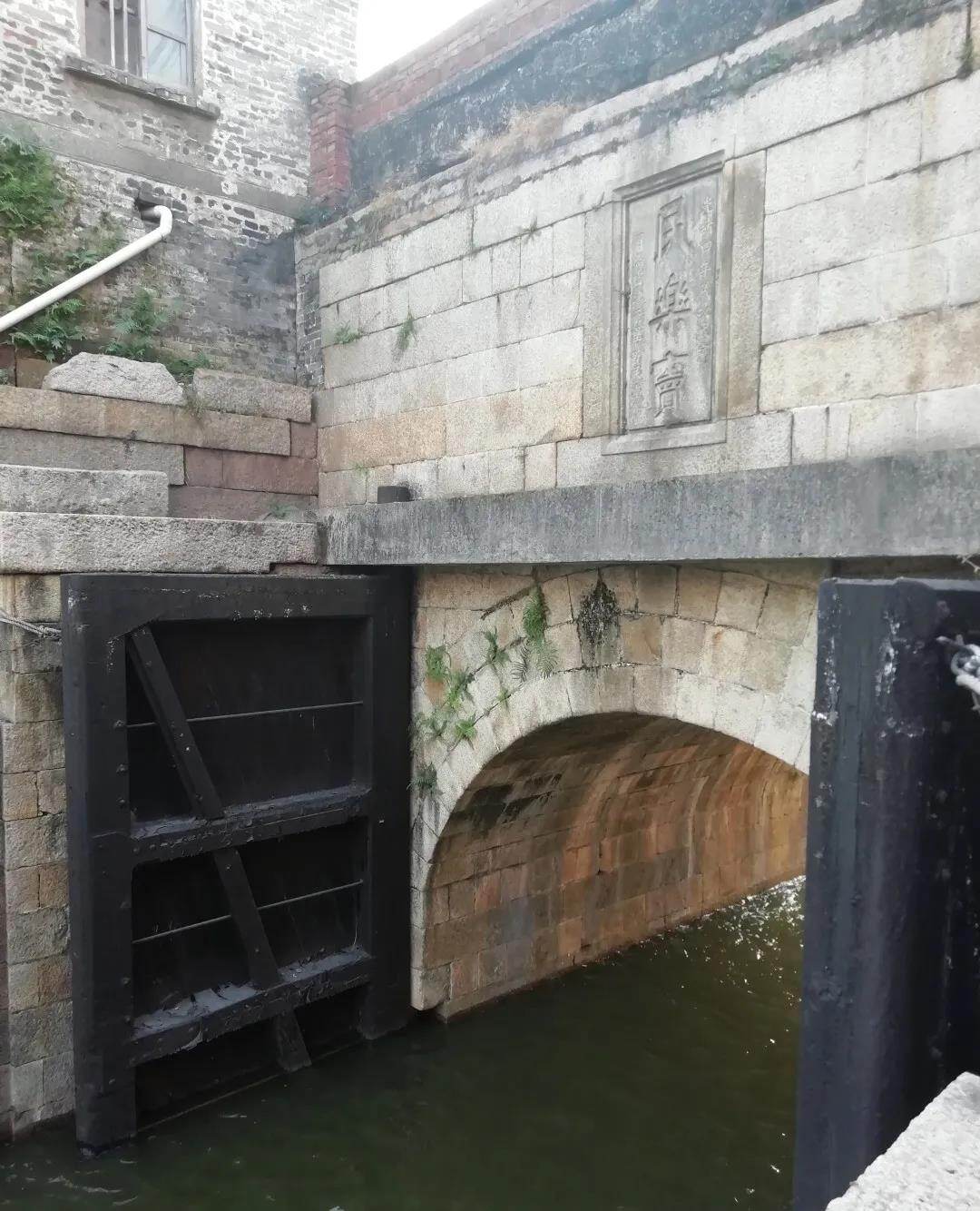
Min Yuedou, known as "one of the starting points of the Maritime Silk Road"
In the Qing Dynasty, the Sangyuanwei project and management system were further improved. The establishment of the Sangyuanwei General Administration and the revision of the "Sangyuanwei Zhi" marked the beginning of the management of Sangyuanwei as an integral regional water conservancy project. The regional status of Sangyuanwei was further highlighted and the engineering system was further completed.
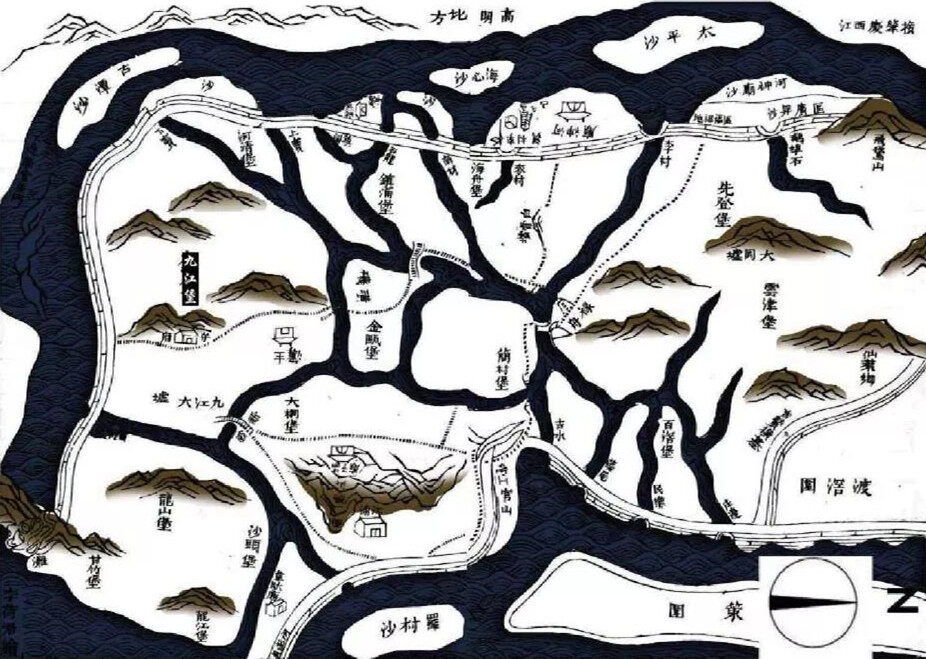
A map of the mulberry garden drawn in the reign of Emperor Qianlong of the Qing Dynasty (1794)
After successive expansions, to the Guangxu period, the total length of the Sangyuan dike project is more than 11,000 feet, which is about 39km. There are 51 sluice gates built in the enclosure, among which Jiujiang Fort has the most sluice gates, with 29. There are about 150,000 acres of land in Wai Nei, which is the largest Ji Wai water conservancy project in the Pearl River Delta. According to the literature, Sangyuanwei "surrounds hundreds of miles, with hundreds of thousands of residents, and one thousand hundreds of hectares of mulberry fields". It is known as "the area with the greatest food life in eastern Guangdong" and "the first fertile soil in the province". "Widely belongs to the largest district in Zhongjiwei."
After the Guanshan sluice was built in the 1950s, Sangyuanwei and Qiaobeidawei were integrated together, and they were collectively called Qiaosanglianwei. Through measures such as joint enclosures, embankments, and rectification of dangerous works, the overall flood control standard of the Sangyuanwei area has been increased from once in less than 10 years to more than once in 50 years. According to statistics in the early 1990s, the length of the mulberry dike was 63.2km, with a protected cultivated area of more than 200,000 mu and a population of 210,000. The current perimeter of the mulberry garden is 83.86km, the length of the embankment is 64.84km, and the flood control standard reaches once in 50 years. The area of arable land in the enclosure is 62,000 mu, and the permanent population is about 900,000.
Innovation
Different from the modern polders in the middle and lower reaches of the Yangtze River, Sangyuanwei is not blindly competing for land with water and contending with rivers and floods. Instead, it stresses that man will conquer the sky and the unity of nature and man. During the construction of the mulberry garden, the characteristics of topography and topography were fully utilized, and at the same time, there was a scientific understanding of the regional water potential. In the early 19th century, Shen Fu's famous novel "Six Chapters of a Floating Life" described the operating mechanism of the surrounding, yong and sinuses: "Drain (water) to the mature field of the garden, and build high dikes in each size circle to prevent tides and floods. There is water in the dikes. The sluices are used to open and close the sluices. When dry, the sluices are opened when the tide is high, and the sluices are opened when the tide is low.” Use the water level difference between the Xijiang and Beijiang to seize the opportunity and close the sluice to repel the water; Then the artesian diversion of water enters the enclosure or drains out of the enclosure to maintain a reasonable water level in the enclosure.
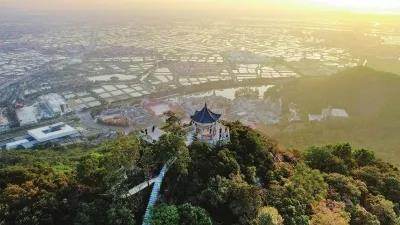
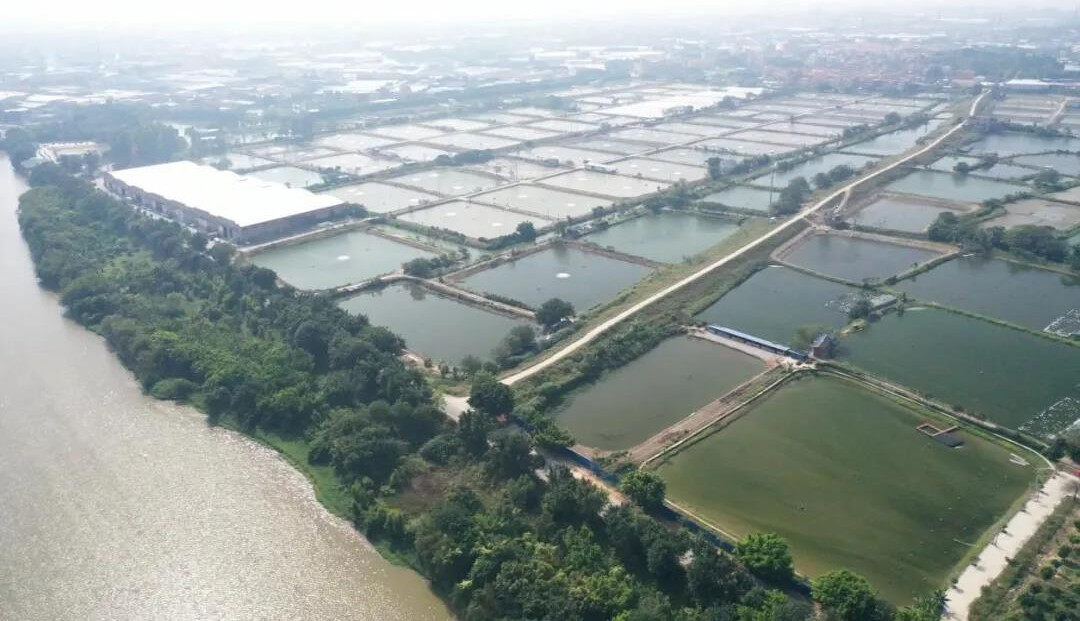
Xiqiao Sangji Fish Pond
In addition, Sang Yuanwei summarized many construction techniques and methods of foundation engineering during the construction and maintenance process, which has important reference significance for modern civil engineering technology.
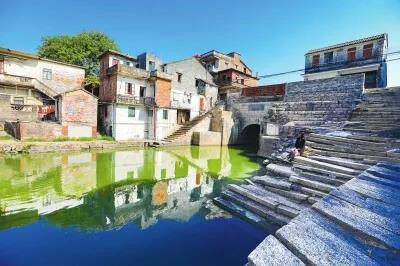
Xiqiao Minletou Sluice
In terms of the method of embankment, the past method of building embankments is changed from the method of taking soil at random, but using selected good soil that is dry and wet to build the embankment. Daoguang’s "Nanhai County Chronicles·Jiangfang" records: "You must choose good soil to build dikes, and no floating sand or mud", the soil must be "dried and wet properly, and each layer must be sprinkled with water", and then "new stone rams, every time Build the first layer of soil densely with rammed once, build the second stone tussah, and build the second iron tipped tussah each time, and reuse the ramming to build flat." And “every six inches of soil travels, and the gaps are built with rammed solids.” In order to prevent rain and collapse, whether it is to build a new dike or surround it for repair, “the old soil is always better, that is, the old soil is hard to find. Use new soil for miscellaneous purposes, find the old soil to cover the top after the embankment is completed, and “plant grass roots” on the side of the embankment. Pay attention to "the root of the embankment should be wide, the top of the embankment should be narrow, and the embankment should not be too steep." At the junction of the new and old dikes, "build with iron tussle force and tamping layer by layer, so that all will be solid." In order to make the dike strong, it was also proposed that "the bottom of the dike should be measured at eight feet, the surface should be measured at five feet, and the height should be five feet. The basis is five feet, and each embankment is one feet, and the standard of "97 squares and a half of soil" is applied. Editor/He Yuting
Comment






 Praise
 Collect
 Comment

 Share
Share


Write something~