 Search


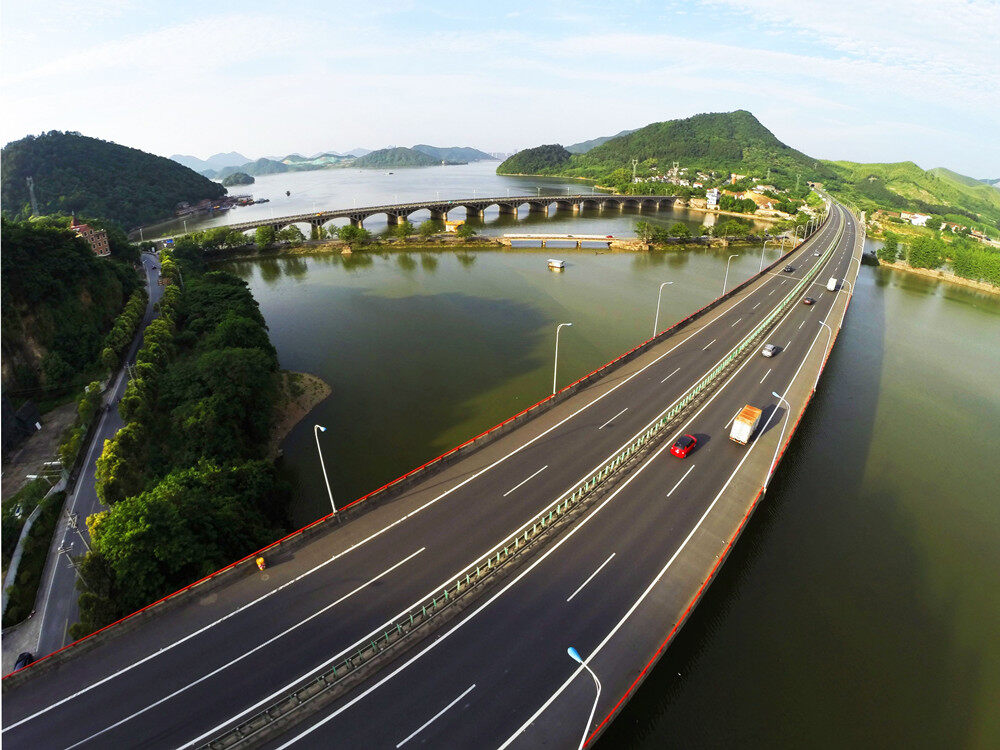
- After the Hangzhou-Shaoxing-Ningbo Wisdom Expressway is completed, it will connect Hangzhou, Shaoxing and Ningbo in series
As we all know, some high-speed roads in Germany have no speed limit, but most countries in the world have the highest speed limit, such as Italy is 150Km/h, France is 130Km/h, and China is 120Km/h. As the only country in the world with no speed limit, Germany has the world's most powerful superhighway, which can drive at speeds of up to 200 km/h or more. Despite the speed, there have been no more accidents on German autobahns. Although the domestic high-speed network has expanded in all directions, and the total mileage has far exceeded that of any country in the world, most domestic high-speed networks still have a speed limit of 120km/h or even 100km/h. But China will also usher in the first unrestricted expressway. The full name of this expressway is Hangshaoyong Expressway. At present, the project has reached the middle stage of construction.
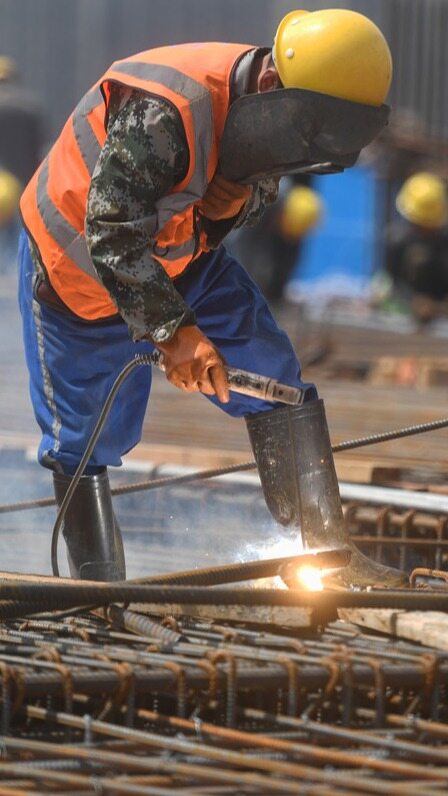
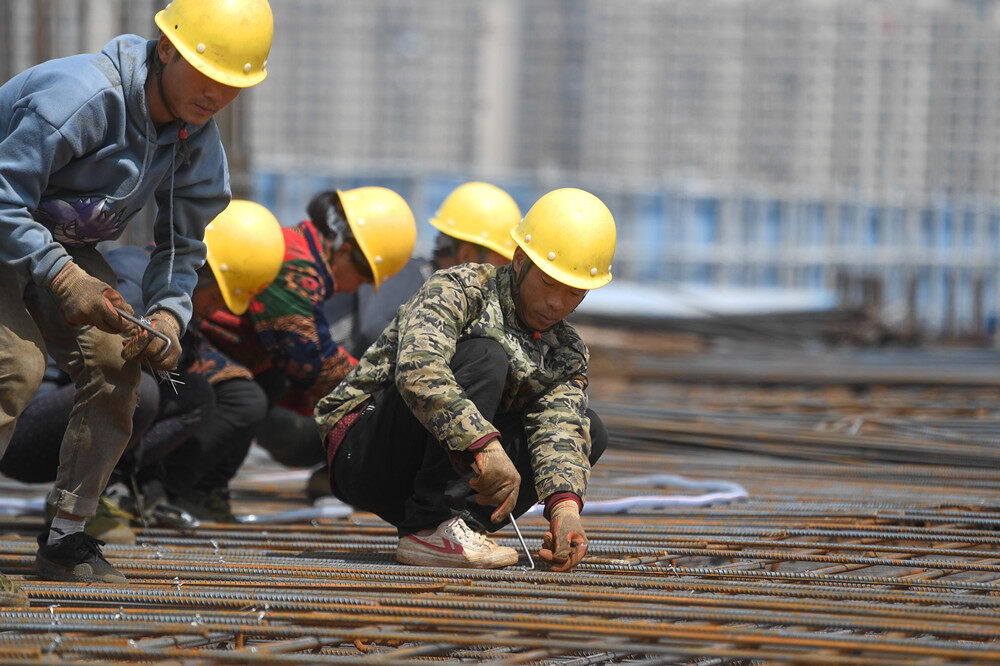
The Hangzhou-Shaoyong Smart Expressway has a total length of 175 kilometers and a total investment of about 73 billion yuan. The whole line adopts the standard of two-way six-lane expressway. . At 1:53 a.m. on March 22, 2021, with the last concrete pouring into the bottom of the water, the back cover of the first main pier cap of the Cao'ejiang Super Bridge, the fourth branch of the Hangzhou-Shaoyong Expressway of Zhejiang Transportation Group, was completed. Formally entered the stage of construction of the cap. According to the plan, the Hangzhou-Shaoxing section of the Hangzhou-Shaoxing-Ningbo Expressway will be completed and opened to traffic before the 2022 Hangzhou Asian Games.
According to the relevant person in charge of Hangzhou-Shaoyong Expressway Co., Ltd., a "smart, fast, green and safe" expressway will be built. At that time, innovative services such as safety warning, real-time guidance, dedicated lanes, formation driving, free-flow tolling, all-weather traffic, and precise control and scheduling will be realized. It is expected that the near-term traffic capacity will increase by 20% to 30%, which can provide accurate information services and safety reminders for existing social vehicles, and provide safety warning assistance and decision-making assistance for vehicles with driving assistance; in the medium and long term, it can provide high-level autonomous driving vehicles. Provide a vehicle-road collaborative autonomous driving experience.
From intelligence to intelligence evolution
Smart high-speed cloud control platform under big data. At the beginning of the design of the Hangzhou-Shaoyong Expressway, it not only drew on the construction experience of foreign expressways, but also used the most advanced transportation technologies such as Internet of Vehicles and vehicle-road coordination in China. Its smart cloud control platform driven by big data, through intelligent systems and vehicle management and control, will effectively increase the speed of expressways and increase the speed of all vehicles on the entire road by 20%-30%.
The relevant person in charge of the Zhejiang Provincial Department of Transportation pointed out that the core concept of intelligence is to build a comprehensive perception system for people, vehicles and roads, and to build a road network comprehensive operation monitoring and early warning system. At present, the actual average operating speed of similar expressways in Zhejiang is about 90 kilometers per hour, which is far lower than the speed limit of 120 kilometers. Through intelligent systems and vehicle control, the speed of super highways will be greatly increased. The short-term goal is to increase the average speed by 20-30%, which is close to the design speed. In addition, drawing on the corresponding technical standards of the unlimited speed limit of German highways and the maximum speed limit of 150 km/h in Italy, civil engineering technical indicators are reserved for the long-term breakthrough of the design speed of Hangzhou-Shaoyong Expressway of 120 km/h.
At the same time, in order to improve the traffic efficiency, the traditional toll booths will no longer be set up on the Hang-Shao-Yong Expressway, but the free-flow toll collection model will be adopted. Simply put, cameras and sensors will be set up on the high-speed highway to record in time when the vehicle passes, and then deduct the toll by itself. Equivalent to an upgraded version of ETC.
Advanced assisted driving and autonomous driving capabilities. Hangzhou-Shaoxing-Ningbo Expressway has adopted a number of intelligent control systems. In the future, the vehicle-road coordination integrated information service system can provide analysis of the road surface status for vehicles that have turned on the automatic driving mode on the automatic driving lane to realize intelligent guidance. And through the pre-installed roadside equipment and the early warning system of IoT perception, it can provide different types of information security warnings for manual driving, assisted driving, and autonomous driving vehicles, and avoid risks in advance. These measures are expected to reduce 10% of accidents. rate, the traffic smoothness rate can be increased by 10%. In the future, the intelligentization of the Hangzhou-Shaoyong Expressway will be at the forefront of the world, and a large number of test vehicles related to autonomous driving may appear here after it opens to traffic.
security capabilities. Fog is one of the factors that has a greater impact on safety in traffic weather. In view of the frequent occurrence of fog on the Cao’ejiang section of the Hang-Shao-Yong Expressway, this section chooses to set up a visibility meter every 800 meters on the passing bridge to induce warnings through the fog area. The system can instantly and accurately detect the fog in any area of the bridge deck, and link the information boards, intelligent indicators and navigation operators within 1 to 3 kilometers behind to issue early warning information about the distance of the fog, and set up fog guide lights in the fog area. , by marking the outline of the road and the visible distance, it guides the vehicle to pass smoothly.
Of course, the security capability is not limited to this. During the construction of the Hangzhou-Shaoyong Expressway, all kinds of sensors and 5G optical fibers will be implanted in it. In this way, an information expressway has also been built on the basis of the physical expressway, which can intelligently It reminds every car of speed, dangerous lane changes, queue cuts, etc., to improve the overall traffic order. At the same time, the Hangzhou-Shaoyong Super Expressway will rely on integrated access systems such as high-precision positioning, vehicle-road coordination, and unmanned driving in the future. Driving, assisted driving, and self-driving vehicles provide different types of information security warnings, avoid risks in advance, and ultimately realize the vision of zero accidents and zero deaths.
Technology means for new energy charging. Under the national policy of energy conservation, emission reduction and vehicle electrification, it is said that at the beginning of construction in 2018, the Hangzhou-Shaoyong Expressway planned to use solar power and road photovoltaic power generation to supplement the power of plug-in charging piles and provide charging for electric vehicles. Serve. And it is expected that in the future, mobile wireless charging can be realized, that is, charging while driving, to further solve the problem of battery life of electric vehicles. Ren Zhong, deputy director of the Zhejiang Provincial Department of Transportation, said that the future development direction of automobiles is electrification, and super highways are naturally taken into account in the design. The near-term goal of the superhighway is to provide charging services for electric vehicles through solar power generation, road photovoltaic power generation, and supplementary power from plug-in charging piles. The long-term goal is to achieve mobile wireless charging, charging while driving.
At present, it takes about 2 hours to drive from Hangzhou to Ningbo and take the Hangzhou Bay Ring Expressway without traffic jams. The Hangzhou-Shaoyong Expressway has fully absorbed the advanced experience of Germany and other western countries, and it is expected to break through the speed limit bottleneck of 120 km/h in the future in terms of speed design. That is to say, if the conditions are met, Hangzhou to Ningbo can be reached by car in 1 hour.
The Hangzhou-Shaoyong Expressway is the first intelligent expressway in China that supports the application of autonomous driving technology. It will fully support autonomous driving, free-flow toll collection, and long-lasting battery life of electric vehicles. As one of the ten major landmark projects of Zhejiang Province's major channel construction, it is a pioneering demonstration project in Zhejiang Province to promote the intelligent and digital development of the transportation industry. According to Ye Nan, chairman of Zhejiang Hang-Shao-Ningbo Expressway Co., Ltd., the completion of the project can greatly relieve the traffic pressure of the Hang-Ningbo Expressway that is about to be saturated, boost the construction of the Greater Bay Area and the Great Passage in Zhejiang Province, and create a smart transportation demonstration project in the Yangtze River Delta.
The Hangzhou-Shaoyong Wisdom Expressway is the first super-highway in China. Among the seven new infrastructure directions, the big data center, new energy charging, 5G infrastructure, and artificial intelligence will all be reflected in the smart expressway, and these are the current The center of gravity for the hot new infrastructure. In a word, the construction of the Hangzhou-Shaoyong Expressway is equipped with a number of pioneering technologies in China. In the long term, based on high-precision positioning, vehicle-road coordination, unmanned driving and other integrated access systems, the vision of zero traffic deaths will be realized. At present, the mileage of China's expressways has reached 142,600 kilometers, ranking first in the world. Once the intelligent expressway is rolled out, the market will be broad and bright. Editor/He Yuting
Comment

 Praise
 Collect
 Comment

 Share
Share


Write something~