 Search


- On May 13, 2026, Chinese scientists announced the development of the Jiuzhang-4 quantum computer
- Its computing speed is 10 ⁵⁴ times faster than the world's fastest supercomputer, once again breaking the world record
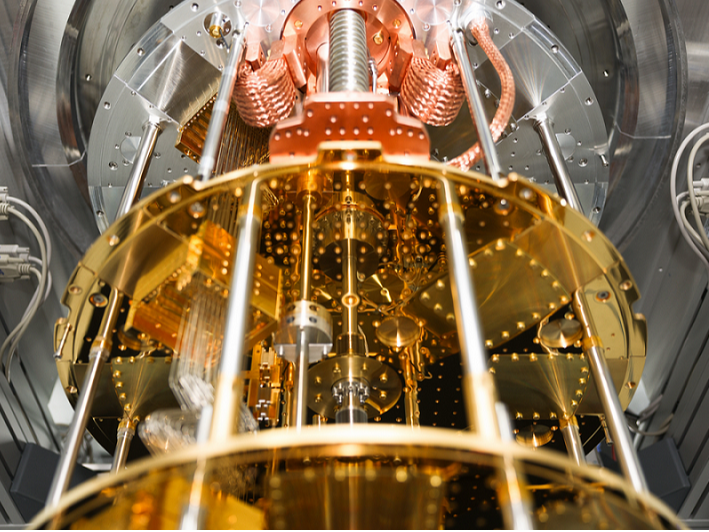
Late at night, the laboratory of the University of Science and Technology of China is still brightly lit. Academician Pan Jianwei's team closely monitored the data stream on the screen, and as the last photon was accurately captured, a stunning set of contrasting numbers popped up on the screen: 25 microseconds vs 10 ⁴ ² years. At this moment, the programmable quantum computing prototype named "Jiuzhang No. 4" officially declared China's absolute leadership in quantum computing superiority. This achievement was published in the top international journal Nature on May 13th.
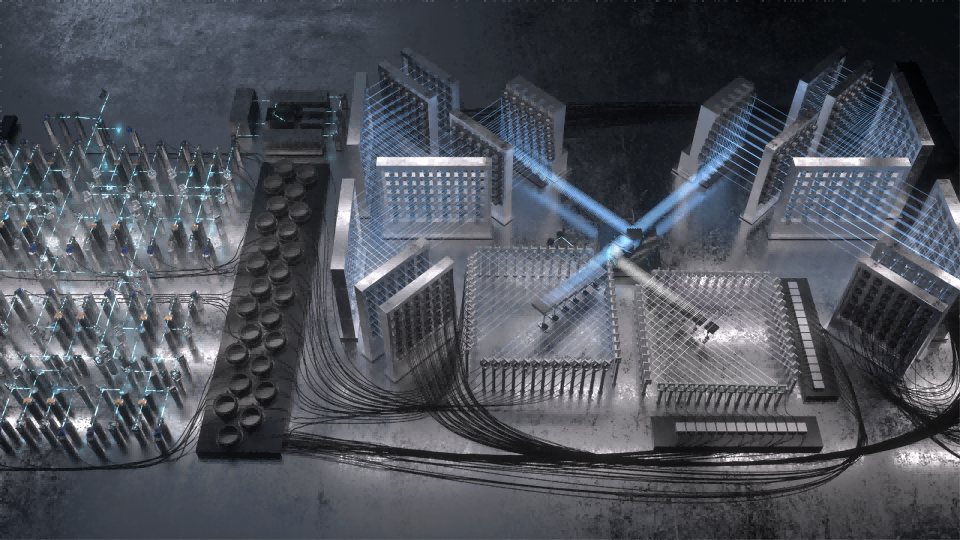
The core breakthrough of Chapter Nine No. 4 lies in its terrifying computing speed. It can manipulate up to 3050 photons and solve complex mathematical problems called "Gaussian Bose Sampling". For traditional computers, this is like searching for a unique exit in a maze; For Chapter 9, Number 4, this is just a high-speed crossing. Test data shows that it only takes 25 microseconds to generate a sample, while the world's fastest supercomputer El Capitan takes over 10 ⁴ ² years to complete the same task - a time far beyond the age of the universe. In other words, the speed of Chapter 9 No. 4 is 10 ⁵⁴ times that of the latter, completely widening the gap between quantum computing power and classical computing power.
The key to achieving such large-scale quantum manipulation is that the team has overcome the long-standing problem of photon loss that has plagued quantum calculations. The research team has developed a new type of light source and interferometer technology, which greatly improves the system efficiency. This is equivalent to ensuring that the vast majority of photon "vehicles" can arrive at the destination on time on an extremely long information highway, rather than "breaking down" halfway. This technological leap has taken the scale and complexity of quantum computing to a whole new level.

From the first achievement of superiority in the Jiuzhang-1 spacecraft in 2020 to the current fourth prototype, China has firmly placed itself in the world's top tier in the field of photon computing. It is worth mentioning that, combined with the breakthrough of the Zu Chongzhi series in superconducting quantum computing, China has become the only country in the world to achieve quantum computing superiority on both major technological routes. This not only consolidates the leading position, but also lays a solid foundation for the future development of universal quantum computers.Editor/Yang Meiling
Comment





 Praise
 Collect
 Comment

 Share
Share


Write something~