 Search


- The high-speed rail corridor carrying the hope of revitalizing Northeast China will fill the gap in the regional high-speed rail network
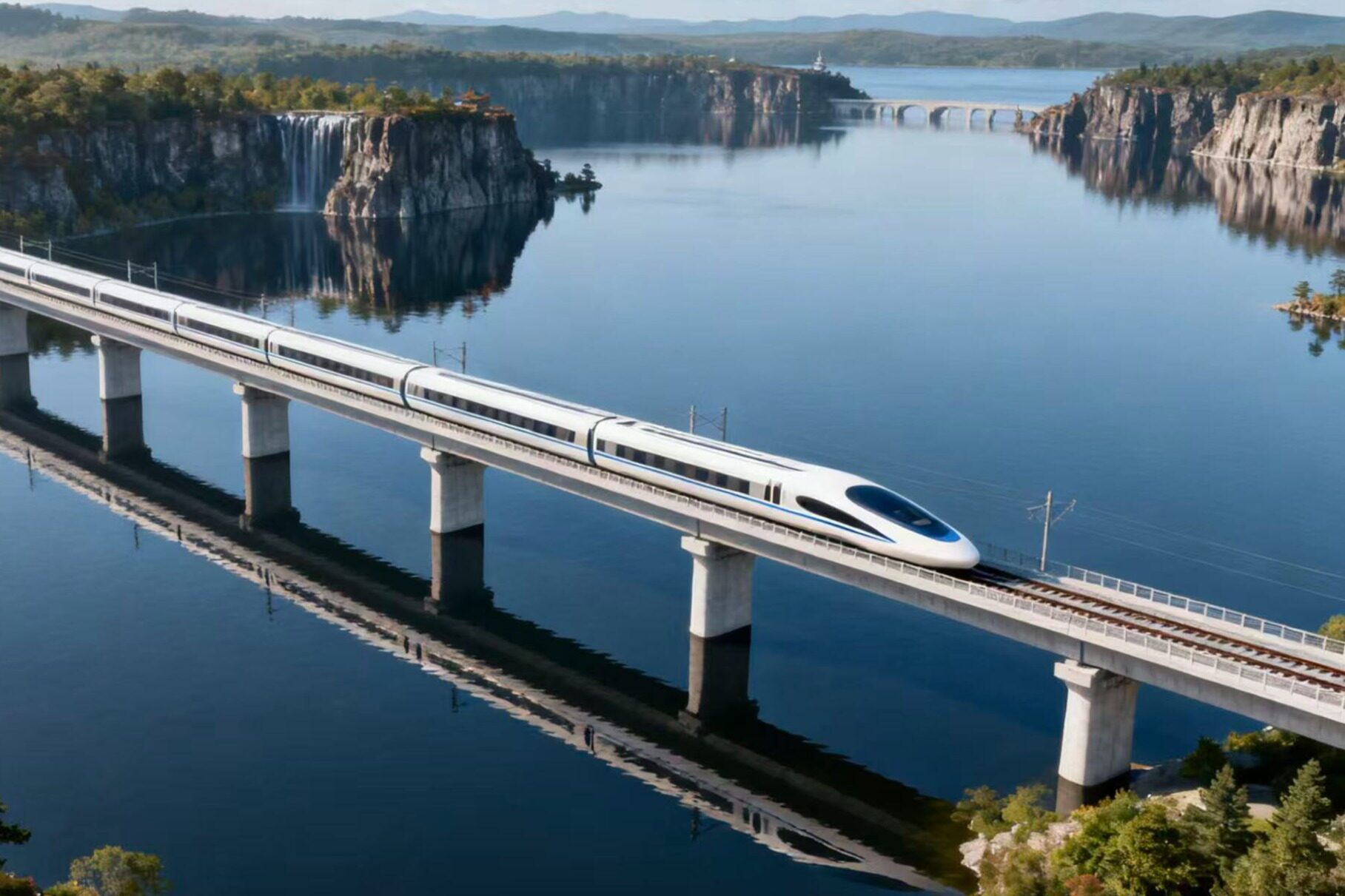
Recently, the Ministry of Natural Resources officially approved the preliminary review of the construction land for the new Mudanjiang Dunhua Railway project, marking a key progress for this high-speed railway channel with a total investment of 26.686 billion yuan. As the "last section" of the Shenyang Jiamusi high-speed railway (hereinafter referred to as "Shenyang Jiamusi high-speed railway"), its construction has entered the countdown, and the high-speed railway network in eastern Northeast China is about to achieve closed-loop networking.
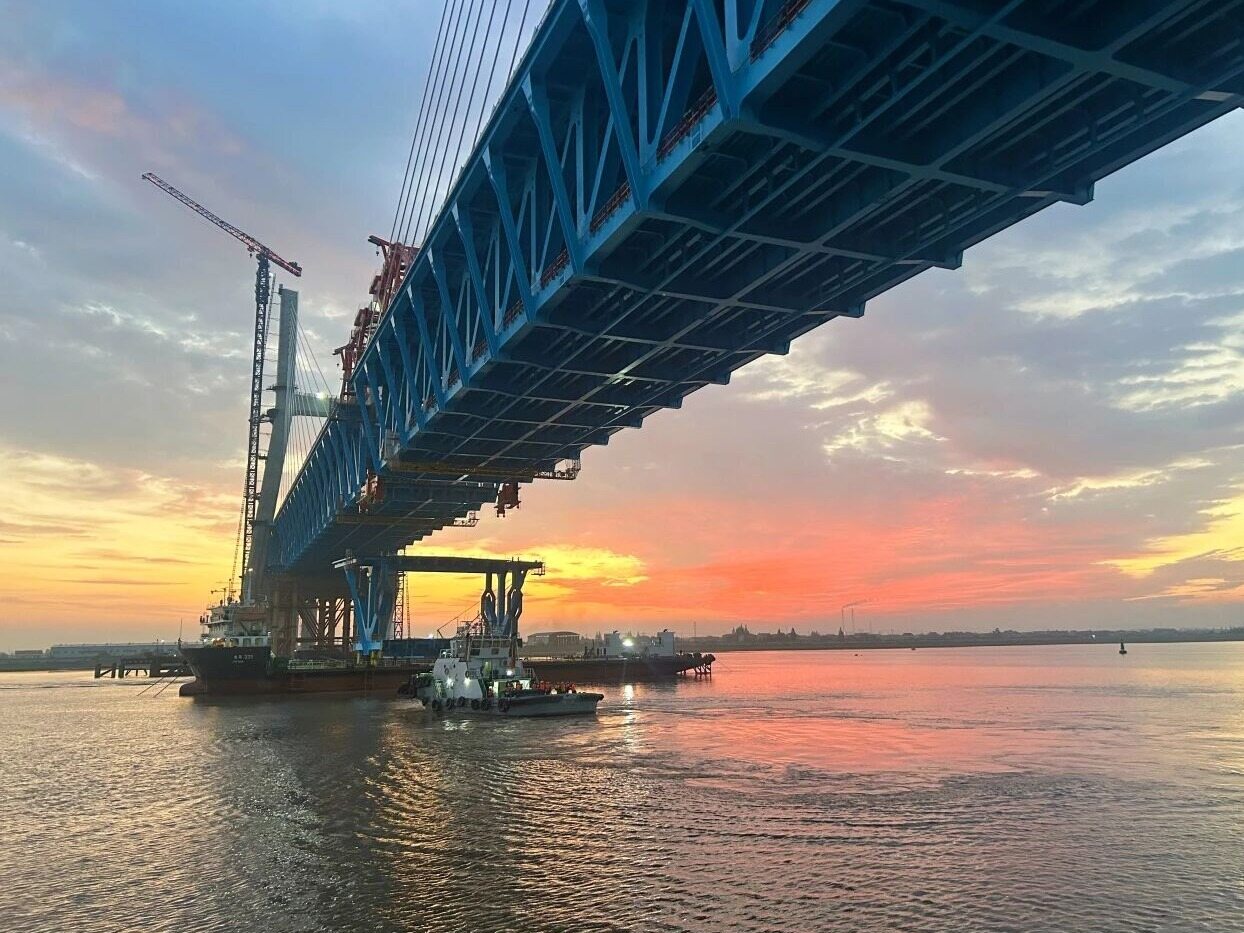
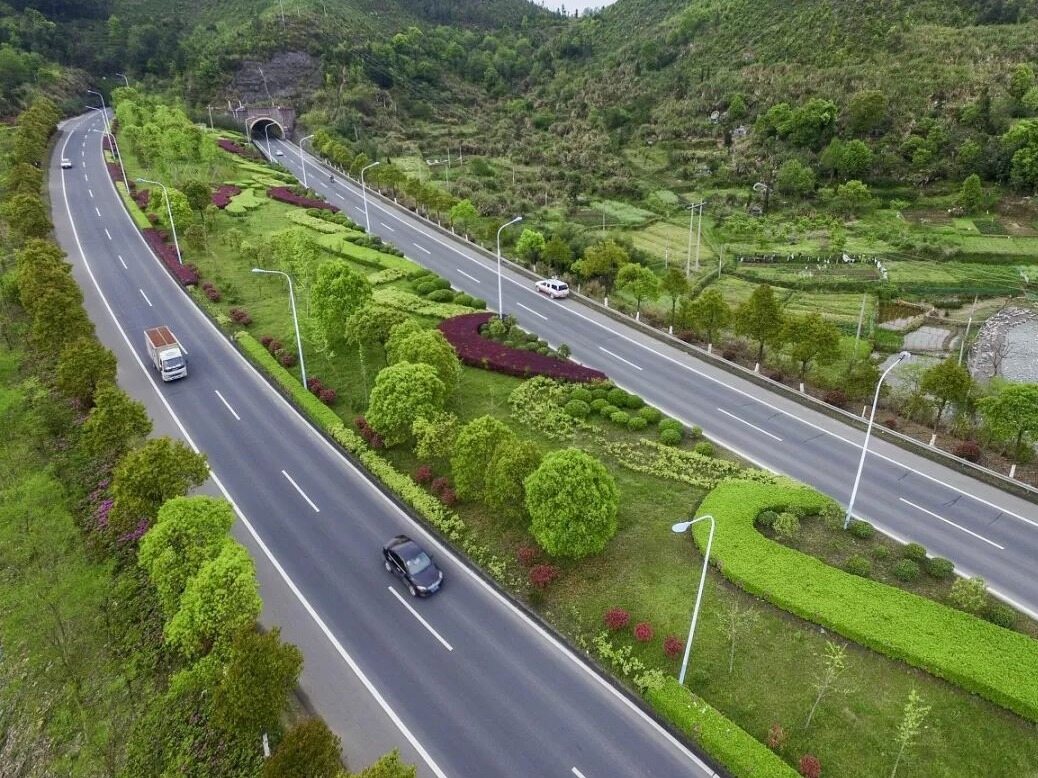
The approval and implementation of the Mudun high-speed railway is an important measure to implement the comprehensive revitalization strategy of Northeast China, and is also a key link in improving the national "eight vertical and eight horizontal" high-speed railway network. The project starts from Dunhua City, Jilin Province, passes through important areas such as Yanming Lake and Jingbo Lake Scenic Area to the north, and ends in Mudanjiang City, Heilongjiang Province. The total length of the newly built line is 186.92 kilometers, including 61.46 kilometers in Jilin and 125.46 kilometers in Heilongjiang. The bridge tunnel ratio of the entire line is as high as 62.94%, demonstrating the complexity and difficulty of the engineering construction. The line adopts the high-speed railway level standard, with a design speed of 250 kilometers per hour, a double track layout, a main line spacing of 4.6 meters, and an effective length of 650 meters for the arrival and departure lines. After completion, it will achieve rapid access between the two places and completely change the traffic bottleneck in the eastern part of Heilongjiang Province, which requires detours to Harbin when leaving the province.
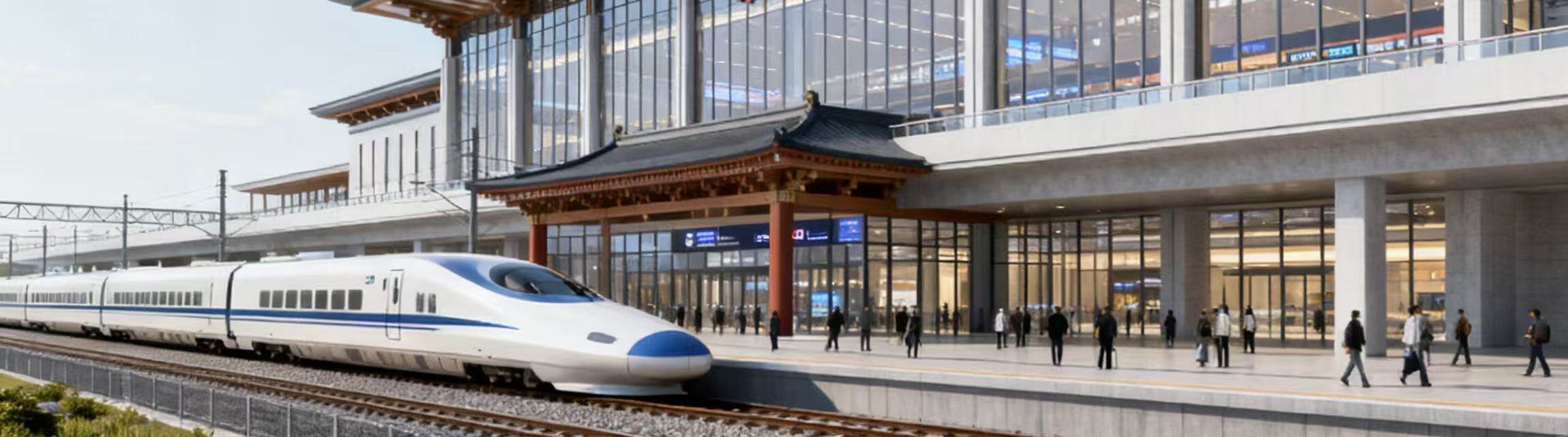
In terms of station layout, the Mudun High speed Railway has built a three-dimensional station network of "new construction+renovation+utilization", with a total of 5 stations along the line: the newly built Yanminghu Station (overtaking station, reserved for passenger transportation) and Tokyo East Station, the renovated Dunhua Station and Ning'an Station, and the utilization of the existing Mudanjiang Station. Among them, Tokyo East Station will build a new high-speed station with 2 platforms and 4 lines, a regular speed station with 1 platform and 4 lines, Ning'an Station will build a new high-speed station with 2 platforms and 4 lines, Dunhua Station will serve as the starting point at the southern end, connecting with the Changchun Hunchun intercity railway and the Dunbai high-speed railway, and undertaking important passenger flow conversion functions. Mudanjiang Station, as the railway hub in the eastern part of Heilongjiang, will achieve seamless connection with the Harbin Mudanjiang and Mudanjiang high-speed railways. It is worth noting that Yanming Lake Station and Tokyo East Station respectively serve Yanming Lake Scenic Area and Jingbo Lake Scenic Area, and will become important nodes connecting tourism resources along the line in the future.
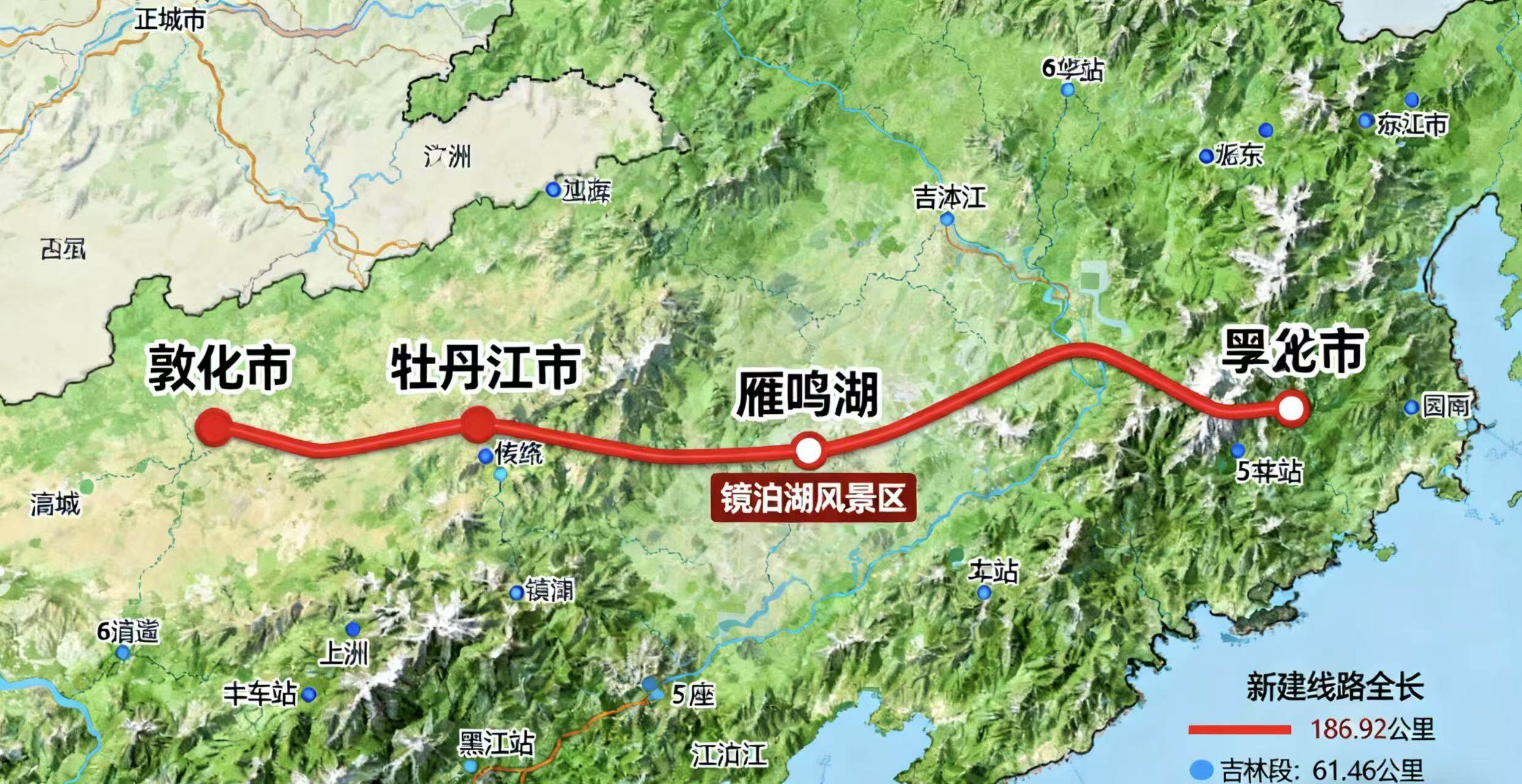
From the perspective of construction period and implementation details, the Mudun High speed Railway is planned to have a construction period of 4.5 years and is expected to officially start construction before the end of 2026. It is expected to be put into operation within 2030. The project land is strictly controlled within 448.21 hectares, covering 387.24 hectares of agricultural land, including 228.89 hectares of permanent basic farmland. In the subsequent construction, the requirements for farmland protection will be strictly followed, and the scale of land use will be strictly controlled to ensure the coordinated promotion of engineering construction and ecological protection. At the same time, the project also includes supporting projects such as the Dunhua regional connecting line, the relocation of conventional trains in the Tokyo metropolitan area, and the expansion of the Mudanjiang high-speed train station, further enhancing the overall operational efficiency of the road network.
As the final work of the Shenjia high-speed railway, the construction of the Mudun high-speed railway has epoch-making significance for the road network. At present, the Shenbai section, Dunbai section, and Mujia section of the Shenjia high-speed railway have all been completed or entered the final stage, with only the Mudun section yet to commence construction. After its completion, it will form a north-south high-speed railway corridor with the Dunbai and Shenbai high-speed railways, achieving rapid connectivity between cities such as Shenyang, Fushun, Tonghua, Baishan, Mudanjiang, and Jiamusi. The travel time from Shenyang to Mudanjiang is expected to be shortened to about 3 hours, forming a "golden transportation line" that runs through the three provinces of Northeast China.
In terms of economic and social value, this high-speed rail corridor will release multiple development drivers. At the transportation level, it will improve the rapid passenger transport network in the Northeast region, enhance the overall efficiency of the road network, and achieve interconnectivity of key nodes in the "Eight Verticals and Eight Horizontals"; At the tourism level, well-known scenic spots such as Changbai Mountain, Jingbo Lake, and Yanming Lake will be connected to promote the deep development of tourism resources along the route; At the industrial level, it will accelerate the two-way flow of factors and assist in the upgrading of industries in cities along the route, especially providing transportation support for the transformation of traditional resource-based cities in eastern Heilongjiang. In addition, during the construction period of the project, it will drive the development of related industries such as construction, building materials, and logistics, create a large number of job opportunities, and after completion, it will also enhance the level of regional urbanization and comprehensive carrying capacity.
At present, the feasibility study review of Mudun High speed Railway has been completed, and preliminary work such as social stability risk assessment and earthquake safety assessment is accelerating. With the implementation of key approvals such as land pre-approval, the project is about to enter the preliminary design and construction preparation stage. This high-speed rail corridor, which carries the hope of revitalizing Northeast China, will not only fill the gap in the regional high-speed rail network, but also inject new development vitality into the eastern region of Northeast China, becoming an important transportation hub artery connecting Heilongjiang and Jilin provinces and radiating the Yangtze River Delta.Editor/Bian Wenjun
Comment

 Praise
 Collect
 Comment

 Share
Share


Write something~